
How to Create a Neurodiversity-Friendly Workplace
In this episode of the HR Leaders Podcast, we sit down with Kristen A. Pressner, Global Head of People & Culture at Roche, to unpack why neurodiversity may be the single biggest untapped advantage in the post-AI workplace.
Kristen explains why most organisations are sitting on “free upside”, talented people already inside the business who are not thriving because work was designed for one type of brain. She shares why only ~25% of employees feel psychologically safe, and why the line manager is the biggest determinant of whether neurodivergent employees thrive or merely survive.
Most importantly, she reframes neurodiversity away from labels and diagnoses, and toward practical, human questions, how do you work best, what gives you energy, and what conditions help you shine, and why asking those questions changes performance, engagement, and learning at scale.
🎓 In this episode, Kristen discusses:
Why creating brain-friendly environments is “free upside” in a post-AI world
Why interest, urgency, and novelty, not importance, drive action for many people
The role of line managers as the single biggest differentiator in employee thriving
Why neurodiversity is not about diagnosis, but about how brains process motivation, focus, and energy
How workplaces accidentally label potential as laziness when they misunderstand neurodivergent behavior
What if global compliance took 5 seconds?
It does now.
atlas copilot partnered with our friends at Deel, the all-in-one Global People Platform, to bring on‑demand employment matters and compliance intelligence into your daily flow. With Atlas' GenAI agentic platform and Deel’s vetted sources, get authoritative answers across 150+ countries.
Ask anything:
“Is a 3‑month probation period compliant in Mexico?”
“What termination notice is required in Germany for 18 months’ tenure?”
“How long are the maternity and paternity leave in the UAE?”
You get clarity, that used to take hours, in seconds.
This is not a feature. It’s a new operating model. The chaos of Slack threads, scattered PDFs and expensive calls collapses into one trusted interface. Your team moves faster, escalations drop, decisions align and you see regulatory change as it happens.
If you’re still stitching notes from outside counsel, you’re already behind. AI-Smart HR leaders are shifting to always‑on intelligence. Don’t let compliance feel like navigating a minefield.
Kristen Pressner 0:00
I'm 100% convinced that the biggest unlock in a post AI era that we can have in our workplaces as HR executives right now is to help people understand how to unleash all of the beauty and benefits of very divergent thinking. It's right here. We have the employees already, and the problem is some of them aren't thriving. Research shows only about 25% feel like they have psychological safety and in an environment that lets them thrive. Almost every neurodivergent person I've talked to has said the biggest differentiator on whether or not they're going to be able to thrive or they're just going to be holding on for their life to survive at work, is their line manager. So if we could create environments where we just normalize saying, how do you work best? Awesome. Here's how I work best, awesome. How do we divvy up work? Okay, has it changed today? Just let me know. This is the opportunity in front of us. You don't need to get all new employees. You don't need to upskill everyone. It's free upside. It's so exciting. So
Chris Rainey 1:10
you said, Welcome to the show. How are you?
Kristen Pressner 1:12
I'm great. How are you today, Chris,
Chris Rainey 1:14
I think you win the best award for best microphone and camera of the last 10 years.
Kristen Pressner 1:20
I'm very lucky with this luxurious setup that I get through my employer.
Chris Rainey 1:24
Yeah, people that can't see Kristen right now, she's in a fancy podcast studio with an amazing microphone, like a little like a pro, like you're on show now, basically,
Kristen Pressner 1:33
I think I do. We've got these cool rooms, and you can just come in here, and world class equipment. I'm very lucky.
Chris Rainey 1:38
It's amazing that the team built this on site. What a great idea.
Kristen Pressner 1:43
Yeah, we're really lucky. I think it's a great way to learn. I mean, not everyone learns through getting a 30,000 slide, PowerPoint, text. We love that something
Chris Rainey 1:52
to be said. Yeah, you do. Yeah. I mean, that kind of leads nicely onto our conversation a little bit before we jump in and in. Today's today's topic, which we're both super passionate about, tell everyone a little bit more about you personally, and the background, the family, and the journey to where we are now, because that leads nicely into the into the conversation.
Kristen Pressner 2:12
Yeah, sure. So I'm Kristen pressner, and I'm a global human resources executive for a large multinational company, who I am, in my heart, honestly, is somebody who feels like I'm on this earth to help potential come to pass in this world. So once I discovered early in my career that HR was a thing and that I could, through that line of work, be able to make that happen, I've been in love with it ever since. On the private side, I'm an American by my nationality, but I've lived and worked in Switzerland for the last 18 years, and have since become Swiss. And I moved here 18 years ago with my husband and four kids, who, at the time were 135, and seven. And I think what finds us here, Chris, besides the HR angle is I learned a lot recently through the lens of my own family about neuro diversity, things I thought I understood, until I realized I actually didn't understand them. And I had a real challenge afoot in my house, and I made a pact with myself that if I cracked the code, I would pay it forward to anyone who would listen so they didn't have to go through what I had to go through to figure out how to bring out the best in everyone. Amazing.
Chris Rainey 3:28
Well, thank you for sharing that. And I want to start simple, because I feel like when I talk about neuro diversity with different people, I get very different responses. So let's start with, what is neuro diversity?
Kristen Pressner 3:41
Yeah, it's a great question. So I think that particular because your audience is one of HR professionals, I think we all intuitively get that not everyone's brain works the same way, and that that is good. I think where we end up talking about neurodiversity is recognizing that across the full spectrum of humanity, people's brains work differently and are optimized in different ways. Neuro diversity is generally when you've got someone whose way of working, or their neurotype or the way their brain processes information, is considered outside the general norm, or the most of us, as I like to call it. So I see myself as a neurotypical and so kind of the world was built for me because I'm in the majority. But for those people whose brain is divergent from that majority, the world isn't built for them, and that comes with consequences, some of which can be negative, and some of which, quite honestly, can be quite positive.
Chris Rainey 4:36
Could you give an example of neurodiversity? Yeah, bring it to laugh at people, yeah.
Kristen Pressner 4:43
So one example would be ADHD. So a lot of people are talking about ADHD these days. I thought ADHD was nine year old boys bouncing off the walls. And if I didn't see nine year old boys bouncing off the walls, then that was someone else's thing. What I have. Come to learn is that ADHD actually isn't what I thought it was. Doesn't look like what I thought it looked like. And I had the same reaction as I would say the vast majority of us, a little bit of an internal eye roll. Seems like everybody's getting diagnosed with ADHD these days. And what I uncovered is, besides, it's horribly named because it implies that there's a deficit of attention. It's actually too much attention. It's the inability to focus the brain the way I'm able to on the task at hand. So I'm here recording a podcast with you, and all of my attention is on you in this podcast. But for instance, for one of my family members, who might have ADHD, it would be really hard for them to ignore the buzz from outside or the light seeping in the window or the vibrations in the floor. And so I came to realize that there are actually pretty enormous differences in how I and other people experience the world that are invisible to all of us, including those individuals.
Chris Rainey 5:57
Yeah, it's a there's a lot of preconceptions or misconceptions, right? Yeah.
Kristen Pressner 6:03
I mean, I think the joke is like, squirrel haha funny, and it's not squirrel haha funny can actually be quite, quite dangerous and quite deadly, because if you didn't understand your brain, you know you and I talked about this before the podcast, if this is invisible to everyone, including the person that it's happening to. Then how would one process the fact that it feels like for everyone else the world is easier and they've got wind in their back, and I have wind in my face, and things that seem easy for everyone else feel hard for me, it would be awful. Yeah. And I think there are a lot of people in our workplaces, in our families, in our school systems, in our family, in our relationships, who are struggling with feeling like there must be something wrong with me, but not having any idea what it could possibly be in our society today, the most natural inclusion when we see those things is character flaws. If Chris, you happen to find doing mundane adulting tasks like laundry or being on time or whatever. If you found those things kind of supernaturally hard, we kind of chalk it up as you know, you're not trying very hard. You can't get it together. And that's not the correct diagnosis.
Chris Rainey 7:11
Yeah, and a lot of the systems and processes around us are all kind of designed for the many like so like school, we spoke about this personally. Before my experience in school was a really tough one. Didn't learn how to read until I was, like, 13 years old, and really struggled. But if you asked me to paint a portrait of you, I could paint a perfect portrait of you, but then no but no one cared about that. That wasn't rewarded, right? Or if I read a book, I can't. I really struggle to retain the information. But if I watch a video or listen to a podcast, I can remember everything, yeah, and I never, and I never understood why that was the case, right? And in school, I was seen as a failure because I couldn't memorize things and write them down on a test, therefore I didn't understand it.
Kristen Pressner 7:59
But, yeah, just hearing you tell that story, I mean, it hurts my heart, because, right? First of all, that's awful, but you're not the only one. In fact, you're, by far, not the only one who experienced that. And there's that old cartoon of all different animals, and someone saying, now the test is to see who can climb a tree, you know, and there's a snake there, the snake's not going to be able to climb a tree. And so our school systems are built on that neuro typical assumption, I would argue, probably an outdated neurotypical assumption that it's actually healthy and good to sit in a classroom for eight hours a day and regurgitate back what you've been taught in certain ways. But you know absolutely, as we think about creating inclusive work environments, or helping people learn every day in our workplaces and reinvent themselves as the pace of change increases. People, most people don't learn best locked in a room for eight hours memorizing things that have been put in front of them. And so I think we have a huge opportunity, not just in the school systems like what you described, but also in our workplaces, and how, what assumptions we make about how people learn best?
Chris Rainey 9:03
Yeah, I mean, even to this day, it was really bad, but I'll share it, because we're talking about, like, I have such a Vivian memory as a kid sitting in a classroom next to my teacher and my mom talking about how I was struggling and I'm so far behind and like, I'm literally just listening to them, you know, be I'm like, just so demoralized, like, you know, Chris is really far behind, you know, he doesn't understand this, this and this. And I'm sitting now. I'm like, Just standing. And I convinced myself that I was bad at reading. I convinced myself that I was slow and stupid, right? And that stuck with me for my whole like, every latest stuff, primary school, secondary school, even when I was thinking about going College, as I can't do that, like there's no way I can go and do that. I'm not smart enough to to do that, right? Because, like, I was everyone around me was telling me, you know, so I just believed it, you know. But at the meanwhile, I'm playing ice hockey at a super high level, six. Eating. I'm like, I'm traveling all over the world, break dancing and doing tours. I'm painting and sculpting. And I'm like, like, those things were like, you know, like, easy for me create the creative side, right, of things, but none of that was really, you know, rewarding your value. So your values, that better word that none of that was valued. So I was like, Ah, just for like, a failure along along the way, right? Whereas, and we'll get into this, the opposite side of this is that you also have some superpowers that emerge from this, that people don't talk about, which I didn't know, and only more recently, even even our conversations, I've started to be able to label it and identify those things, because it's kind of not
Kristen Pressner 10:43
obvious exactly. I really appreciate you sharing that story. It takes a certain amount of vulnerability, but you're also indisputably a very successful person. Now. You're an entrepreneur, you have a successful business, etc. And I think you know, until people become adults and we see how the story plays out. These narratives, they're they're awful, they're debilitating. They have, can have life or death consequences, which is what's so unnerving to me, this it can become a question of survival. Undiagnosed ADHD, for instance, comes with a three to five times the death by suicide rate. It comes with approximately a decade shorter lifespan, and it almost is guaranteed to come with other comorbidities, like depression, anxiety, disordered eating or substance abuse or alcohol abuse disorders. These can be deadly. And so this isn't squirrel haha funny. This is very serious and to your point, if it's misunderstood by the person, by the people around the person, if you're getting barraged by messages that say you're broken, you're not trying, you're not good, you're lazy. Fill in the blank. And by the way, the research shows that by age 14, someone who has ADHD has gotten 20,000 more negative messages in their life than their neurotypical counterpart. So think about the effect of that. And that doesn't stop at age 14. It keeps going. And so if you think about that, then for me, it becomes kind of a survival story, but, but this isn't like charity. This is an opportunity to create thriving. And to your point, you know, it was really interesting in my house, my family members are all neurodivergent. I'm the odd man out. And you know, it created challenges for us and it created struggles for us, and with their permission, my family enabled me to do the TEDx talk that brought us together, to have this conversation and to talk about this openly, which takes a lot of vulnerability on their side as well, but we wanted to pay what we learned forward, and what I observed as an outsider looking in was kind of Like, it feels like things that are easy to me, like being on time or knowing where my keys were, or doing laundry or being, you know, mundane adulting tasks like the taxes, seemed super naturally hard for them. But by the flip side, things that are hard for me were supernaturally easy for them, just the stuff you just described, super creative, giftedness, making connections, innovation, etc. And so as I start to as an HR executive, think about the implications of AI and being able to automate the kind of things that machines can do increasingly, what are the differentiating qualifications or criteria that we're looking for in our workforces. In particular, if we're in innovation businesses, which most of us are, it's exactly the kinds of gifts and talents that you just described. Are the superpowers, the unbelievable gifts that you can get in neurodivergent thinking, if you haven't crushed their spirit in the way that we've built our worlds or our environments.
Chris Rainey 13:40
Yeah, let's talk about the TED Talk a little bit. Talk everyone through the name. Okay?
Kristen Pressner 13:47
So, yes. So the name of the TEDx Talk is, why is it that so many people just can't get it together? And the reason that I named it that is because, for me, that's the manifestation of what's happening. And it was the manifestation that I noticed. I kind of scanned the horizon of my family, and, you know, I'm in the potential observation business, and I saw tons of potential in my family members, and yet it seemed like they were struggling on dumb things. And so I was asking myself, why can't they get it together? Why can't they get it together? And once I cracked the code on why they couldn't get it together, I learned that there was an alternative to the common narrative of not being able to get it together, character flaws, they're lazy, etc. And by the way, what triggered it all for us was a very similar conversation to the one that you just described, with my 14 year old daughter, who went from the track of, you know, top of her class heading to uni at age 14, within a matter of months to being told that she was kicked off the uni track because she was too lazy and wasn't willing to apply herself enough. Nobody asked the question, why would a child so precipitously fall in such a short period of time? No one asked the question, is there anything we can do to enable. Her to thrive in the way that she was before they almost seemed thrilled to kick her out, label her as lazy to her face, and now, five years later, she's still traumatized by that experience. She believes the narrative that she got told by those people just like you, Chris and so we have work to do to help her realize actually that wasn't a correct narrative they didn't know. And that's part of why I'm doing the talk and trying to get the word out. There is an alternative explanation for what you see that's different than laziness. It's actually quite the opposite. So as I started to kind of peel back the onion and try to crack the code, what I learned was, in the case of ADHD, there's a dysregulation of the neurotransmitters that drive motivation, so norepinephrine, norepinephrine and dopamine and so how do we get things done? Well, we get motivated to get them done, we take action to get them done, and then we get outcomes. It's a pretty simple formula. How do you get the motivation train going? Well, if your motivation train is broken because the neurotransmitters that drive motivation are dysregulated, if you're the other dysregulation with ADHD is the prefrontal cortex, the brains command center responsible for driving action, is broken, so then now action taking is disrupted. Well, no wonder outcomes were a challenge. And what I learned with my family is I kept trying to get the motivation to action, to outcomes train going the way it works for me. It's important. It's important. So do it. There's consequences, so do it. And so I beat them over the head with the kinds of things that worked for me and most other people. And this was the hard part. They would violently agree with me that something was important. Gotcha, it's important taxes tomorrow on the case it didn't drive action, yeah, because the motivation wasn't there. What I learned for them was their brain gets triggered by interest. What's novel, exciting, fun, whatever. And so once we crack the code on that exactly, then, then, you know, competition, these kinds of things, that gets the motivation train going. And so I had to take a different tack, and we could get equally as good, if not better, results from taking a different tack. But I think it's really important for people to understand that there is a completely different explanation, which is biological, which isn't their fault. In fact, my big epiphany was once I realized all of the different places across an ADHD years life that has negative consequences as a result of being ADHD, whether that's mental health, some of the things we've already talked about, physical health, their relationships and their success at work and school, so all aspects of their life, it hit me, what lazy person would be seeking all of that trouble? No, lazy person laziness wouldn't make everything harder in all elements of their life.
Speaker 1 17:50
Yes, sir. Yeah, that's a good way of putting it.
Kristen Pressner 17:54
So it's not laziness and it's not not getting it together. There's something else at play, and once we can understand what's at play, I can help them connect their brain and be more successful. But here's the tricky bit, and you'll appreciate this being in the HR space. If I were to say to you, Chris, what are the circumstances under which you operate the best and shine the most? Would you have a clear answer for me?
Chris Rainey 18:21
I would say that it cannot be too structured. So whenever people try and put me in too much structure, like Shane's, like, you need to be here at this time to do this, at this thing and and it needs to work that way. I just, I just, I'm, yeah, yeah, exactly. I'm kind of like, it leaves me a little bit like I'm on a leash, but I'm bit far away, a long leash. Basically, I'm on a long leash, right? It's also why we work. Well, Shane's kind of really good at being here in the present, and which is why he manages kind of finance operations, the foundation of the business. And I'm out in the front trying to break things, trying to disrupt, always trying to look at, you know, challenging the status quo. And that's where I thrive,
Kristen Pressner 19:05
yeah, but that's beautiful. And we heart Shane, you know, he has, he has a place that's really
Chris Rainey 19:09
valuable, and he's got a part with me, unfortunately, yeah, but
Kristen Pressner 19:13
I think it was really a very helpful and effective the way you could describe this is where I'm great. Let me run. Give me this, this long leash, and this is where I'm not great, and I surround myself by people, yes, who can help me with those things that I'm not great at. And the you're very self aware. And most people that I've met across all areas, disciplines, neurotypes, etc, most people don't know thyself that well. They're really not that clear on what situation or conditions they need to be successful. And you got to know thyself for someone else to be inclusive, to create this condition. So if you didn't know to say to Shane, give me enough room to operate, but manage the details so I'm on time, and things happen according to plan, and the finances get paid. And. Um, if you didn't know to be able to do that, then it would probably things wouldn't run quite as smoothly. And so it's really important. The way I look at it, at its simplest form, is the things that my family members find hard are easy for me, the things that I find hard are easy for my family members. Doesn't that sound like a perfect match?
Chris Rainey 20:19
Yeah, I will. What me and Shane did was super simple. We went to this, like, this kind of like workshop that was around, kind of leading with purpose, and connecting to your purpose, to your business. But one of the small things I took away, which we did when we got back, was we just wrote down all of the things that we both do, and then next to it, we just said, what are things that give you energy, and what things that take away energy, right? It was very simple exercise, and me and Shane can both do all of the jobs. Doesn't mean that we want to do all of the jobs, right? And what we realized, once we wrote them all down, is literally all the things that he was doing that takes away his energy. I love, like, like sales, like, he doesn't like sales, right? And it was vice versa. And I was like, Oh my God. Like, I hate writing contracts. Like, it's like, for me, I love the sales pitch, right? I love that part. But actually sitting down after and drafting the invoice and doing the contract and getting into the weeds of all the details, I'm like, Oh, I can do I can do it. It's just exhausting for me. And he's like, Oh, that's easy, right? So, and literally, that next year we like Forex, our revenue, because we literally was just both running in the places that we needed to run. So it wasn't like we got there. I mean, thank God I went to that workshop, because it was such a small thing that I walked away with. And also it's also connected all the things that I love with my purpose, right? My purpose statement is to be the unbreakable artist that dances you to life, right? That's kind of, and there's a lot of meaning behind that, a lot from when I was younger, when I was like a unbreakable artist, because I was always told that wasn't valued, but now I actually know that that's my superpower, right? And then dances you to life. I was a dancer, so always sort of being lost in that creativity and then dance you to life is like my passion for growing employees and developing them. So just in a way that I can say it that because everyone else wrote it as bullet points, and that doesn't resonate with me, yeah, right, everyone walks away. I was like, I don't believe I'm not gonna need bullet points being excited, but I need a purpose statement that's going to be and I also drew a whole entire, entire landscape picture with, like, some mountains and a river and everything represented my my next plan for next three to five years visually, because, again, I had this deck that everyone made. Everyone at the end of the event had, like, a deck and like, bullet points. And I was like, I'll just I said to the coach. The coach was like, Can I grab the whiteboard and draw my entire vision? And they're like, What do you mean? No one's ever asked that. And I was like, I can't. I'm not going to walk away with four bullet points I'm excited about so yeah, like, sorry I rambled on there, but
Kristen Pressner 22:57
I love so much about that, because I think you're unique in my experience, and that you know what? What are the circumstances that you need and you will fight for them. And what you just described is the most visceral example I've ever heard of the benefits of being a brain friend, which is exactly what I'm espousing, which this was my big unlock with my family. I was looking for a scaled way to fix everyone, because it was rough. It was rough in our house. It was rough in our relationships. I mean, this isn't all fun and rainbows and roses and it was rough. And I thought, wow, how do we move out of survival mode into thriving mode? And I thought, if I could just find the one thing I could do times five people, that would be so much more efficient for me. And spoiler, it doesn't exist. And I tried, not for lack
Chris Rainey 23:46
of trying. It kind of goes against everything we're talking about, trying to find a one size approach.
Kristen Pressner 23:51
I was, I'm smarter now, but it's like now. The analogy that I use is that plastic toy where you put shapes in a sphere, like I was jamming the, you know, the triangle, into the circle hole, as hard as I could, and it didn't work. And I I was close to breaking the toy, trying so hard to jam them into what works for me. And once I realized it went I was like, I'm going to crack the code on how their brains work. And I cracked two codes that, for me, unlocked everything for us to understand their brains. One was this notion of interest, not importance, gets things going on, the motivation, etc, train. The other one is their perception of time. And so what I learned is I perceive all of time, so I perceive the past, and lessons that I painfully learned from the past that I don't want to experience again. I perceive right now, and I perceive the future a place that I want to be well prepared for to the extent that I can be. And so I do things now to be prepared for the future. I always say, Future Me will thank me that I can find my keys. Future Me will thank me. You know that I did these things, and what I learned about my family is, if this is my sense of time, this is theirs, the vast majority of their sense of time is right. Eight now.
Chris Rainey 25:01
Oh, you're describing me right now. That's how, exactly, how I operate. People ask me, what you doing next week? Or you doing that? Like, what did you last I have no idea exactly. You're right here. I don't even thinking about that exactly.
Kristen Pressner 25:11
And there's pros and cons to that. And so the name of our game is to figure out how to mitigate the cons and how to turn up the pros of that to get the best. Because I tell you, if there was a zombie apocalypse, if I could pick one person in the world, it would be my son. He would be great in a zombie apocalypse, I'm telling you, and I would be terrible, because my mind would get frazzled. In a zombie apocalypse, I'd
Chris Rainey 25:32
be dead so fast you'd be trying to plan everything out.
Kristen Pressner 25:36
And so I think knowing these things then helped us unlock Aha, there's a different way of going about this, but it's individualized. And this was my big epiphany, if I had a list of five or 10 things and I said, Hey Chris, let's both put those in order of importance, our list would probably look pretty similar. If I gave us both a list of five or 10 things and said, Put these in order of interest, just like you and chain, the list would look very different, and that's the tricky bit. When the world is built assuming that importance and our alignment on what's more or less important drives the motivation, action, outcomes train, then there's assumptions that are based built into everything that we do about how one should prioritize, what one should be doing, etc. Interest varies by the person by the moment. Yeah, which means it's a wily beast, because I'm always trying to figure out what's interesting right now, what's interesting right this second. And then we've got to ride that, that wave while we've got it.
Chris Rainey 26:36
I need to do that more often. I remember I've done it like internally a few times, but I need to move on, because somewhere I'm sitting down in one to ones, or in the team saying, Hey, he's, these are the things we're coming up, or these are the areas on new products. And I remember actually speaking to all of my editors and said, you know, these are all the things we've got coming up, but what you most excited about, they're all important, right? And I remember being very surprised by his answer. And I was like, oh, okay, go work on those things, right? And I'll give and I'll give those things to someone else who's actually interested in and all of a sudden, like, you just unlock a whole nother level of like, productivity and excitement and engagement, because they're like, Oh, I'm working on this part. And I was like, oh, imagine if I didn't ask that question. I know. And I just said, three bits.
Kristen Pressner 27:20
Yeah, exactly. We have four now, young adult kids, and my husband and I left for a couple of weeks in the summer, and they we left them in charge. And I mean, imagine my terror of leaving four young adult children to run the household while we went to another country on a long, long flight. And so we said, hey, here's the list of household chores. Yeah, divvy them up among yourselves. And I had nightmares about the anarchy that might ensue. But what was interesting was each of them picked the things they hated, least everything got done and no one was dissatisfied. And it's just, it's an interesting way to run the world, if you think
Chris Rainey 27:53
about it. Yeah, I mean, why don't we all do this to our kids? But I'm doing it quite a lot recently with Robin, like whenever. You know, bedtime is always fun for everyone trying to get your child to sleep, I turned every single stage of bedtime into a game now, so like showers, a game, brushing the teeth a game, putting the clothes away is a giant game. And I've, like, gamified everything, and I know that Robin and it gets done twice as fast,
Kristen Pressner 28:15
exactly, right? Gamification is one of the things that gets the train going for to get the the outcome Exactly. Someone wins.
Chris Rainey 28:21
My wife's like fighting Robin to go to the bed. And I'm just like, alright, let's play. Let's just turn this into a game all the time. Yeah, smart. How does you mentioned, obviously, being a brain friend. What does a What does a brain friendly workplace look like? You know? What are some of the steps that people listening to HR leaders can take to move in that direction?
Kristen Pressner 28:41
Yeah, it's such a great question. So So I was trying to crack the code, and there was, you know, spoiler, no one size fits all. So what the conclusion that I came to is the fix is being a brain friend, and what that means is one, first of all, having that kind of penny drop moment that our brains aren't all the same. We aren't all motivated by importance. We aren't all able to sit back to back in meetings, eight, 910, hours a day without a break and shine. We aren't all in a position where doing mundane things like paying the bills is exciting to us, and so at its core, it's basically the awareness that different people's brains work in different ways, and then as leaders, as co workers, as colleagues, being willing to invest a bit of time and energy to understand how you operate the best, what brings out the best in you? Chris, what brings out the best in Shane? What brings out the best in Kristen? And then figuring it, like you said, our business increased three to 4x you answered the question for me, a brain friend realizes this is willing to widen the precipice of what we think inclusive behavior looks like by one more click. I could give a couple of concrete examples, and then just be willing to be what the other person needs and flex a little bit so that they can shine. So you said, don't box me in. Give me a long leash. You know, other people would say. It's I need noise canceling headphones in the office. It's allowed in these open space offices, and I can't concentrate. Some people would say I can't go back to back to back to back with no break. And so we build in a break, or you know it. And you'll notice all the things I rattled off, none of them where I have to work from Fiji or some, some accommodation that is outrageous to every other employee, and would be unfair. I wear glasses. You don't. You're not sitting there going unfair. Kristin gets to wear glasses. So is it really a problem if someone on the work floor needs noise canceling headphones or a little bit more pacing in their day? It really isn't especially given the upside you can
Chris Rainey 30:39
get, yeah, how the do? Like you mentioned, I think you said earlier, you said it way better than I am, but people aren't aware that they even that I wasn't even aware of a lot of things that you that I discovered during our conversations, or, I mean the fact that now after speaking to you, the fact I kind of hid my anxiety attacks on my anxiety for like, 15 years from everyone that that probably was probably linked. Had no idea, yeah, I just thought that's something separate, yeah, that I beat myself up about constantly, basically, as well. So, like, how like? Because, obviously, organizations don't, they don't want to label anyone. So what is the how do you what advice would you give to them?
Kristen Pressner 31:24
Yeah, no, it's a great question. So I would say for HR executives, I think it's important for us to understand one, because I don't consider myself someone who's ill informed. I mean, I you know, I knew neuro diversity was a thing. I had heard of ADHD, etc. It just seemed like one of those things that was over there that other people, other teams, whatever, like I would be inclusive if I was faced with it was what I told myself, kind of like those horror movies where the call is coming from inside the house. Imagine my surprise when I realized everyone in my house was neurodiverse, and I was trying to jam the shape in as best I could, and it wasn't going to fit, and I almost broke the toy I mentioned the potential negative side effects of the root cause of ADHD, high correlation to anxiety, depression, disordered eating, substance abuse, disorder, much higher prevalence of death by suicide, much shorter life span for a variety of reasons, not the least of which of the ones I just mentioned. And so what does that mean for our workplaces? Well, first of all, I'd like to think that we do no harm so that we have an awareness that people's brains, their motivation train, etc, might operate differently, and that we can simply be this, you know, like they generally say, inclusion helps everyone. Like, just ask everyone, how do you operate best under? What circumstances do you shine the most? Nobody complains if you have that conversation with them. And so I think we, as you know, because this isn't only an HR topic, but I think we can set the tone, and we can be the cultural stewards. And I'm 100% convinced that the biggest unlock in particular in a post AI era that we can have in our workplaces as HR executives right now is to help people understand how to unleash all of the beauty and benefits of very divergent thinking. It's right here. We have the employees already, and the problem is some of them aren't thriving. Research shows only about 25% feel like they have psychological safety and in an environment that lets them thrive, almost every neurodivergent person I've talked to has said the biggest differentiator on whether or not they're going to be able to thrive or they're just going to be holding on for dear life to survive at work, is their line manager. So if we could create environments where we just normalize saying, how do you work best? Awesome. Here's how I work best, awesome. How do we divvy up work? Okay, has it changed today? Just let me know. You know, I was talking to someone the other day who said they were with someone who said, I just can't go back to back to back. And so the other person said, Okay, super I will make sure we get you a break. And they did that. Did that cost any money? No, but it was wildly inclusive and enabled that person to shine. And I think this is the opportunity in front of us. You don't need to get all new employees. You don't need to upskill everyone, although I do want to
Chris Rainey 34:07
come back to upside, yeah, he was reading my mind.
Kristen Pressner 34:10
But I think this is, it's like, free, it's free, upside. It's so exciting.
Chris Rainey 34:16
Yeah, on that point, like you just said, though, like our as a as a leader or a manager, we we haven't prepared them or given the tools or even the language to even have a conversation around this, like I didn't even know this even existed. My in to my like I didn't even know that I was feeling that way, let alone having a conversation with someone else about that as well. So we also need to help support our leaders.
Kristen Pressner 34:46
Yeah, and I know you had shared with me once, when you were vulnerable with a leader, their reaction was certainly not favorable.
Chris Rainey 34:53
It was basically, man up and get on with it. Yeah, and I was saying I was feeling really anxious and overwhelmed, and I. They were like, literally, literally. The exact words was, man up and get back on the phone and sell so. And I never spoke to anyone ever again.
Kristen Pressner 35:07
Of course you didn't. Of course you didn't. Yeah. I mean, you've recounted a few very visceral examples that are shaping in terms of you as an individual. And a lot of people have those. And so in terms of just what advice I would pay forward, you know, I think probably a lot of our HR colleagues out there are going, wait, wait. I don't want people going, Hey, are you neurodivergent? You know, it is a diagnosable condition, and so we definitely don't want to be like, are you neurodiverse? I'm diagnosing you. Do you have ADHD? Don't recommend, but what I do recommend for people is create, create awareness that there are different neurotypes and different ways of thinking about these things, this is the why of my TEDx talk, and why it specifically comes at it from the angle of, why is it that some people who seem to have a lot of potential can't seem to materialize it? This could be the explanation. And so it's a tight, under 15 minute explanation of what you might see and what you might do differently in order to get the best out of the people around you. My hypothesis is, if this get kept in my family, that would be terrible, but if it spread like wildfire to the world, if we all did a little bit to try to create a more inclusive world, there's a lot of upside that can be achieved. And so I'm a woman on a mission to get the word out. And so what can we do in our workplaces? Well, we can be aware of this, and we can create environments where we're asking people how they shine, and we can be willing to do the things that will help our colleagues to shine, and if and when people choose to come forward and say, I'm diagnosed, or I might need to get diagnosed or whatever, to be supportive of that and not do that internal eye roll that is generally the reaction that people have when they hear ADHD. Because it was my initial internal reaction as well, but I didn't understand it.
Chris Rainey 36:50
Yeah, the amount of people that I know that, like, I've got ADHD that are, like, super successful in particular areas, like, I think sports lens itself really well. Like, like, because I've never been more locked in and focused. So when I'm playing sports right and excelling in that, it's like the opposite feeling. I mean, I would love to know what's happening in my brain whilst that's
Kristen Pressner 37:13
happening well, and let me explain it a little bit, because we talked about the inability to focus because the other things are distracting. But there's a mode in ADHD called hyper focus. So that's where you have a big paper due tomorrow, and you work through the night for 12 hours, and you manage to pull it out. And most ADHD ers that I know are really good at sport for that reason, because then they're in the mode, they're in the zone, and they can lock everything out. So it's like relief from the noise, if you will the trick or the potential downside, is I saw hyper focus in my family members cranking out a paper that should have taken six months and 12 hours and still getting top marks or being a superstar on the football pitch. And what was interesting to me is I thought that was their normal mode, and everything else was the can't get it together lazy mode. But that's not how it works. That is a special state that requires a whole bunch of your energy. So you will pay the price, and that later you will need to recover from that. So you'll have a day or two where you just simply cannot get the energy to get going.
Chris Rainey 38:17
You're literally describing my life. So so we so next week we've got our people analytics Summit, so I'll be live streaming for two days straight, 16 hours, eight hours. You're gonna need to build in some recovery time now the next day is booked out because people I literally cannot even I feel like I've run a marathon the next day because I've had to like, be focused, literally for those times. And I never understood why, after like, I feel like that way. But and we try to get your thoughts on this, one of the things that Shane in the team and we talk about is because I don't want to do all of the planning and stuff and things that I find boring and very tough. I end up doing things that typically will take months in a couple of days because I, because I, because I don't want to, because I don't want to do all the other mundane tasks, if that makes sense, and you hyper focus on it because it's interesting. Yeah, no, by the way, it's super interesting. By the way, I'm not, I'm not, I'm super excited about it, but I will go from idea to execution so fast to the point where it's very uncomfortable for the team. And I recognize that now, because I don't bring I am not good at bringing them on the journey sometimes, because I'm like, I just need to get it done. But that is a superpower for me, like, like to just, I have an idea next day, I'm already implementing it, even though I don't know how.
Kristen Pressner 39:35
Yeah, I know I was on the receiving end of that career.
Chris Rainey 39:38
Oh yeah, yeah, that's true, yeah, as well. But I realized that I actually have to bring the team on a journey with me, because they're like, well, we're not all ready to go that fast and be so uncomfortable. And I'm like, oh, okay, slow down as well. But for me, it's like a game, even with the boring tasks, I turn them into a little challenge. Yeah. For myself, and then I forget about the fact that it's boring, and I'm like, okay, I can get it done now,
Kristen Pressner 40:04
challenging, novel, fun or do or die. Urgent. Those are your suit. Those are what can get your motivation training going. So you gamify a lot, you make it a challenge, yeah, yeah. Or you try something, you learn a new skill. So novelty is a big one, if you just inherently find it fun. And when all else fails, and I do this with my family, I used to go, it's important, do your paper. It's important, you know, whatever. Now I say it's urgent. Urgency speaks to an ADHD, or importance doesn't.
Chris Rainey 40:30
And just just a little switch of language, interesting, well, and it
Kristen Pressner 40:34
has to actually be urgent. Oh, you can't fake it. Yeah, exactly, exactly. And, but I was thinking like, what kind of tips and tricks would I give in the workplace? And so I've watched this with my kids, and then I've used it a bit at work. So if you have someone on your team who's great at the creativity and all of the upsides of ADHD, you can't just go over the course of the next year deliver me x. It's their kryptonite. That's me. You could say I'm going to create one once a month a checkpoint, and this is where I'm expecting you to be at that checkpoint. I can promise the day before that checkpoint, they're going to be cranking out everything for that checkpoint because of the urgency. But just build in urgency and checkpoints to keep them on task. I mean, again, as an accommodation is that expensive? No, is it that big of an ask? No, might you get brilliance? Probably, yeah, you
Chris Rainey 41:22
just reminded me of a child of memory. It's so random, if it's good to share or not, but when I did do one year in college, and then I dropped out, and I was obviously I studied art, because obviously I love art, and, you know, you have to fill a sketchbook, right, like so with all your different art pieces, and at the end of the year they grade, part of your grade is on the sketchbook, and the second part of your grade is on, like, the final piece that you make the entire year. I was just messing around, right? And I did the entire sketchbook in one week, yeah, like I'm talking like, I'm talking like, 50 pages with different art pieces on on it, and I wrote, obviously, about each piece. And my teacher was like, this is incredible. We had no idea, just going to out, you know, in one week. And then, because the rest of the year, I was just like, experimenting, cutting things up. I was just just doing a whole lot of playing, playing. I was just learning through play, but I wasn't applying it so. But then at the end of the year, I was like, Oh, I'm I actually have to fill this book up. I did. Yeah, I remember, actually feel the stress right now just thinking about it. I remember just I was coming out of any weird and wonderful idea I could to fill out
Kristen Pressner 42:34
that book interesting story. Because for me, if I had that experience, I would be like, I never want to experience that again for as long as I live. So I'm going to take that lesson learned from the past, and I'm going to do all this stuff to keep it from happening in the future. But I noticed that also with my family members, it's awful, it's painful, and rinse and repeat.
Chris Rainey 42:51
I'm laughing because I still do that now. I'm basically doing it in a different medium, and that's something my something that's something my coach helped me realize. They're like, Chris, you do realize that what you did as a kid, and this really helped me at HR leaders, that what you did in terms of curiosity, your art, like you do that now. And I said, What do you mean? I do like podcasts, like, and I do like, like, create digital content, right for HR. They're like, No, that's like, you're it's a different medium, yes, different brush. Yeah, you're still doing something different. Like, like, when I said to Shane, I'm gonna build this whole studio if I studio, if I was crazy, imagine, right? Don't like, Hey, Shane, I need couple 100, couple 100k to build a TV studio. Is that? What are you talking about? We do events for HR, and you want to do that? I was like, Yeah, but there's like, I want to tell the stories of p of people, right? And I want to create a good experience for everyone.
Kristen Pressner 43:42
Like, it's very cool studio, too. So well, saying
Chris Rainey 43:46
yes, I think he regrets it to this day. Talk about you contributed to the World Economic Forum, brain Economy Initiative, yeah. So talk a bit more about that.
Kristen Pressner 43:57
Yeah. So first of all, I have to share. So why am I here? Because I've had this epiphany that I want to pay forward. And the tricky bit is, who's the target audience for this epiphany, everyone who hasn't already had the epiphany. So it's already tricky to kind of nail the target audience. Once I realized this, I was like, Oh, I've got to share this with everyone, because there's I've yet to meet the human being who isn't like, I think I know someone like that, or that might be me, or this could be a real unlock. Or, Wow, there's a lot like, my husband and I are fighting, and this could really, you know, help us. And so for me, it's like this huge gift to the world. And I'm like, You're welcome world. And what's interesting to me is, I would say it's like 8020 about 20% of people I talk to are like you, where you're like, mind blown. This is amazing stuff. Like, how do we tell everyone? And the other 80% it just kind of goes right over their head, and they're just like, disinterested, or don't get it, or whatever. And so now I forget the question.
Chris Rainey 44:50
Oh no, I was just saying that the World Economic Yeah,
Kristen Pressner 44:53
so when my TEDx talk came out, it was a little bit unfortunate timing, but. It came out about 2025, days after the US executive order on de and I, which created a period of time of trying to recalibrate what is okay and not okay to do and say in the DE and I space. And since it was around neuro diversity, it got swept up in a lot of that. And so it hurt my heart that it didn't have exactly the perfect launch timing, and so I'm appreciating platforms like these to get the word out. Not long after it came out, a number of people were sharing it, and a partner in McKinsey saw it and gave me a ring and said, you know, you're onto something. And there's a lot of work that's happening out of McKinsey with regards to brain health, optimizing people, mental health, neuro diversity, etc. And there was a work set that had been getting kicked off in Geneva at the World Economic Forum on the brain health initiative. And so I was invited to be a member of a panel to talk about this and to share some of those ideas. And so it's really, it's really heartening to see there are places where this works that is getting some traction and some momentum, because there's no doubt in my mind that it's a true unlock for the future, and I really think our colleagues in HR have the potential to be the ones who can really supercharge it.
Chris Rainey 46:11
Yeah, no, I love that. I mean, glad, I'm glad we're putting it on a larger platform at scale, right? Yeah, that's, that's the goal for people listening, what's one small shift listeners can make today to unlock their potential in their workplaces or someone they care about closer to them?
Kristen Pressner 46:31
So for me, the smallest thing you can do is give me 15 minutes of your time and watch the TEDx talk I gave two years of my life to picking every single word and the order of that talk on purpose, to within less than 15 minutes, break down the arc of awareness so that you can't unknow what you now know, and a call to action for all of us to step into a space of what's possible through being a brain friend that the talk was cursed, Not just because of the release date, but I actually gave the talk in London a year prior, and the files were corrupted, so I had to find a new venue give it all over again and wait a number of months for it to come out. And so sometimes it's disheartening. And then someone shared with me that in the desert, seeds underneath the ground will bloom only when it rains, and so I'm just looking for the rain.
Chris Rainey 47:23
Yeah? Well, definitely you've got the rainy Thank you. I appreciate it. Chris Rainey and your and your army behind you. Yeah? No. I mean, yeah. Well, goes without saying for anyone listening right now, wherever you are, watching, listening, reading, the link will be in the chat, in the comments section or description, yeah, wherever, wherever you is somewhere. I don't know what platform you're on right now, but it will be in the description. We've also got something exciting that we want to share with people, right? We do you can, you can do this. You can do the announcement. Do I get to do it? I'll add a drum roll here.
Kristen Pressner 47:58
So Chris and I were talking about how, if you watch the TEDx talk, and you're part of the kind of 20% who's like, Whoa, I really see this, and I want to be part of doing something. Usually people are like, now what. And we were talking about, what's the now what. And we were talking about the Atlas platform that you've created and launched recently, and how it includes learning pathways, which is for me, as an HR person, the holy grail of learning. Because the Holy Grail of learning isn't I've done my training. I've passed the test, now I can tick it off. It's actually learning, building some skill, building some capability, feeling a bit more confident as you leave. And so together, Chris and I have created a free learning pathway where people can build skill on how to create more neuro inclusive workplaces. Yeah.
Chris Rainey 48:44
And one thing I add to that is I didn't know this when building it, but we discovered it together. Is I was building this because of a lot of the you know, the experience I had with my own learning. So what I mean by that, for everyone listening is, if you want to listen to the entire pathway and interact that way. If you want to talk to our AI coach and have a conversation for every single pathway, it was important for the team, they kind of, like, Chris, really, this is not possible. We've never done this before. I was like, I don't care. I want people. I want this to meet people where they're at, like, you know, and and however they like to learn, you know, we need to meet you where you are. So just want to this isn't an online course where you watch each video. It will adapt, and it will adapt to you, your learning style, your skill level, any questions you have. And I think also this will be great for HR leaders listening to send this to their managers, absolutely.
Kristen Pressner 49:39
And I love that you can get a certification, because I think I'd love to create a world where people want to brag that they're neuro inclusive leaders, and so you could get a certification out of this. And so I have to tell y'all, it's super cool what Chris is describing. I think you have to experiencing it to really appreciate it. But I did the learning pathway, and I know a few things about. This topic, and after it has you practice. And so, like, we all know, no one likes to practice, but that's how you see how you'd actually be. IRL, yeah, and I practiced and with Chris at all as an audience, and then it gave me feedback. It told me what I did concretely, what I did well, and it told me what I could do better, even better next time. And the feedback was really spot on, and I had the epiphany, wow, a lot of people in a lot of cultures don't give feedback, feedback on how to improve, how to be more impactful to people, because they're worried about hurting feelings or worrying ruining the good camaraderie or whatever. And it was like, this is a way of making sure that everyone's getting a little bit better each time whatever the topic is, whether it's neuro inclusion or not, getting a little bit better each time in a kind of, like zero stakes way, like I could take it or leave the feedback, but at least in this case, the feedback was really good, and I would, I know I would be even better next time, which is the holy grail, as far as I'm concerned, in terms of learning, I think
Chris Rainey 50:57
never one of important things is this is a Safe sandbox to play in. So you can practice with the AI coach, which is part of the learning pathway, having a conversation with an employee around this topic, and it's just a safe space for you to practice and ask questions and get feedback before you actually have that real conversation. Therefore, that's quite nice, like we wanted to make sure that that role play element was in the practice. One of the practice modes is role play, so you can just practice having the conversations, and that way, when you go for the real thing, you're less overwhelmed. But this
Kristen Pressner 51:30
is is a window into your soul, Chris. Because you were like, I overwhelm my team because I have these ideas and I want it tomorrow. And y'all like, Chris and I were talking about, like, what we might want to talk about on this podcast, and then all of a sudden he's like, we need a learning pathway for this. We haven't even been to learning pathways yet.
Chris Rainey 51:45
I think it was like two days. It was two days after, oh, the day I lost.
Kristen Pressner 51:51
He's like, I just, I haven't slept. We just launched, and all of a sudden he's like, basically telling the team, listen, I have this podcast with Kristen. So we are going to create learning pathways. Create this learning pathway, and we're going to give it away, which I thought was beautiful.
Chris Rainey 52:04
So yeah, and we're even going to include this podcast in the pathway, right? So the pathway is going to be trained on your TED Talk. All of the research this this episode, but it was still adapt to the individual. So yeah, the link will be in the again, in the description, wherever you are, you can use it completely for free for seven days. You have the certification at the end, and please share the link. We want to help as many people as possible. That's our goal. For this our only goal, anything else that we missed that we should have spoken about,
Kristen Pressner 52:35
I think this was good stuff. Thank you for the opportunity. Honestly, it's been a pleasure to get to know you through this process, and I personally appreciate your vulnerability, because there are a lot of people out there who are suffering and they don't know why. Yeah, and I think you've shared some personal examples, and you've shown that you can be very successful if you figure out how to surround yourself with the right set of circumstances, the right chains and and do the right kind of work for you. And there's a high correlation to incredibly successful athletes, entrepreneurs, etc, who are neurodivergent. It's a matter of whether or not we're all creating the conditions where everyone can shine.
Chris Rainey 53:11
Yeah, I agree, and congratulations to you and all the work and even your own self reflection, right? With a family that's also not easy to talk about
Kristen Pressner 53:19
and share. No, they've been troopers. I mean, it's easy for me to give a talk about them. Give a
Chris Rainey 53:24
talk about them. With the next episode, we're going to have Kristen's family on to talk, to talk about Kristen. I'm joking, but listen, thanks so much for doing this. I wish you all the best, and look forward to chatting again soon.
Kristen Pressner 53:39
Thank you, Chris, thanks for having me on the show. You.
More from the HR Leaders Podcast

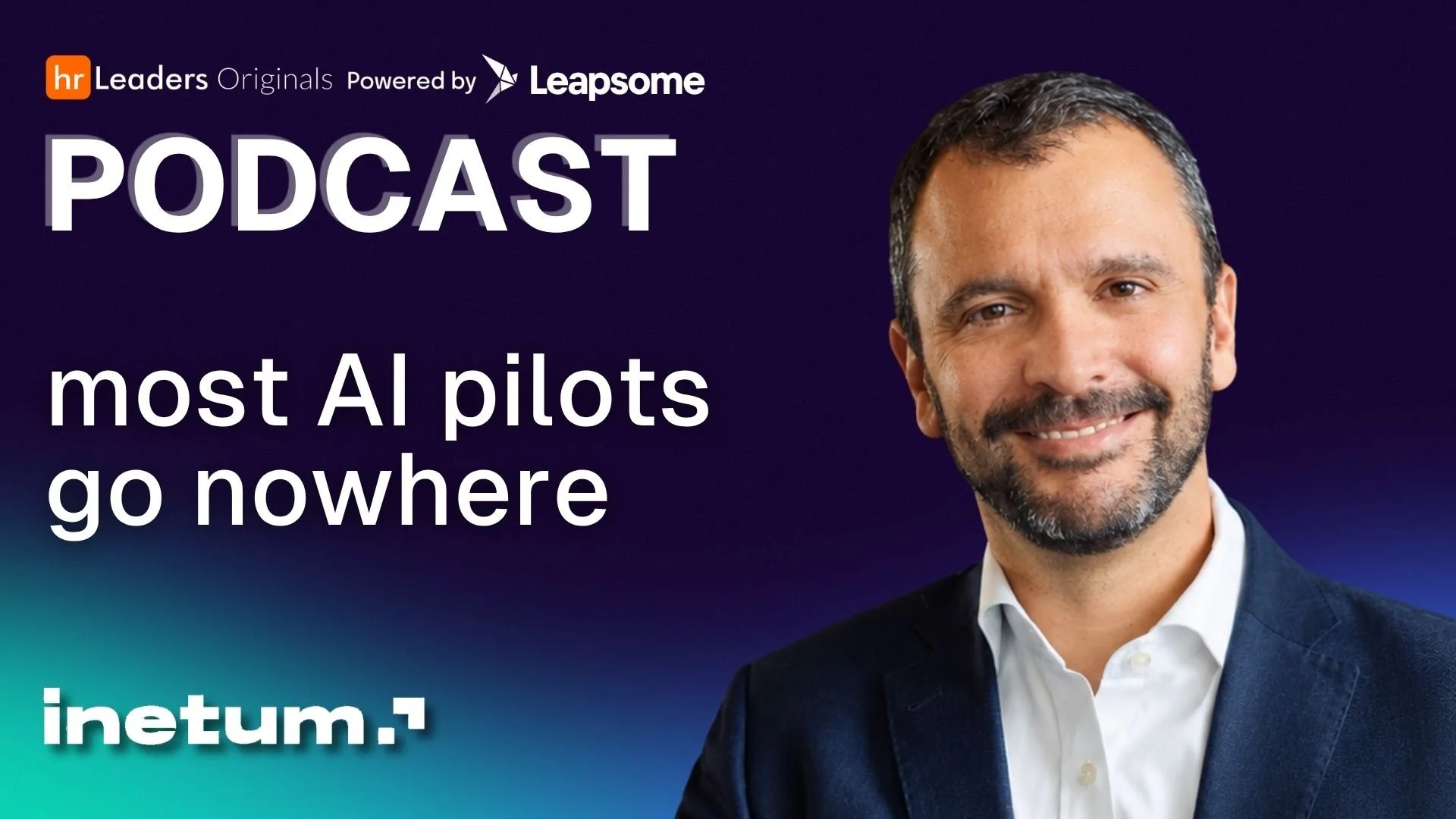


Andrea Petrone, The CEO Whisperer and author of Reinvention at the Top.