
How HR Can Put People at the Center of AI Transformation
In this episode of the HR Leaders Podcast On The Road, we sit down with Julie A. Stone, Chief Learning Officer, Group VP at TTEC, to unpack what it really takes to bring AI into an organization without losing the human connection, trust, and coaching that actually drive performance.
Julie explains why simply training people on AI tools is not enough, and how leaders must help employees understand where, when, and how AI fits into their actual work.
She shares how TTEC is using AI to create more time for human coaching, improve guidance in the flow of work, measure coaching effectiveness, and give people safe spaces to practice, learn, and build confidence.
Most importantly, Julie reveals why the future of AI transformation belongs to leaders who start with real business problems, bring people along transparently, and redesign work in a way that helps people perform better.
🎓 In this episode, Julie discusses:
Why AI training fails when people do not understand how to apply it in real work
How TTEC is using AI to create more time for human coaching, trust, and connection
How safe practice environments can help managers and employees build confidence
Why leaders need to measure behavior change, skill development, and coaching effectiveness
Why AI transformation requires trust, transparency, experimentation, and thoughtful work redesign
What if recognition was not just a moment of appreciation?
What if it was also one of the clearest signals of trust, performance, leadership, and culture inside your organization?
Workhuman helps companies turn recognition into something much bigger than a thank you. It becomes a source of real-time human intelligence, helping leaders understand who is influencing others, who is strengthening culture, and where meaningful work is happening across the business.
Because the future of work will not be built by technology alone. It will be built by organizations that know how to make people feel seen, valued, connected, and motivated to do their best work.
With Workhuman, recognition becomes more than a program. It becomes a way to improve retention, strengthen engagement, uncover leadership potential, and connect culture directly to business outcomes.
00:10
Julie, welcome to the show. Nice to see you again. Thank you. Thrilled to be here. How was your day? Really good so far. Yeah, you were on a panel today. I was on a panel. What was the panel about? Fill us in. It was about bringing AI into companies and how companies are getting along with it. Everything from governance models to how to transparently bring your people along, how to help them and ourselves deal with the fear of what it means. So really all aspects of it. I bet that was a busy room. It was a really full room. It really was. No one has the answers to those questions. And that's kind of the beauty of it. Nobody expects you to have the answers, but it's helpful just to hear how others are tackling the same challenges and what you're learning along the way. What's that one thing maybe that you learned from some of the other panelists?
01:00
Yeah, look, I think the insight is, and it's something that I actually talk about, but it got reinforced through the discussion and being here at WorkHuman, is that it really doesn't matter what the challenge is, what the transformation of the day is. Right now it's AI, but we've had many.
01:20
We've had COVID, we've had going way back Y2K, we've had financial and political instability.
01:28
And what it requires for people in a company is their leaders to apply the same principles that they always have. Those don't change. You wrap your arms around people, you create that climate where they feel valued, they feel like they belong, and they feel like they can grow with you for the long term. And so at times like this, it's even more important for leaders to make sure that they're focusing there. And at WorkHuman, a big piece of that is recognition.
01:59
You know, you can't over-recognize. You just can't. When you recognize somebody, they feel valued. When you recognize somebody, they feel like they belong.
02:09
And when you do those things, they're going to be more willing to put aside their fears and stay with you. Yeah. You've led multiple transformations, but do you think that this one's different with AI? Everyone keeps saying that, right? We all went through the digital transformation before, and now it's AI. Is this different? I think it's different because the scale and the magnitude of the impact is larger than anything that we've seen before.
02:38
If we think about probably the most recent one for people, it was COVID. But we weren't changing our business models. We were just doing our work from different places. That's true. Yeah. You know, but this is fundamentally changing our business model. The way we work.
02:50
The way we work, even the value proposition of companies is changing. We've seen it, yeah. You know, what was valued in the market isn't necessarily going to be. I think companies who are AI native from the jump have a really big leg up. The bigger and the more established and the, you know, gosh, that's hard. You're seeing those bigger companies now have to consolidate their tech stack because it doesn't work.
03:19
As you said, if you're AI native, you can already plug into everything and it works straight away, right? Whereas if you're spraying AI on or adding AI as a bolt-on onto the side, it doesn't work the same way, right? Yeah, it doesn't. And so then you're forced to pick your places, which... which has its merits, right? Like you can't redesign all of your work all at once. So pick your places, pick the highest value and go after those that gives you the space and the time to iterate and learn and figure out how you're going to scale it. So I do think there's advantages there, but you can't beat designing with AI from the ground up. Yeah. So one of the journeys you've been on obviously is your AI-enabled learning and coaching, right? Am I getting this right? It costs 50,000 people in an organization. What does it take to put people at the center of that transformation when things are moving so fast?
04:15
I mean, I think in so so just for a little bit of context, what we have done is we have built into our existing coaching workflows. We have brought AI and technology into that workflow to actually make it easier for people to connect person to person. So we're not removing the person. We're helping coaches identify what are the skills and behaviors that they need to focus their coaching and their coaching action plans on with an individual. How do they use data to see if it actually made a difference? And so that's hard to do, but AI can deliver it really easily. And so we've taken the friction out of a lot of that entire process so that what remains is guidance and insight that the AI can deliver and more time for a human to human connection.
05:09
that is going to make a difference and provide valuable coaching to that person. So in this particular instance, the people were in the center in the beginning and they remain in the center the entire time. I love the word guidance. Yeah. Because it's incredible now. I look at our learning platform, Atlas, the same thing. It provides organizations, individuals guidance. And we couldn't do that before at Scale. No. It's definitely not personalized. No. In a way where it meets people where they're at. For Chris, for me personally. Yeah. While still having the organizational context and linking it back to this is the problem we're trying to solve. Yeah. That's kind of always been our dream. It has been. And we can finally do it. Yeah. You know, it's really incredible. What does this mean for your poaches now?
05:59
I mean, it takes a lot of the mystery out of it. You know, it's like when you think about for decades, what we've trained coaches on is how to engage in a meaningful conversation, how to build a relationship based on trust, how to co-create a coaching action plan. But what's really hard to do is to help them identify, okay, I can do all of that. I can have a great conversation, but
06:27
What do they need to improve?
06:30
What is the actual skill or behavior that they need to change? And then, well, how do I know if that's going to work? For the longest time, it was just like we just had to believe in the inherent goodness of coaching, but it couldn't be measured, except in very isolated instances. Now we can. And not only that, this is really, really powerful.
06:51
If you allow AI to listen in on those coaching conversations and it has access to all of the data, it will identify what the best coaches are doing. And then that becomes a best practice that you disseminate to all those other coaches. So can you imagine what a leg up, you know, you're spending all of this time in one on one coaching and you until recently just really don't know if it's delivering any value.
07:16
Also for your managers and leaders, right? For them to get that instant feedback and guidance on what went well, what didn't, what they can improve is incredible. Yes. And to inform them for the next call. Yeah. Or the next call with, you know, this is how your last call went with Chris. Maybe we should try... you know, listening more and asking more questions to understand, like that kind of like instant feedback in the moment of work, in the moment of need is just amazing. Yeah, you know, you think about the parallel with a sport, you know, a lot of people have played a sport in the past or they've got an athletic pursuit. And when you get that feedback on, you know, how to improve your jump shot, or how to get that high jump, you know, or how to do the long jump, just a little bit more of that technique, then you're motivated to do it because it's so personalized. And so that's been really, really elusive in the workplace, but now we can bring it in.
08:12
Yeah. We also, I think one of the other cool things is now we have the ability to have a safe playground to practice.
08:18
So in the past, right, you have your manager training, your coaching, and they're like, there wasn't anywhere to really fail safely, right? Now you have an AI coach that can mimic being an employee. You can have a conversation. You can get your reps in before you head in. And it can be predictive, right? You've got a meeting with Chris tomorrow about his performance. Do you want to practice having this conversation right now? Yes. that's that's the way that we did it right you would do role plays maybe you'd ask a co-worker maybe you'd be forced to do it in training or you might ask your spouse right that's true i've practiced my sales pitch to my life and it's embarrassing yeah right like it's sort of it's not it doesn't feel natural either It doesn't feel natural.
09:02
Sometimes the other person doesn't really know the context. And so you can practice as many times as you want. AI is never going to tell you, you know, that was stupid. Why did you say that? Or you've done that again. You know, you were supposed to watch out for that.
09:17
It gives you the feedback that you can actually apply. And it tells you what you've done well. Yeah. And going back to your point, I want to emphasize it.
09:24
We can now measure that. Yes. Right. In the past.
09:29
Now we can say that this person didn't just watch a video about coaching or just go to a workshop. We're not measuring clicks and views. We're measuring the fact that you can see that they've practiced and you have the data in the back end to see the skills that they developed. And you can prove that people actually have the capability. That's right. Couldn't do that before. No, and so we've actually translated it into a coaching effectiveness metric. Oh, amazing. Right? And then it just gives you so much insight that then you can action forward.
10:00
What coaches have the best coaching effectiveness? Why? Well, AI will give you insights into that. Where are you struggling? Where are you seeing skills actually develop And then where are those areas where maybe the coaching plans and that guidance isn't developing the skill? So it's just endless, endless insight that you can action forward. Yeah. Something I want to talk about, you've said before that AI does not change performance on its own, right? And people do. So how should HR leaders think differently about trust adoption and behavior change? Especially as AI just keeps scanning at the pace that it is right now. Yeah. There's so many points that I would want to make there. And one of the common pitfalls that I see being made right now is people are viewing the implementation of AI in their company as tools training.
10:58
and how many people got trained, or they might even go one step further and say, show me how many people used an AI agent today.
11:07
But to get true work redesigned, to get true transformation, it's never just training.
11:16
And that training has to be within context of something. So that's great. Maybe I went to, you know, co-pilot prompt training or I went to... It doesn't mean anything. It doesn't because where am I expected to use it and what part of my job? I'm so happy you just said this. Throughout the interviews the last two days, this has constantly come up, this point that people don't know what to then do. It's like, oh, we've given everyone co-pilot licenses. Okay, okay, great. That's great. But now what? Yeah. And there's like this assumption that it's just like, Go play. Go innovate. We need daily guidance, back to our point before. But I already have a day job, so when am I playing and innovating? Have you made space for me to play? Right? And can you help me understand in what context I'm supposed to actually apply this? So what we have is we have people who are using it to...
12:02
help them write emails. They're using it to take their meeting minutes and these things. But I don't know if you saw, there was some research that was published on LinkedIn recently that did not surprise me because what it showed is there's this big promise of AI, right? We're going to have AI do all of the grunt work that nobody wants to do that's repetitive and then we're going to do all this deep work, this deep thinking and innovation and synthesis of ideas. Well, that's not what people are doing. They're spending more time in their email. They're spending more time in their apps. So they're just running faster on the treadmill doing more of what they did. More of the same. And by the way, if your workflows...
12:52
didn't deliver great results, great, now you've just upped the volume on a poor work product. That's where the burnout's coming from. Because we're saying, rather than freeing up that time, or more importantly, not adding AI onto an existing process, let's fundamentally look at redesigning work, or does this even need to exist in some cases?
13:12
before just adding AI on top of existing, you know, to your point, frameworks, because you could just be exacerbating an issue with AI as well. And the companies I am seeing getting it right, though, they're kind of creating like...
13:31
Hacker funds? Hacker funds? Yeah. Is that what you would call it? Yep. Where they're getting the different teams together and specifically giving them a business challenge to solve. Right. Within their context. Right. And their department. And then together, different team members are like, okay, this is what I'm solving for. Then you have a way, like a direction. To spark ideas. Yes. And to get people to go, oh, I do that task as well, right? And then the idea is to centralize a repository of the agents that are being created so that you don't have a whole bunch of people just duplicating what's already been done. You said it exactly, because I had the same image thing. I built a couple of different agents in my business, and the same agent can work across production, marketing, operations. It has maybe a slightly different nuance, but I've built, we don't need to build it again 10 different times to be able to do that. And the tool we use is called Perplexity. and you have an organization, it's not a cell for them by the way, but they have like an organization dashboard in the middle and you can see the organizational agents and each employee can access the different agents.
14:32
That is very cool. And deploy them in different ways. That is very cool. And now they're creating their own and sharing it with the organization. so it's all centralized yeah i can see all of the agents within one central location whereas before that's what you need yeah but before it was a nightmare like the editing team had their own set of agents the marketing team like this and also it cost a fortune it does because that's the other piece that people aren't talking about is uh the token cost credits right and so some you know ai solutions
15:05
Have you heard the stories about AI solutions that are actually costing more than just having the humans do it in the first place? Oh, 100%. When we first set R1 up, I did it in such an inefficient way that it was more expensive. And I kept running out of tokens constantly. And then I was adding up how much the top ups were. And I was like, this doesn't even make sense. Right. At this point. Right. As well. And then I, interestingly enough, I actually told the agent, told Perplexity, optimize every agent that I've built to be cost efficient and use the least tokens possible. And I reduced it by 75%. Wow.
15:44
because of the way it was running the task, it now optimized itself. And now it's a way cost-effective to do that. I was amazed it even knew that. I was like, oh my God, wow. Like I've just told it to spend less. But I have to tell it to do that. Yeah. Yeah. But that's where the curiosity and the problem solving power skills become so much more important now. Because now it's like, what are the right questions to ask? That's right. We've got access to knowledge. Everyone has that democratized. Now it's like, what is the right questions to even be asking? The other thing to just kind of watch out for is if you are redesigning work, well, the systems thinking has never been more important because you may be redesigned or optimized within your portion of a much broader workflow that goes end to end that maybe doesn't align with what's happening upstream and downstream. So you might have, with the AI innovation, broken it.
16:37
And so this is where you have to actually start thinking broader. What is the input coming in? What am I pushing out? Is this going to work? How are we going to collaborate and do this in a way that's going to deliver the end to end value? Yeah. What I've realized is also that this is a full time job.
16:56
Like, I've taken this on as the CEO in our company because I personally am just really excited and I love the technology. But the more I get into it, I'm like, I can't. It takes too much of my time. Yeah. To your point. Hours. Hours. Like, to design and be intentional, to your point, about really understanding the whole ecosystem. I was like, oh, this is... And just to keep yourself up on the evolving tech. Every day it changes. Yes. There's new releases, new, like, I've got an AI assistant now that's connected back to that same workflow that operates in everyone's inboxes, and that's added a whole other level of, like, who should be...
17:31
in what is the rules around when an AI should reply to a client, this is a human, just because you can do it, doesn't mean you should do it. And what are your quality controls around that so you know that it's actually going to respond the way that you want it to.
17:47
I would say we've already got in trouble where a couple of times it's just gone off and triggered an email and I'm like, okay, guys, we have to take a step back.
17:54
figure out like that's even a small business doing that in a large organization. It's massive. And and so you think about and you don't want to you don't want to squash grassroots innovation and thinking, but you've got to have the guardrails in place, you know, the top down where the real value is, where you're looking cross function, cross silo to either generate more growth, to generate you know, better financials, that's going to require more than just a team iterating on their own. Yeah. And when you know, just to go back to your question about, you know, I think how do you bring the people along and how do you how do you build trust? I mean,
18:34
We have a contract with our employees. And I don't mean that in the legalese sense. I mean, we have a contract and an understanding on what I, as an employee, am delivering to my employer. And that has been clearly defined in most cases. This is what my work output. This is what I'm goal to do. This is my work output. This is how I measure. This is how I'm compensated.
18:59
I think a lot of folks are just tossing AI in as another tool, and so you all still do the same stuff. But that is missing the forest for the trees. It's missing the fact that if you're truly going to use it in a way that's going to deliver better value,
19:16
It's going to change the goals. It's going to change the work output. It's going to change what you want them to do, how you're going to measure them. And it's going to require different skills. How people are compensated. And then you have to look at how you're going to compensate them. How do you measure and compensate those? Some in some ways, some intangibles.
19:35
Yeah. And so if you haven't sort of thought about that and started bringing your employees along, you can better believe they're sitting there wondering, you know, what is changing for me? Do my goals change? Are you going to measure me differently?
19:50
Well, gosh, am I just expected to develop all this fluency now, but I still get paid the same thing? Yeah. Like the questions are being asked, maybe not out loud, but they're being asked. Yeah. And we don't have the answers, right? And I think even as we look at tasks and work itself beyond skills. Yeah. there are many people's roles and even their seniority are tied to those specific tasks yeah so now you remove those people feel uncomfortable because they're like no like knowing that when i turn up to work these are the tasks i complete that's right it's the way to do okay that's that's comfortable being there now you remove that yeah without guidance yeah
20:33
What do we do? It's a really uncomfortable place. It is. And I don't think our employees expect us to know the answers because there isn't really a playbook. We're building it as we go, but you've got to be able to transparently have that conversation and share how you're thinking about things, what you're testing, what you're learning. Where are you going wrong? Like we recently deployed an agent and it was absolute disaster. And I shared that literally with the team. Like, look, like this is where an example of we didn't put enough processes and restrictions in place and approvals where the AI has just gone off and emailed a certain amount of people when it shouldn't have. Yeah. Right. Like we have to learn from those and not pretend it's all perfect. And we're going one step at a time. Like I'm actually having my entire team right now document
21:21
all of their work, what they do on a day-to-day basis. And then on Mondays, we share, it's a shared document so everyone can see everyone's work and all the tasks that they do. And even me, I'm like, wow, I didn't even know those tasks even existed. Like, I'm actually learning so much. I'm like, we shouldn't be doing that anymore. We have something else that does that.
21:39
But then we're choosing one or two things like per department to like... To go after. Yeah, yeah, yeah. But like sharing the wins, the failures along the journey with everyone. I think that's awesome. And I would say, you know, to add on to that, the thing that I've done, we've talked about this before, that over the last two years, we've really matured our own AI agents in the instructional design, discovery, design, development process. It's evolved quite a bit since we last talked. And just to realize that as we continue to iterate,
22:13
It's not going to necessarily give us the result that we wanted every time. It's okay. We need to not expect perfection. We try and mitigate as many risks as we can up front, but you just take it in as a new learning and say, all right, so this didn't work or it's had this unintended consequence on this other piece of work that now we have to go solve for. That's not a bad thing. We just now have to go solve for those things. You've amplified that twice as well, because this is also a time where the AI tools that we use, they're also not fully developed. So you've got the human element error, and now you've got the hallucinations or maybe the AI doesn't have enough context. So the output doesn't make sense. right as well so you also give i've even said to the team like it may not always work like you can't always rely on the data you have to look into it like you may be pulling some random information from somewhere you didn't realize right so i don't think we've ever brought in tools into our organizations that are at this stage of their development
23:15
kind of AI, everyone felt like they had to push in, but you still get like some of the answers I get now and again, I'm like, where the hell was it pulled that from? And that's like, our employees are getting this information. So we have to be careful. Yeah, and that has caused the rise of the now infamous term work slop, right? Yes. And I think we've all seen it. Oh, you get an email. We all can identify. Isn't it weird, though, that we can all identify how quickly we're like... I know. It's got to the point now where everyone's like, yeah, that's AI. I know. It's kind of quick. I've...
23:46
When I'm using AI, I actually tell it terms to stay away from because it just sounds too much like AI. Oh, there's certain terms that people recognize that it's AI. I'm like, oh God, at the intersection of please don't use that term. No one talks like that. They don't. Yeah, I've trained my AI now where it's trained on my entire inbox history. Oh, that's cool. For the whole life of my inbox. So it has my way of speaking and my tone and stuff like that to avoid... It definitely learns. It does. Yeah. In many ways, it knows more about us than we do, which is kind of scary. It is kind of scary. I also have to, you know, the sycophantic nature of its feedback, right? You have to, like, temper that.
24:28
It likes me too much. But you've got to challenge it as well, right? You've got to challenge it. Because it just feeds you a mirror of yourself. Yeah. But listen, I could talk to you forever, Julia. Before I let you go, for those that are just starting their journey, what advice would you give to them?
24:42
Yeah. I mean, I mean, look, you said it, you know, the tools are still evolving. There is no playbook.
24:49
So just jump in and start right.
24:52
Be thoughtful about it. I wouldn't say just throw a bunch of tools out and ask your employees to, you know, kind of go hog wild. But start engaging. If you haven't done very much of it yourself, get involved yourself. Start seeing what's possible. Create those opportunities for people to share how they're using it or to actually go solve a business problem.
25:14
And you don't have to start large. You don't have to cover the entire company. Pick your places, test, iterate, learn, and you can scale from there. Amazing. I appreciate you coming on. Always fun. Thank you. Thank you. I can't believe it went by so fast. Thank you.

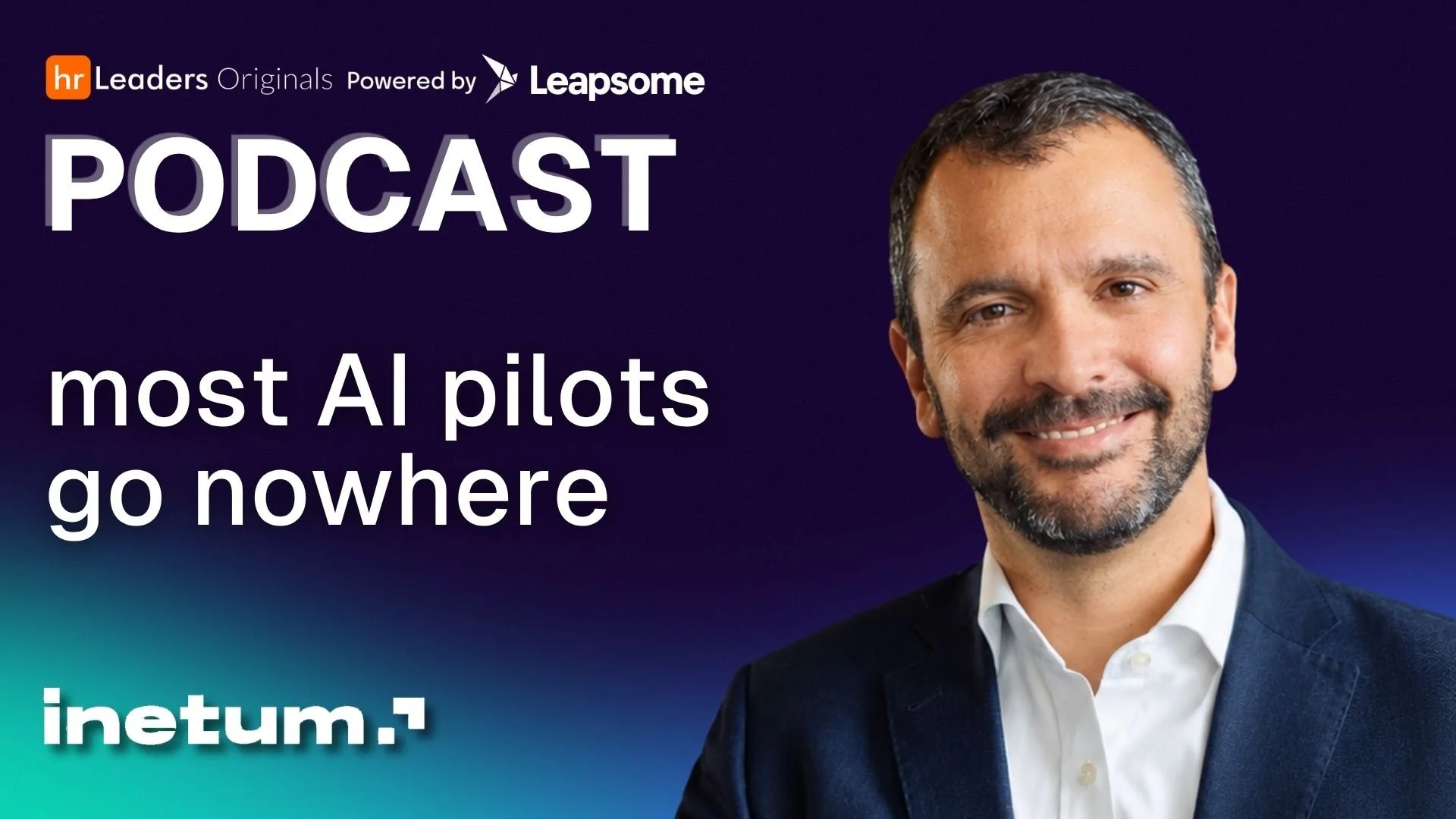


Andrea Petrone, The CEO Whisperer and author of Reinvention at the Top.