
What Nobody Tells Your CEO: 7 Leadership Lessons for HR
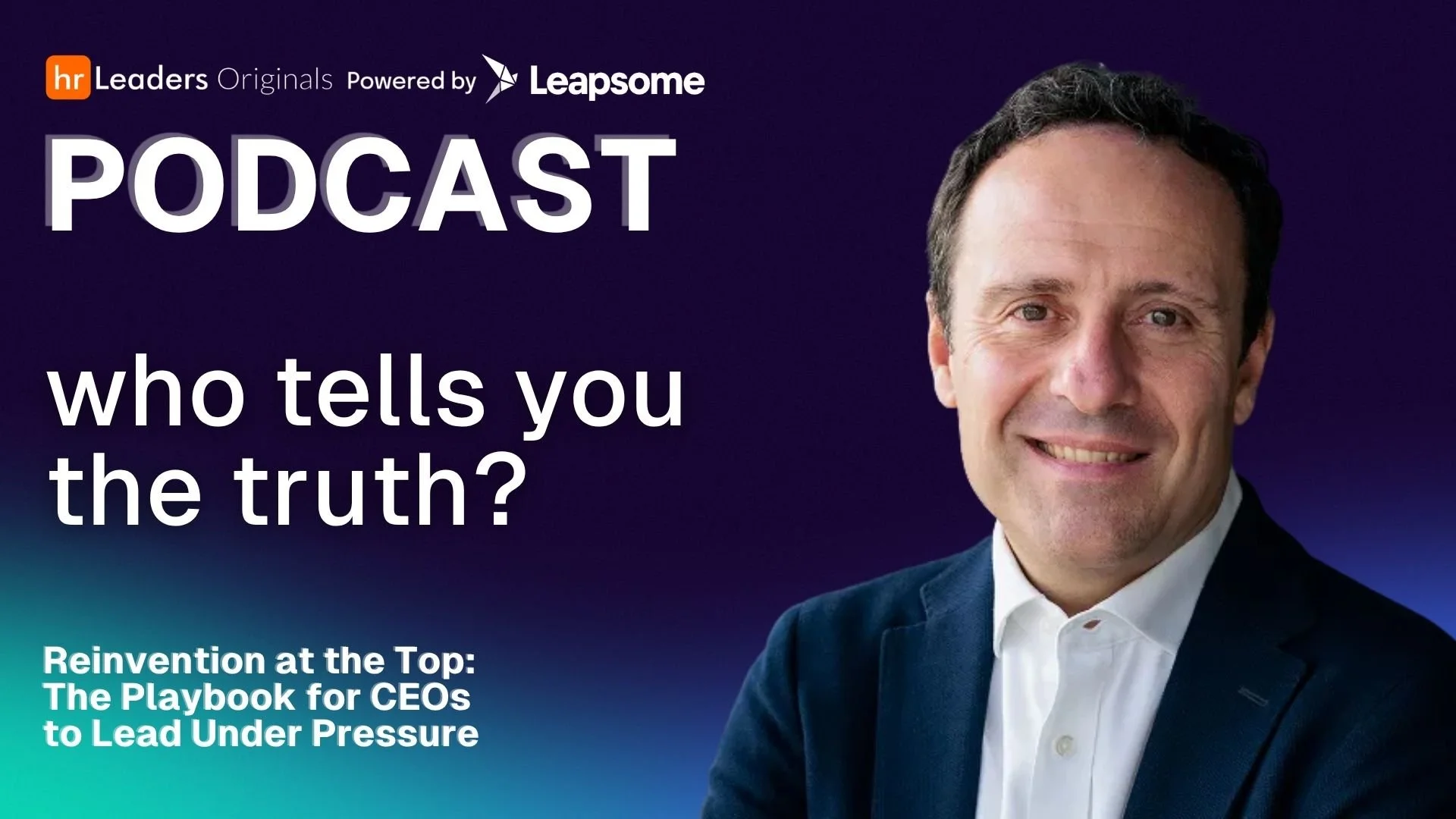
Why do CEOs stop hearing honest feedback? And what happens when the leadership habits that earned someone their promotion start holding them back?
Chris Rainey sits down with Andrea Petrone, The CEO Whisperer and author of Reinvention at the Top: The Playbook for CEOs to Lead Under Pressure, to explore leadership blind spots, executive pressure and the conversations people avoid at the top.
Chris also shares what happened when he gave a former CEO difficult feedback, and how that experience shaped his own approach to leadership.
In this episode, you’ll learn:
• Why successful leaders can become trapped by the approach that got them promoted.
• How pressure pushes leaders back towards familiar habits.
• Why psychological safety depends on what happens after someone speaks up.
• How Andrea connects leadership identity, message and presence.
• What CHROs should demonstrate if they want to become CEOs.

81% of the fastest-growing companies already require AI skills in People roles. Will your HR team lead the shift or be left catching up?
Leapsome’s six-month Agentic HR Accelerator gives your team a practical path from AI ambition to implementation.
With expert guidance, a dedicated point of contact and a cohort of forward-thinking HR leaders, your team can launch three practical AI use cases, migrate its HRIS in as little as two weeks and earn Agentic HR certification.
Sign by 31 December and the €24K Accelerator plus Leapsome’s Agentic HRIS Foundation are included at no extra cost when you choose a Talent module.
[01:00:00:08 - 01:00:02:15]
All right, you ready? I am.
[01:00:02:15 - 01:00:04:08]
Andrea, welcome to the show, my friend. How are you doing?
[01:00:04:08 - 01:00:05:24]
Hi, Chris. Thank
[01:00:05:24 - 01:00:20:02]
you so much for... Are you real or are you AI? We were just talking about that right before we hit record. How crazy is now that we don't know the difference. Wherever it's going to be. AI content, real content as well. But here we are in person.
[01:00:20:02 - 01:00:24:10]
It's fantastic. Thank you so much for inviting me. It's an amazing experience. So
[01:00:24:10 - 01:00:35:20]
let's be real. Yeah, let's be real for once. We connected on LinkedIn and now we're here in person. Before we jump in, tell our audience a little bit about you personally and the journey to where we are now. Yeah,
[01:00:35:20 - 01:01:24:00]
so what I probably have done in most of my career is being very close to senior leaders, really, from COOs to C3 leaders. So that's how it started for me. I'm an executive coach and advisor to COOs. I'm a speaker, an author and we'll talk about this. But that is just a result of 20 plus years. I've been spending internationally an amazing corporate experience first. And then I became a COO 35 years old. And then to me was the beginning of an experience of leading at the top. And then I learned a lot from this experience. Then from there I said, well, I want to stay closer to COOs. And after that has been, you know, all my work has been rotated around them. And that's what probably come back to it. Yeah,
[01:01:24:00 - 01:01:29:16]
it's interesting to know that a lot of coaches that I chat to, though, have never actually been in the role.
[01:01:30:21 - 01:01:47:00]
Yes. It just framed my unique value proposition. As I always say, the UVP is true. I mean, I think what I... There is one thing that, by the way, seriously talking Chris, is being into that role specifically as a COO level,
[01:01:48:20 - 01:03:07:21]
it's an experience on its own. Because you started to learn not only the great stuff of leading, all the benefits, the perks, the money, but you started to really appreciate it. What is the weight of the responsibility at the top? What does it mean taking the decision? What does it mean having in front of you options, second guessing, not sure what you're doing? You know, most people, one of the things I say, I write a lot on LinkedIn. There is this idea that COOs, you know, everything they do, they all the answer, it's really stupidity. COOs are like us. They are human beings with a lot of self-confident issues, and they struggle with all the things that we are struggling with. At least the good COOs that I normally talk to, why coach do. So that clearly has been my angle. Understanding more the human side of it doesn't mean being a COO because I was there. And I think that helped a lot in the conversation I had with my pod, the work-class leader show, writing a book, having the inside experience, what does it mean leading at the top. It's quite a different angle because a lot of talking about COOs is about strategy, tactical, communication, influence. But very few people know and understand what does it mean inside out, what does it mean really being a COO. So it's more, if you like, introspective about the role. Yeah.
[01:03:07:21 - 01:03:47:09]
I think that was one of the biggest, I'll say, shocks, but the surprises for me when I started doing the show is when I would speak to CEOs, CH Rose, I had this preconceived perception of who they are. And then I'll be having conversations both on the show and off-air. And I'm like, "Oh, they're just like me." Yes, they are. They all have their own challenges, their own stresses, just because you're the CEO of a huge, gumbly... I was like, "Oh." I was like, "This is really interesting." Because to your point, who do they go to when they have a challenge? It's pretty lonely, right? To do that. It's lonely,
[01:03:47:09 - 01:04:55:13]
Chris. And look, let's talk about the good side of CEOs. Because there are also some terrible CEOs there. And we read a lot about them in the media, et cetera. But let's not go there. That's not my experience. With the people I coach or I talk to, I can tell you, these are amazing people. They're trying to do their best to make a difference in the society. And they work like crazy. And they go back home with a lot of questions and answer comments or observations they have. And I think you raised a very good point. It's lonely being at the top. But it's not in the traditional way how people think about loneliness. Because they have a lot of people around them, which is really an interesting paradox. Because they are surrounded by a lot of people. It's not that they're lonely in that sense. In that sense. So it's not really the loneliest of that. It's also the most important thing. And I think that they're trying to help them with their inability to say openly and transparently what they're really dealing with. And to your point, sometimes they go to the coach. Sometimes they go to the peers. Sometimes they don't talk at all. Or, which is even worse, they bring it at home. And I have a lot of coaching experience of CEOs say,
[01:05:06:03 - 01:06:00:04]
"I can't do this." And I think that's that frustration anywhere else. Absolutely. Taking that home. Absolutely. I've said this quite a few times on the show. But I remember when I was a coach for a while, he said to me, "No amount of success makes up for failure in the home." And I think that really hit me. Because I remember I was making a lot of excuses for my bad behaviour and some of the decisions and actions that I was taking. And I was like, feeling sorry for myself. And he said that to me. Because I was making excuses. "Oh, it's because I'm busy. I'm stressed." And he was like, "No, no, no." It's like, "Chris, no amount of success or the work that you're doing makes up for that behaviour and for failure in your home and your marriage." And I was like, it really hit me. And I needed someone to say that to me at the time. Because I was like, "This isn't going to get worse if I don't really address that." I didn't know who to talk to or go to about that.
[01:06:00:04 - 01:06:17:01]
Which is fair. I mean, in the community of CEOs that I have with a lot of CEOs, and we have very frank, open conversation only with each other. I can tell you, most of the things that came up, they are not about strategy or the business. Because they had the answer, at least they are experienced enough to deal with
[01:06:17:01 - 01:06:18:05]
this. They have how
[01:06:18:05 - 01:06:24:22]
they need to deal with the big decision that they have right now. And just the fact of speaking and talking about it for them is a relief.
[01:06:26:11 - 01:07:11:16]
The other thing I would say, which I think is important, and maybe is connected to why I have written this book about CEOs and the pressure, is really about the pressure, Chris. Because I think we are living in a moment when the pressure has never been so high. And the expectations clearly follow the pressure. So the more pressure exists, the more expectations people have on the CEOs, but also that you have for yourself an expectation to deliver. I have expectations myself, you have expectations on yourself. So that increases the level of pressure, which is always internal. And equally, we have less time as leaders to deliver on this reputation. So if you build everything on that, and AI is on top of all this, right? It is really challenging at the moment and leading at the top. I
[01:07:11:16 - 01:07:33:11]
feel like we say this every year. And by the way, just for the book, right? So it is reinvention at the top is the name of the book. But as you just said, the playbook for CEOs to lead on the pressure. I feel like every few years we say, now is more challenging than ever. Right? Like we see it constantly change. But do you feel like this time is a little bit different in this era of AI, for example? It is different
[01:07:33:11 - 01:09:02:19]
from three specific reasons, in my opinion. One is clearly AI. So AI is distracting, not only business model. It is distracting, which I think is another angle that hasn't been really spoken about. It is shifting how people lead. From the traditional operator, from the traditional, I know things, from delegation, the experience, the expertise, to AI. What does that lead me? For me, what I need to do as a leader now that we can outsource or delegate the power, the intelligence, the research, the expertise. So that requires what we call an identity shift. Because you need to show up in a different way as a leader on AI. AI is definitely one thing. And then clearly the increased level of uncertainty due to wars, due to price, inflation, has an incredible level of pressure on people. You might say we had wars in the past, it's true. By the moment people started to feel like, I don't know, where in the next three years I can really turn things around. Because I feel like I'm less in control than where I was maybe five years ago. And I would say it's not a surprise. There is an interesting research, I don't know whether you came through to the increase. It was in the US last year. And they found that among 1000 CEOs of meat-sized companies, as far as I remember correctly, more than 60% of them, they left their job on purpose.
[01:09:02:19 - 01:09:04:07]
In what period? In
[01:09:04:07 - 01:09:11:13]
2025, just in a matter of 12 months. They left because they couldn't cope anymore with the stress and the pressure.
[01:09:12:13 - 01:09:41:06]
We saw the exact same thing in the CHRO community. I'm sure. Literally. I remember going through that period, being like, I've never seen so many CHROs leave. And quite frankly, I can't blame them. Was a pandemic happening and geopolitical? There's just so much going on, right? And I saw so many, every time I refreshed LinkedIn, there was a new CHRO announcing their retirement. And I was like, whoa. So I'm not surprised. You're
[01:09:41:06 - 01:09:45:00]
not surprised. The uncertainty is building up for everybody. Yeah.
[01:09:45:00 - 01:09:54:06]
I noticed when you were saying that about leaders, and this may sound like a strange question, but do you think you can, can you be a successful CEO and still be a poor leader?
[01:09:56:01 - 01:09:57:06]
No, I don't think it's possible.
[01:09:58:10 - 01:10:04:12]
I don't think it's possible. Maybe it was possible 20 years ago. You know what I mean by that, though? I know what you mean.
[01:10:04:12 - 01:10:05:23]
And let's see whether my
[01:10:05:23 - 01:11:08:23]
answer addresses that question. You have something else in your mind. But to me, we used to think about leadership, like especially at the top is control, commanding, right? I think that's what you're pointing to. It's directing people. It's I need to be strong. I need to be the hero. I need to be the real operator. That model, hopefully, we will not see that anymore in the future. But right now, I think has already shifted. I can see the people I talk to every single day. They are people, they are humble, they're starting to be much more vulnerable. They're open, transparent. They're made of failures. They are much more human, which I think is what everybody is expecting. So people in your audience, they will probably love to hear that because you're working and you're talking with people leaders, really. So hearing that the CEOs are shifting might not be the experience for everybody. Yeah. But the experience I have, leadership is shifting. And I don't think, I don't believe that you can be the 90s generation CEOs that have that. That's what I was
[01:11:08:23 - 01:11:24:01]
thinking about that, right? Because in my previous companies, they've been successful. I've worked at not my own companies, but doesn't mean they had a good CEO, a good leader. But the company on paper, Profitball, doing very well. That's what I was asking, right? But what's the cost of it, right?
[01:11:24:01 - 01:11:28:15]
What's the cost in that model to organizations, to people?
[01:11:28:15 - 01:11:54:17]
I can tell you right now, there was this constant fear, like when the CEO would walk across the floor in the office, they'd be like, "I bet." I remember vividly, "Oh, someone's coming down, right? That all seems crazy now. Looking back, that was just normal. I didn't know anything different." But now it's like, "Oh, that's terrible." That was the feeling. And I got there.
[01:11:54:17 - 01:12:05:01]
In my early experience, I had the CEOs. And by the way, that's interesting, because one of the reasons why I wrote this book was because that sort of identity crisis happened to me when I was at the top.
[01:12:05:01 - 01:12:09:23]
You thought that someone didn't even think that that's what I need to be.
[01:12:09:23 - 01:13:17:06]
Yeah, it's a reflection of what people believe on other's expectations. For me, for example, I grew up, from a professional standpoint, in organizations where the only way to lead, the bosses that have, the managers, the directors, the CEOs that I experienced the first five years in corporate, were exactly like that, Chris. They were the kind of leaders that you just pictured. So I grew into the role understanding or knowing as a fixed thing, as a given, that that was a way to be a CEO. So I started very similar in that project, because I thought that was the right thing to do. And I quickly realized I was so wrong and so different than, first of all, who I am. So I needed to have some sort of a mask in place. So I was that sort of leader in front of people. But then my humanity, my real identity was different. It's draining. It's draining as you feel like something's not connected. And that caused me as well in terms of performance at some point. So that was a big, high moment for me. And so what does it mean leading at the top?
[01:13:17:06 - 01:13:27:06]
When you kind of meet a client, a CEO client for the first time, what's kind of the most common thing that comes up for them as a challenge? Oh,
[01:13:27:06 - 01:14:41:17]
as a challenge. Well, there are, first of all, there is a different layer. So the superficial layers is, well, it's my team, my executive team, you know, is the culture here. How can drive execution, which I think is fair. I think these are the three major challenges that people deal in. By the way, the three are board, relation with the board, having the board really assisting you in supporting you, being really taking the most out of the board, number one, to have an executive team that is either not aligned or they're not executing on your vision. So they are over so much, so many times concerned and frustrated about that. And the element is how can we drive, how can they drive execution across the entire organization? These are the most strategic challenges they're dealing with. Then when you go a little bit deeper, so that is less said, if you like, in a traditional conversation meeting, you started to realize is that their challenges is primarily for themselves, is how they are, are they showing up in the system? How is the message landing? Is the message landing? Is this something I'm doing wrong? Now, that's interesting part is CEOs, by design, unfortunately, they don't have a lot of feedback.
[01:14:43:16 - 01:15:45:05]
And I know, you know, in your audience, a lot of, you know, human resource leaders, they are really trying, they're already trying to do it perfectly, you know, to embed a feedback system in their organization, for example. But with a CEO, that doesn't really work. Because when it comes to the CEOs, unfortunately, most of the CEOs, they don't either get the feedback at all, or the feedback they got is biased. So people have an agenda when they share a feedback to the CEO. So CEOs are a little bit reluctant to accept the feedback because they don't know where it's coming from. For example, if you have a feedback from a chief financial officer about you, you might think, well, maybe there is a different reason, there is an agenda that is going on. So how would you read transparently a feedback? So that's why I think most of CEOs, and I think, by the way, all the C-suite leaders, they're trying to get closer to other peers so they can have a much more unbiased feedback or from the coach, because the coach has no any stake in the game to some extent.
[01:15:45:05 - 01:15:48:14]
Which is why it works in many cases. How do we change that?
[01:15:50:05 - 01:15:51:18]
The relationship with the feedback.
[01:15:53:10 - 01:16:03:05]
Well, I think it comes down to one single thing. First of all, are you committed and then able to drive?
[01:16:04:10 - 01:16:07:13]
Well, we both know Amy Amelson. I was just thinking,
[01:16:07:13 - 01:16:08:20]
exactly the same.
[01:16:10:07 - 01:16:54:05]
Amy, by the way, Amy frames me in a perfect way, because when it comes to psychological safety, most people think about being able to share whatever is in your mind, like, you know, vented out. That's not what psychological safety is about. You know, in our context, it is be able to share the challenge that you're dealing with, the ability to share what you really think about something as a solution, as a potential idea. So going back to the point, I think the CEOs, they probably will, they work better, are those they are able to drive a sense of openness, transparency, and really drive feedback to them. But without fear of consequences, which I mean, to the model of CEOs that you were featuring before, that will never
[01:16:54:05 - 01:17:05:06]
work. No, I actually got before I started this, I've never actually mentioned this, but before I started this company, I got fired for giving my CEO feedback.
[01:17:05:06 - 01:17:10:24]
Oh, yeah. Okay. That is interesting. And there's no surprise.
[01:17:10:24 - 01:17:52:13]
Because the entire company was super frustrated. I wasn't even in the main leadership team, I was a manager. Yeah. But everyone was talking about it. It was like every meeting, every lunch, every, just this constant frustration. And I was like, oh my God, like, I just need to, like, and I felt like a responsible, responsible, I felt like it was, you know, like, it was like, I thought, I thought going into that meeting, it was like a gift. Like, hey, look, this is what everyone's saying. You're not going to like this. But I think it's important because, you know, people are super stressed as like, and it's been going on for months. And literally the week after I was put on a performance plan,
[01:17:53:24 - 01:19:26:06]
literally out of nowhere, and it was a target, it was unachievable. It was like, you know, it was just, I knew immediately I was being performance managed out of the business and it's just ridiculous. And, yeah. Sorry to hear that. You're landing in a way better place now. Yeah. Yeah. I know. The crazy thing is I saw that person about probably about seven years later and he apologized to me. Really? Yeah. He was like, I really, he was like, it took a little bit longer, but yeah. And the thing that the decision he had to make was, it was difficult because it meant removing some people in the business. And some of those were his closest friends. And that was kind of, he was like, and then he realized at the time, it was like, I wasn't, there was no benefit for me to go in there apart from helping the business. Like I knew it was already going to be, yeah. So he was nice to say, like, you know, I just, you know, he was a young CEO. It was his first ever company and his first ever CEO role as well. And he, and I think he was playing a role. Yeah. That's exactly right. And he was so obviously he was playing a role. Like, you know, it's like, I knew him before this, he became a CEO and that wasn't him. But you kind of had to portray like this thing. And I was like, anyways, it's fine. But I learned a lot from that about when I became a CEO of this company, I was like, oh, okay. Like, let me, let me learn from the behaviors that I've seen and I'm not perfect. I'm still trying, but no one is. But I was like, I, I, I, one thing I did know is how I don't want to be led. Yes. So let me try not to do that in my own leadership. Does that make sense? It
[01:19:26:06 - 01:20:12:04]
does. And I think these bad experiences to me, at least they're helping you to redefine what's your identities. What kind of a leader you first of all, you don't want to be and then started creating what could be that entity is that's really is the most of the work I do with CEOs is going to a point where I call it inflection point where you started to recognize for some reason. And that's not necessarily an easy thing to do, but study recognize that the version of yourself that you had before, it helped you to get where you are right now. But that's not anymore in service or what you're dealing with either for the context that you're dealing with other for your, you know, your maturity, how you're evolving as a leader. So that is a moment of truth. And some CEOs, they understand that some other CEOs, they keep using the same
[01:20:12:04 - 01:20:22:07]
playbook. Break that down a little bit. So you said that what gets you to becoming a CEO maybe can then also become something that can hold you back. What do you mean by that? Yeah,
[01:20:22:07 - 01:21:09:12]
so most of CEOs, they get to the top for a very simple and valid reason because they're good at because they deliver performance, they deliver results. Now, there is a still a very small percentage CEOs that got there and maybe they did not deserve it. But let's not go there. Okay. Let's say 95% or whatever of leaders they deserve to be in that seat. Here's the challenge, though. Most of them, they are functional leaders, right? Because they come from, you know, could be in a hot, actually, I hope to see more. And she, you know, chief human resource officer become CEOs. But most coming from there from chief operating officer, chief commercial officer. So they've been great functional leaders. So they have their own identity. They're what I call us in the book, I call the achieved identity.
[01:21:10:12 - 01:21:52:06]
And that is a playbook is a playbook. They keep using the same plug every single time they're operating. It worked for them. So why changing? Yeah, what they don't recognize, by the way, it doesn't always happen. But most of the time, that playbook is not anymore in service of the role that you have. And very few people struggle to understand that. That's why you see and I've seen so many chief commercial officer coming becoming CEO and keep looking at the commercial numbers, forgetting about the people side of the business, forget about the financial numbers. They don't get it. But not because they don't want to because they have a disorder orientation inclination to see only what worked for them before. And
[01:21:52:06 - 01:21:57:00]
it makes sense, like they're leaning into what got them there. That's their comfort zone. So there is an
[01:21:57:00 - 01:22:35:01]
element of what they focus on comfort zone. But also there is an element of their leadership identity, what I call into the book. And the leadership identity, Chris, is not about your core values, your core values are underpinning whatever identity you're creating your leadership identity. You decide to be in that moment that is needed in a specific context that you're dealing with. And the context, by the way, is not only a new role. The context shifted all the time in the moment of pressure. Could be you need to recreate your executive team. You need to drive a major transformation project. You have a new shareholders, new board you need to deal with. So
[01:22:35:01 - 01:22:35:24]
if you
[01:22:35:24 - 01:23:24:23]
think about there are so many inflection points in the journey of SEO. And this inflection point to me, there are incredible big opportunities for them to reconsider who they are, to lead better, more powerful in that moment. So essentially it's taking the most out of the inflection point versus then reacting and being managed by the inflection point. And that's when you started to see CEOs, they are more operational. They're starting to be more like the firefighter. Yeah. It's normally because they tend to use the playbook. It's safer and it's easier to do firefighting. You know what I mean? Because to some extent. Of course, it's comfortable to them. Yeah. Maybe they don't want to, but it's comfortable while stepping back a second and say, what kind of leader I want to be. Who I am right now. You think
[01:23:24:23 - 01:23:40:16]
that's because though there's this sort of like immediate pressure to deliver. It's definitely a pressure to deliver. I mean, it's great to say, let me step back and there's this sort of expectation that, you know, you immediately need to come in, deliver, making impact.
[01:23:40:16 - 01:25:28:15]
You know, that's exactly the point and the point. And that's why is all this book about it. And that's why the identity crisis, I mentioned the book. And then if you want to go there, you know, the architecture, the framework of, you know, the methodology to use to resolve that. But all starts with the conditions. And the conditions are increased pressure, increased expectations and lower time to deliver. That is building up on people in terms of if I have less time. So if the pressure is really hitting me and I have less time, what am I going to do? The default will be I'm going to just do what I know works because yes, because I'm less friction. Yeah. And that is default. Now, a different type of leaders actually start honestly say, no, the default is not going to break me at a different level in this specific context, something else I need to create it. I'll tell you an example. I was speaking with the with the CFO and actually was an HR and was talking about CFO. She was into coaching and interesting because she said exactly this point. But through the lens of CFO, she said, look, this CFO is an accountant. He is an incredible is a fantastic guy on numbers, on chunking numbers. Right. He's a financial guy. But as a as a way of his own identity, he created this thing is he's not giving feedback to anybody. He's not pleasing and acknowledging anybody's work is just, you know, head down and do the work. That's how people experience the CFO now. And she was struggling because she said, well, you know, the CFO tried two different coaches and nothing worked to change these behaviors. And I said, well, I guess I know the reason because the identity didn't shift. Yeah, because that's his
[01:25:28:15 - 01:25:30:11]
perceived. Yeah. This is
[01:25:30:11 - 01:25:32:19]
war is perception about the leader and
[01:25:32:19 - 01:25:36:12]
and he got him to where he is. Exactly right. So why do
[01:25:36:12 - 01:26:28:22]
I need to change it? Now, there is another point, Chris. The point is how many leaders are self aware? Are so because that is to me is the bigger question, because if you are not aware about that, you are you're leading blindly. You know, you're trying to do what you think is right in that moment. So, you know, circling back to the earlier conversation we had about feedback without feedback without an unbiased feedback without somebody that can really see who you are and challenging. That's going to be difficult for people unless unless there is a burning platform. But sometimes as happened to me when I see there was a burning platform because I left a job by. He took me at least four, six months. I could have intervened into that six months earlier if I knew there was an identity crisis I was dealing with. But I did not recognize it for myself.
[01:26:28:22 - 01:26:33:00]
So what does that framework that you provide people to help make this more tangible?
[01:26:33:00 - 01:26:34:15]
But so
[01:26:34:15 - 01:27:50:01]
so the first element on identity is very is an introspective work that we do with CEOs and CEOs and other CCS leaders because, you know, these methodologies, honestly, is in my opinion, my experience. It was for any leader that has a huge responsibility. It doesn't really matter. But I would say that the starting point is starting, first of all, to appreciating what is this achieved identity that you have. It's a moment of reflection. Say, OK, what I know about leadership, what is my approach to leadership, what work in the past. So we need to look at a little bit at the past. It's important that you do this part of work once you started to recognize what is your achieved identity. And you started to see how they work for you. But also what might potentially cost you right now once they started to understand that now they have a choice in front of them. OK, shall I keep the identity in place because it's going to serve in the future or as most of the time they started to say, oh, maybe it's a moment for me to do something different, to be somebody different, not better, different. So once they started to recognize that, then we started to co-create it together. What could be the new identity? And that's most of the time is the most profound work that I do with CEOs because other coaches can do business projects. But how do you
[01:27:50:01 - 01:27:54:14]
projects. But how do you know what identity you're trying to create that is going to be
[01:27:54:14 - 01:27:55:19]
successful? Yeah,
[01:27:55:19 - 01:28:51:03]
well, there are two important things. So there are some data points they need to read it. So one is, first of all, what people are saying about them. It's not necessarily direct feedback. It depends. But also there are some signals. There are a lot of signals in the workplace, but they don't read them. Not always. A lot of people, Chris asked me the same question, how can leaders know about this? How do they know that there is something that is not working at the identity level? And the only thing I say is, first of all, you don't have a lot of feedback. That's not helpful. Second, the results, they're coming always later. It's kind of a lagging indicator. You don't see immediately the connection with your identity and your performance. It's so impossible. It's difficult. I use it maybe later after six months, five months, you started to see the numbers. They don't work anymore. Maybe is there a function of you? Maybe. Or maybe there is a function of different
[01:28:51:03 - 01:28:59:07]
other folks. So you're saying then like, are your identity drives specific behaviors which then drive?
[01:28:59:07 - 01:29:43:23]
Absolutely. That is the through line they introduced in the book. But if we stay a second today, and we'll come back to it. If we stay a second on an identity, so if you don't have that feedback and you don't see the correlation between the results, the performance, the company, and your own identity, who you are, then you need to look at these signals. And there are signals. So how people are showing up in front of you? Are people really saying what do you think? Do they give you feedback? Are people clear about your expectation? Are people clear on your priorities? Are people executing? What people say, what people don't say, how is the body language? There are so many indicators that if you become good at reading them, you have a clue that something's going on with you. Is
[01:29:43:23 - 01:29:50:03]
that like a muscle you can develop? So you can definitely be more self-aware like during a meeting, during a conversation?
[01:29:50:03 - 01:30:23:21]
Definitely develop. But the orientation needs to change. The orientation between is all about me. I'm the hero here. I'm the status ego, kind of a guy, ego driven guy. Or I'm starting to listen more, intervening less, listening, reading the room. How many? Look, I, as coach, and faceted a lot of rooms. And I can tell you, I developed my own ability to read a room. I can do it. They can do it. The question is, what is the orientation? Because I have an orientation about reading a room, about people.
[01:30:24:24 - 01:30:33:00]
We'll say always have an orientation about reading people. I will tell you that's right. That's challenging for them. Not because there are bad people, just because
[01:30:33:00 - 01:30:36:24]
that's not the orientation. What do you think is the most sort of
[01:30:36:24 - 01:30:40:17]
dangerous lie that leaders keep telling themselves?
[01:30:42:14 - 01:31:01:00]
They know the answer. They're good enough. They know what they're doing. Which is a lie. They know it's a lie, but they keep using it. The other lie is people get me, they understand what I'm saying, and they know exactly what they're doing. They're lying to themselves, because that's not how it
[01:31:01:00 - 01:31:01:05]
works.
[01:31:02:14 - 01:31:04:13]
But telling me to the other
[01:31:04:13 - 01:31:45:16]
point, Chris, is once you do the identity work, so once you're clear in terms of what the identity is, now I know exactly who I want to be, who I need to be in this specific context. I may be, you know, going back to the CFO example, say, well, now, based on where we are going, I want to become an empathetic leader. I want to be an empathetic leader. I want to show up differently in the system because I care about something. The next step is the pillar number two. If one is identity, pillar number two in the methodology, the book or through line, pillar number two is what I call the message, because the message is not what we say in a traditional communication messages in front of an audience like the town
[01:31:45:16 - 01:31:46:17]
hall or on
[01:31:46:17 - 01:32:22:00]
social media. What I'm saying the message is why you make unmistakable for people in terms of what you stand for. Give me an example. Well, there is the world CEO of Alcoa in the 90s. Actually in the 80s, Alcoa was a big manufacturing company, aluminum company. And his first day, he was in front of a shareholders and he said in front of shareholders, I'm going to stand for safety. I'm going to stand for making Alcoa the safest organization in the entire US. In that moment, Alcoa was one of the worst from a safety performance
[01:32:22:00 - 01:32:23:08]
record.
[01:32:23:08 - 01:32:37:00]
After the meeting, a lot of people in the space analyst, they called their own client and said, sell the shares. This guy is not talking about revenue. He's not talking about profitability. What's the point? He's going to fail all of that.
[01:32:38:21 - 01:32:39:05]
Six
[01:32:39:05 - 01:33:09:21]
years later, he tripled the revenues for that specific message. His message was always the same message that he used multiple times is I stand for becoming the safest organization. Everything they said, it was always consistent with that. He making a mistake for people. So people were so clear what were the priorities for the organization. Number two messages. And in the book, I have a lot of examples of clients of mine, but also CEOs that we all know how the message either work or didn't work.
[01:33:11:03 - 01:33:29:02]
And the reality is most of the time, these messages in the organization, they are not that clear, Chris. They're fluffy. They are inconsistent. They say one thing that they after they say something different. They're not clear on expectation. People get lost in that. You get, you know, this is one of the senior that you have. I'm sure it must be hard as
[01:33:29:02 - 01:33:36:23]
well for organizations and leaders to be consistent over an extended period of time as you go through like different shifts and transformation. It
[01:33:36:23 - 01:34:05:19]
is as long as your identity is not clear because once your identity is clear, because you know you want to be the message is just a natural consequence of that. That's why if you have a major transformation, you can shift the identity. That's the power of of human. You can shift their identity in that time because you're not making new trade off. You're on core value. That doesn't that's no implication of core values. You can shift because now you want to transform in a company. You can build a new identity message for that.
[01:34:06:21 - 01:34:22:13]
So that is the pillar number two message. Number three is the presence is how you bring this together. Once you have that entity and the message, the presence essentially is how people experience you. By the spirit is true. Not much through the lens of behaviors is through the lens of standards.
[01:34:22:13 - 01:34:27:15]
Okay, so that's interesting because most people immediately when you said that I was thinking behaviors. Yeah,
[01:34:27:15 - 01:34:52:00]
influence, charisma, the way it's connected to it. But I think it's a one level deeper. It's what I call in my view, the standards, the standards of you. The standards of you meaning is once you're clear on who you are and what you stand for your message, your standards should be always the same because that is what you are teaching to the entire organization. These are my standards. An
[01:34:52:00 - 01:34:54:06]
example would be the safety one you just said the safety
[01:34:54:06 - 01:35:00:06]
one and he did something. So he stand us was every single time there is an incident. You're going to call me. There
[01:35:00:06 - 01:35:04:13]
was a CEO of how really, really stood on it. He created
[01:35:04:13 - 01:35:13:06]
an entire behavior procedure process. There was so much consistent with the message. And we have, I don't know, so many examples.
[01:35:13:06 - 01:35:24:23]
So like what I mean, how does how does like you hear that great fantastic? How does that then translate to, you know, three times growth?
[01:35:25:23 - 01:35:36:01]
Because, you know, if you're a shareholder, you have safety. Great. How's that going to make us more money, sell more metal, whatever it was? Like, how does it how does that translate operationally?
[01:35:36:01 - 01:37:20:10]
Well, first of all, when people are because at the end of the day, we deliver results is people. So when people are so clear in what is really important to you, it normally comes down to have only one or two priorities and people are operating on those priorities. They normally drive performance on his own. OK, so that level of clarity, the level of clarity on vision, clarity on the message, clarity on what is important right now in people operating. So that is half half of the story. I have the level of clarity. And I can tell you, Chris, most organizations are failing because they don't have that in place priorities keep changing. Yeah. Right. I was saying earlier, it's very difficult to be exactly. So how can you perform an organization with you? And I'm sure you're you know, about your own business, you have the level of clarity, what's important to you and we say it's hard. It's hard. But then it comes to how to operationalize this. How can you make it operational? Right. And that is when the present element becomes important. If your standards are clear in terms of how you want to see people operating and you are the role model organization, people operating that way. So, again, we need to go deeper into the methodology, how to apply. But that's exactly the way my experience. It works on driving performance. And going back to our core, the reason why to your to your question, it tripled the balance. Because he made a very clear correlation between safety and business performance. Most of the time, people are not able to connect the dots. They can see safety as culture. The same thing as culture. Yeah, safety culture like, well, that is a nice to have. But then we have the business. No, the connection is these are all enablers to drive performance in an organization. I think his ability has been able to connect the dots with a level of clarity of the message.
[01:37:20:10 - 01:37:35:23]
You think companies like that is even relevant, like Toyota or they had like the Toyota away. You know, around lean Six Sigma, like super like anyone who works with Toyota knows that they have like specific. Yes. Is that the same or different?
[01:37:38:00 - 01:37:38:08]
That is
[01:37:38:08 - 01:37:51:05]
more a process. I mean, they have a very effective. They create a very effective process for efficiency. All of that, right? To me, the process, I think the distinction, which I think most. Because
[01:37:51:05 - 01:38:10:08]
I'm struggling to like how how does that translate to the process? I get the I get the clarity. The clarity, I can see how the clarity in itself is a huge driver of that. But then maybe I have a lot of time on the podcast. But then how then you operationalize that? No,
[01:38:10:08 - 01:38:16:00]
it's a valid question. The only thing is, Chris, most organizations, they put the process first.
[01:38:16:00 - 01:38:17:08]
And then the
[01:38:17:08 - 01:38:53:24]
rest. So they become the process driven organization that doesn't drive performance. My take my take on this is you need to start building a mindset of a performance is a called performance mindset. How can you drive people to make it to be clear on the outcomes of something instead of leading with processes? That is a huge mindset shift that is required. That's why the card is important, because once you are clear in terms of what's important, the priorities, that becomes really the foundation for people to shift from process to performance. We know exactly what we need.
[01:38:53:24 - 01:39:39:09]
Yeah. While I was thinking while you're saying that, like, how do you kind of maybe I don't have to make sense, but how do you know when you're playing the role of a leader? Instead of being yourself? Yeah. Because it took me a lot. I say that is it took me a long time to just be me. Like, for the longest time, I always thought I had to show up in a specific way, talk a certain way, act a certain way until it just, I mean, for me, it resulted in burnout. Yes. Anxiety, you know, time off work. And I was like, just trying to be something that I just wasn't me. Like, how do you know the distinction between the two?
[01:39:40:17 - 01:39:42:01]
So what
[01:39:42:01 - 01:39:48:03]
you're pointing to is something real and important. One thing I say, and I've
[01:39:48:03 - 01:39:49:12]
write into the book in the
[01:39:49:12 - 01:40:37:18]
first part, is this idea of, and I think we touched on before, this idea of wearing a mask. Okay. Wear a mask is burn you out because you feel, you know, you are performing. Every day. Every day. You're performing. You want to convey a message about you or a picture about you that is different than you are. That creates on his own an identity crisis for people. That's why, you know, what you experience is exactly that. Now, that requires a moment of, and again, I think the work on identity is helping you a lot because once you're starting to understand who you really are, you want to be, then things get easier because you are not starting to project something different because it's required. Now, there are forces that will drive you, especially at the top, that will still drive you to be somebody else.
[01:40:37:18 - 01:41:43:20]
Yes. And that is the way how you usually... And that's how I felt like, 100%. Like, when I became a manager, I was a very high performing sales executive, became a manager, and I was told to lead this way. Yes. And even though it felt completely wrong. People's expectations on you. Yeah. So I was like, okay, well, this is apparently how I have to do it. Even though it felt like, what do you mean? I can't, I remember one of my bosses said to me, "Christie, not your friends. Why are you going to lunch?" I used to go to the gym with a few employees around the corner. They're like, "You're their manager. You're not your friends." And I was like, "But this feels... I spend most of my life with these people and you're telling me not to build relationships." It just felt crazy to me, right? And it was like, "No, you're the manager. You know, they're your employees and you separate that." And I was like, "I can't. I'm here every day with these people and you're asking me not to do that." It just felt so wrong to do it. But every leader in the company led like that. So I thought I was the odd one out at the time. It's
[01:41:43:20 - 01:41:56:15]
the most challenging condition for people to operate it because at some point you're going to break it. You're going to break it because it's not sustainable having the sort of dual personalities, right? Yeah. And it helped me
[01:41:56:15 - 01:42:25:21]
back in my career. I wasn't promoted because I wasn't following the... I wasn't going along with the crowd. So there was a lot. And I knew. And they told me until I get on board and do it this way that I'm not going to progress. I was just like, "I'm not right." If that's what it takes, then... I'm out. Then, yeah. I was like, "I'll stay in this role and I'll figure it out." But I was like, "If that's the cost of it, then I don't really want to pay the price." There
[01:42:25:21 - 01:43:04:02]
is one thing that is worth saying though. I mean, COs have incredible opportunity to create different conditions. So for many managers about your experience, I think it's unfortunately it's fair and it's so common, too common. But for your SEO, what a great opportunity to recreate the condition where people can be themselves and be vulnerable starting with you. Again, it's all you mean to be. Again, the conditions... The good thing about SEO is they can shape all of them. They can create a condition they want. The question is, is everybody interested in doing that? Not everybody is. Because it's...
[01:43:04:02 - 01:43:08:09]
Oh, to your point, they might not even be self-aware to even know that they're doing it. Yeah.
[01:43:09:11 - 01:43:22:24]
It's exactly the point. One of the things I was thinking about before you came in is like, how do you tell... And I spoke to many stitchers listening right now. I have these conversations with them. How do you tell a CEO that they had a problem?
[01:43:25:16 - 01:43:27:06]
You mean as a coach or as an
[01:43:27:06 - 01:43:38:21]
employee? Coach, an employee. I just gave you my example of what happened to me when I did that. So how do you constructively tell a CEO that they had a problem?
[01:43:39:22 - 01:44:49:12]
Well, first of all, if they are able, as we said before, to create a level of openness and transparency organization because that's what they stand for, at least they created a condition. But then they need to ask that activity employee say, do you have a feedback? Do you have anything that you want to share with me? And I will take this into serious consideration. That's what I would do as a CEO. And people can feel open enough to share that. But you need to prove it, Chris. That's why the press, you need to prove that the standard, for example, that is a great example on applying the methodology. You can say, I'm going to stand for radical transparency. I'm going to stand for this. That is my new message in organization. Now, as a presence, I'm going to show you that I'm going to do exactly that. That's in my standard. In every conversation, I'm going to take the first 10 minutes, for example, to say, who wants to say something of transparency? Because it's important to you and we have an address so far. How would we do with my executive team? If an executive team, I'm taking executive advantage, say, we're going to spend the first 10, 15 minutes, et cetera, to share, open, to put on the table the things that don't work for us.
[01:44:50:13 - 01:45:03:18]
What a great opportunity to create that condition. So you can. But you need to do it, you know, in a very systemic way. Keep repeating because that is the standard that you have. Not that this time you do it, next time, because... And
[01:45:03:18 - 01:45:05:19]
also not just one is convenient.
[01:45:05:19 - 01:45:18:17]
Exactly right. And these are the shortcuts and these are the moments where your real presence, your stability in this straw line methodology, get really tested.
[01:45:18:17 - 01:45:30:01]
What advice would you give to CHRO's CPOs that want to become a CEO? Because there's not that many that have really made that jump. No,
[01:45:30:01 - 01:45:35:08]
and there are very few. I mean, we have a great example of one of the consumer brand companies. In
[01:45:35:08 - 01:45:35:18]
Viva.
[01:45:38:02 - 01:45:39:13]
She's now CEO.
[01:45:39:13 - 01:45:47:13]
L'Oreal too. Is it L'Oreal? I don't remember if it's L'Oreal. But nonetheless, there are few, too few examples, unfortunately.
[01:45:50:00 - 01:45:50:05]
I'll tell
[01:45:50:05 - 01:45:56:08]
you what I think is going to work because I had this conversation before with folks, especially with the chief human resource officers.
[01:45:57:18 - 01:46:09:02]
You need to build a business case for people. So you need to demonstrate why your work that you have done, that you're doing is going to drive business performance.
[01:46:10:03 - 01:46:53:02]
Build a business case, demonstrate how people, you know, development, culture, this element of the chart work matters to the performance. If you're able to build and demonstrate it with a very specific tangible result, the board will love it. The board will take it because at the end, the board is making that decision. Why CFOs and chief commercial officers, they tend to become CEOs more than others because they work with the numbers. They work with the numbers. They are into the business. So, and by the way, there are two different choices. Normally, the CFO becomes a CEO when there is a sort of stability that you want to protect. When you want to grow, normally, it's the chief commercial officer. So
[01:46:54:08 - 01:47:08:08]
it's quite standard. How the chief human resource officer plays into that. The only angle, because they don't necessarily work with numbers in that way, is demonstrated why their work makes a difference on business performance. At the end
[01:47:08:08 - 01:47:08:22]
of the day,
[01:47:08:22 - 01:47:20:02]
if you are a board member and a shareholder, what you care of, you know, these are the numbers. So this will be the challenge for me for the chief human resource officers.
[01:47:20:02 - 01:47:29:09]
Yeah. Do you think that they, because I've seen this happen to a few, like that they need to spend time in other parts of the business outside of
[01:47:29:09 - 01:47:30:17]
HR? I
[01:47:30:17 - 01:47:46:07]
think it would be extraordinarily beneficial for them if they understand the business. Look, you have spoken with so many HR leaders and I'm sure that one thing that came up in conversation is how can HR get more into the business? But we've
[01:47:46:07 - 01:48:15:22]
been talking about that forever though, right? So there's still like a disconnect. Like I know incredible like Citroes that are kind of doing what you're saying, like in terms of like driving business, like driving revenue. Because HR is the business and the business is HR, right? Because you know, it is the business. But it still seems to be that some sort of disconnect of why we're still going to the CFO, the COO as the go-to. It's a traditional choice.
[01:48:15:22 - 01:48:24:08]
It's a conservative choice for a board. So for an HR leader, they need to think, how can I disrupt that? How can I disrupt that thinking?
[01:48:24:08 - 01:48:31:07]
But you know what I realized as well, even if they do become CEOs, a lot of time it's not in the same company.
[01:48:33:00 - 01:48:35:09]
Yeah, well, we don't have... So like
[01:48:35:09 - 01:48:36:16]
Lena, gone from
[01:48:36:16 - 01:48:38:18]
Unilever, CEO
[01:48:38:18 - 01:48:45:24]
of Shell. It's like you'd think it would be more common internally that they were progressed to become...
[01:48:45:24 - 01:48:58:23]
But yes, but I don't think there is a specific rational crease from my experience. Because I mean, the reason why people get promoted to the CEOs or people get
[01:49:00:15 - 01:49:09:09]
appointed a CEO from a different company is most of the time context-driven. It's the context that the company is dealing with. That's normally the reason why
[01:49:09:09 - 01:49:17:24]
one choice is made of the... For small, about where the company, like you said, if you're in growth mode, this if you want a conservative, then this... It's a context-driven. So I don't... So turn around
[01:49:17:24 - 01:49:36:22]
this. Yeah, or there is this a section plan that was in place, is not in place. You know, we are all sport fun in a way or another. We know there is a section from young generation to the top. But sometimes it just happens that either you did not build your section or your succession is not delivering the kind of a leader that you... Or
[01:49:36:22 - 01:49:41:02]
you... Or when you're building that person, now the business is in a different place. Exactly right.
[01:49:41:02 - 01:49:47:22]
That's why I'm saying that's normally the reason why sometimes the CEOs get appointed from outside, just because you need a different perspective. You've seen an
[01:49:47:22 - 01:50:24:10]
interest in my life. You see this, I think it was Starbucks, the new CEO, right? So you had the old CEO was from a consulting background. I think maybe like a Deloitte or something along those lines. Yes. And then obviously didn't do so great. And then now they've brought in a pure operator, someone who's used to be CEO of Denny's restaurant chain and came in with a completely different approach. Obviously the company is doing very, very well. So like two completely different types of leaders. Two different
[01:50:24:10 - 01:50:42:23]
identities as well. Two different identities. And we have, again, in the book, I brought so many examples of CEOs that actually they were... By the way, it's interesting because I've wrote Unfortunate about, you know, Tim Cook, for example. He's a section to,
[01:50:42:23 - 01:50:44:06]
I
[01:50:44:06 - 01:50:54:08]
always forget his name of the new CEO, but the tech guy, you know, there was... I actually can't remember his name. And it was specialized in AI. Now you can... Or was
[01:50:54:08 - 01:51:00:07]
that his background? The new one? Yeah. He's a product manager. He was a product leader. No surprise then, because where we are right now. It's
[01:51:00:07 - 01:51:08:20]
no brainer, right? But you might argue that Tim Cook's identity was all about operation cost. He did not really... But do you remember when he first
[01:51:08:20 - 01:51:18:23]
came in, how many people were like, the skeptics? Yeah, that's not going to work. Yeah. I remember it. And now he's like, he did an amazing job. It was incredible, right? Was
[01:51:18:23 - 01:51:26:19]
Tim Cook, or is Tim Cook, the right person to lead the new context that is requiring Apple? Probably not.
[01:51:26:19 - 01:51:29:13]
No, because I think he brought in a bit of stability.
[01:51:30:13 - 01:51:31:23]
Control, operation, life.
[01:51:31:23 - 01:51:36:12]
The scaling, whereas before that Steve Jobs was just like, you know, incredible.
[01:51:37:17 - 01:51:45:03]
It was like, yeah, whereas now they've reached a scale where they need to, you know. Exactly. So the
[01:51:45:03 - 01:52:09:03]
identity is in the way because... I've seen example of even amazing leader. They were appointed because for what... His interest, because they were so good at that specific thing and they were hired for that reason. But then the culture of the company was exactly rejecting them because they were not fit inside of the company. So there are so many different variables and conditions they can, you know, they normally
[01:52:09:03 - 01:52:21:19]
get in there. Before I let you go, what was the one thing that you learned during the research? And all the interviews that you maybe was surprised about the CEOs.
[01:52:21:19 - 01:52:22:16]
Something
[01:52:22:16 - 01:52:35:13]
you learned about yourself, right? You spoke to all these amazing leaders and a lot of research. Like, was something that surprised you perhaps during the journey of writing a book that really stuck with you. So
[01:52:35:13 - 01:53:51:06]
I guess one thing that was really a surprise to me is how many leaders they really struggled to... to do things that from outside we consider they are easy. So the complexity of what they're dealing with at the moment is so enormous. They're looking for simplicity. So the takeaway was the simplicity. How can you drive something simple or simpler than what you have right now? I think in this moment like this, we know pressure, you know, expectation of that. People, they're trying to find the most simplest way to do business, to do work. And to me, that was kind of an interesting common line of all the conversations. So people are trying to do that. I have some clients that say, can we make it simple? How can we simplify what we do? So there is this big perception about complexity is eating them alive. So to me, the question really that I want everybody to live with is how can you simplify the business? Make it simple because I think we are... AI is bringing incredible level of opportunities.
[01:53:52:07 - 01:54:00:10]
But I'm not sure it's going to simplify. From one angle, you can say, yeah, it's going to make things simple. You say that. It's a different model. It's not necessarily getting
[01:54:00:10 - 01:54:06:00]
simpler. No, I agree with that. I think now it's becoming overwhelming.
[01:54:07:08 - 01:54:13:11]
Even in our tiny business, we've got about 30 plus different AI tools.
[01:54:15:22 - 01:54:36:02]
The marketing and editing team have a whole suite of tools. The production have a whole... The marketing and how do we make sure that all works together, right? Rather than working in silos, the data is disconnected. You've got 20 different apps that people are communicating in. It's just overwhelming. I get it. How do we simplify, go back to...
[01:54:36:02 - 01:54:44:17]
Because 10 years ago, 20 years ago, there were all the ERP, all the SAP system, all of that.
[01:54:45:22 - 01:54:49:03]
They were created with the idea of simplifying the business. And
[01:54:49:03 - 01:54:50:01]
then it's done the opposite.
[01:54:51:09 - 01:54:55:11]
You go in there now, there's like 50 different modules. Yeah, that's what
[01:54:55:11 - 01:55:00:03]
I'm saying. If we lead with
[01:55:00:03 - 01:55:01:12]
processes, we're going
[01:55:01:12 - 01:55:09:03]
to lose the plot here. We're going to lose the clarity on how we can make things simple. I think most organizations
[01:55:09:03 - 01:55:10:24]
out there... Also, people don't connect to processes.
[01:55:10:24 - 01:55:12:22]
No. If I'm talking about
[01:55:12:22 - 01:55:18:02]
my why, my purpose, and what drives me, I'm not going to be like, "Oh, that's a really good process."
[01:55:18:02 - 01:55:18:22]
That's not really how.
[01:55:20:01 - 01:55:26:17]
Whereas, like, some of the examples you gave around safety and others, that's something that really people can connect to, right? Because
[01:55:26:17 - 01:56:13:05]
it's a deeper connection with something that is relevant and important to you and for others. Exactly. And people, you can mobilize people when you're able to do that. That's why going back is what you stand for as a CEO matters more than other things that you can create in your organization. Complexly processes, system, to structure, whatever you call it. But they don't sell. Because emotionally, you are not connected to it. You are more connected to that purpose. Because if I know what you stand for, Chris, and I like that, I'm going to follow you. I'm going to deliver better. I'm going to deliver more. That is the question. If that stand is not clear, what are you operating for? I mean, what is it critical for you? Because otherwise, it becomes a transactional experience.
[01:56:13:05 - 01:56:15:06]
I got this really cool ERP.
[01:56:17:09 - 01:56:21:06]
Last thing, where can people grab the book? It's out now, right?
[01:56:21:06 - 01:56:40:09]
It's out now, yes. I'm very excited. We are just at the beginning of this journey. He's clearly on Amazon, all the traditional retail shops. But clearly, you can go also to reinventionathetop.com. It's the website that we created. There are a number of T's there.
[01:56:42:02 - 01:58:05:16]
Hopefully, people don't mess it up with the title. But he's reinventionathetop.com. I think what it would be good to do, there are also some free tools and a scorecard that I created. It's a scorecard, by the way, to bring this methodology to life, the throughlines, the identity message and presence. So you can test it. It's very well developed. You can test and see where you are right now. It's a good moment for, we're talking about awareness, to start at least to experience that, to say, "Okay, there is maybe something here where I'm scoring a little bit low." So maybe it's something that it's worth considering. And then for organization, we have a way deeper, much more structure, robust assessment in place. So that is normally the starting point to bring the methodology to life. And for people that are listening, I mean, these methodologies we're bringing right now into organizations, because we know that it's going to work, because it worked in the past in my coaching experience. So if people are interested in understanding more, what does it mean using this methodology to help their senior leaders to lead under pressure, that's what we're having a conversation about. And you have your own podcast. And I have my own podcast. Thanks for reminding me. It's the world-class leader show. It's not as big as yours. But you are, to me, a role model. Biza is a good show, because they're top 5% globally still. I interviewed a lot of CEOs and big influencers, people that have been in the show too, Amy Amunson, Josh Bursey,
[01:58:07:17 - 01:58:24:09]
Gary Hamill, for example. So many great people there, a lot of CEOs. So I think it's an opportunity to understand what they're really dealing with, and a lot of people that want to know what the CEOs are really thinking and doing. So definitely there. And last is LinkedIn, where both of us are active. I know, we're
[01:58:24:09 - 01:58:37:22]
here every day. So you can find me there too. Cool. Well, for everyone listening, as always, those links will be in the description. So wherever you're listening, watching right now, all of the links will be there below, so make sure you click those. But good to meet you, my friend. Great. Thank
[01:58:37:22 - 01:58:38:18]
you so much. Congrats on the
[01:58:38:18 - 01:58:42:04]
book and all the success so far, and looking forward to doing it again soon.
[01:58:42:04 - 01:58:45:18]
And congratulations for an amazing thing that you have done here. Thanks a lot. Thank you.



Andrea Petrone, The CEO Whisperer and author of Reinvention at the Top.