
How to Make Culture Your Biggest Competitive Advantage
In this episode of the HR Leaders Podcast, we sit down with Dr. Marcus Collins, Best-Selling Author, Keynote Speaker and Professor at University of Michigan - Stephen M. Ross School of Business, to unpack why culture is the most powerful force shaping human behavior, inside and outside organizations.
Marcus explains why most companies misunderstand culture by reducing it to slogans, rituals, values, or “how we do things around here.” In reality, culture starts with how people think, what they believe, how they make meaning, and what behaviors those shared beliefs produce.
Most importantly, he reveals why the future of work will not be won by technology alone. It will be won by organizations that understand the culture of work, align the front stage and backstage of the business, and build environments where people are truly connected to the beliefs, behaviors, and conviction behind the work.
🎓 In this episode, Marcus discusses:
Why purpose is weaker than conviction
How beliefs shape behaviors inside organizations
Why culture is more than “how we do things around here”
Why the future of work will be cultural, not just technological
How companies accidentally confuse data with real human understanding
What if AI agents were not just another way to create more learning content?
What if AI agents could help talent teams find real skills gaps, build the right intervention, and deliver it at the moment employees need it most?
That is what Arist is building with the first end-to-end AI agent for enablement.
Instead of relying on slow needs analysis, outdated content libraries, and one-size-fits-all training, Arist helps organisations move from guessing what people need to identifying real gaps in real time.
Its AI agents can interview employees, uncover talent gaps, create personalised learning, and deliver it directly through tools like SMS and MS Teams.
Because the future of enablement will not be built by more content or more manual workflows. It will be built by teams that can spot business needs faster, deliver learning that fits the moment, and prove impact.
With Arist, AI agents become a way to close skills gaps faster, improve performance, and help employees get the right learning before the business has already moved on.
00:00 --> 00:02
Marcus, welcome to the show.
How are you doing, my friend?
00:02 --> 00:05
I'm doing really well, man.
Good to be with you.
I'm excited to be here.
00:05 --> 00:20
Now, you've been blowing up since we last spoke.
What's happened, man?
You just like, you like go, you know, down on a low like Chris, you know, I'm going to start, you know,
building my personal brand and boom, you're everywhere.
I can't get you off my LinkedIn feed.
It's been a good run.
I got to say, I'm very, very grateful.
00:20 --> 00:28
It's been a good run.
You know, you sometimes you write a book and things work out well.
And I've been on the beneficiary side of that.
00:28 --> 00:51
Yeah.
Would you think that was like a first spot on one of the first sparks as well?
When we when we first met, we were at the Finkus 50 award and we were on the same table.
And I think if I remember correctly, you had no idea that you were going to win.
And all of a sudden, boom.
I mean, I didn't know what Thinker's 50 was six months beforehand.
00:51 --> 01:10
Honestly, it was all new to me.
You know, my wife and I were like, well, this is going to be a vacation.
This is our first vacation away from the kids.
We're going to go to London.
And there's no way I'm going to win this thing.
Are you kidding me?
Look at all the people who are in this category for the Radar Award.
No way I'm going to win this.
So we actually showed up late.
I don't know if you remember that.
We showed up late.
01:10 --> 01:11
Yeah, yeah, yeah.
01:11 --> 01:18
Because I cut myself trying to cut my hair the night of and a big gash on my head.
Well, I didn't notice that, by the way.
01:19 --> 01:22
Yeah, like a big bandage on my head.
01:22 --> 01:31
And I was like, I look like an idiot.
My wife was like, well, you're not going to win.
So no one's going to see it.
So you'll be fine.
I was like, true.
Very true.
So when they called my name, it was complete shock.
01:32 --> 01:43
Yeah we're super happy for you man that was like it was i could see that genuine like surprise with you and the wife
and it was like a really cool moment um i'm very very grateful for it and it was awesome to chop it up with you
01:43 --> 01:47
and your wife while we were there man we had a blast yeah that's why it's important to get out there man like some
01:47 --> 02:21
people say we're too busy to go to events too busy to network i mean you never know who you're gonna meet like it's
like you kind of need to
Like people, oh, it's luck.
Sometimes it's not luck.
Sometimes you put yourself in the right places and you put yourself out there and people call it luck.
Yeah, serendipity befalls you.
Yes, exactly.
Tell them what you've been up to, man.
Like tell them, well, firstly, tell them a little bit more about your background because it's super interesting.
And I love the intersection of your work with marketing and culture and how that's also now the work you're now doing with organizations,
02:21 --> 02:28
which is super interesting because when we first spoke, that was something early.
In your thinking and now that it's accelerated.
So just give everyone a bit of a catch up.
02:29 --> 03:04
So I study culture and its influence and impact on human behavior.
I'm a professor at the Ross School of Business, University of Michigan.
Historically, I looked at culture through a consumption lens.
I've been a marketer for the majority of my career.
I sort of bridge the gap between practicing and scholarship, bridge the academic practitioner gap.
So I started my career in music marketing at Apple, doing partner marketing at iTunes.
I met a gentleman named Matthew Knowles, who has a daughter named Beyonce Knowles.
I don't know if she's big.
In the UK.
But he brought me over to run digital strategy for her and I go, oh yeah, I'll totally do that.
03:05 --> 03:09
How quickly did you reply when you're like, oh, let me see if I say yes to Beyonce.
03:10 --> 03:42
I tried to play it cool.
I was like, give me a day or two to think about it.
I'm like, come on, I'm doing this.
So I ran digital strategy for her before going into advertising,
which is where I spent the lion's share of my career and really cut my teeth in advertising.
And while I was putting things in the world on behalf of brands, I started to get really curious about the behavioral sciences.
And I realized the more that we understand us, the underlying physics of humanity, the more likely we are to get people to move,
which I would argue is the core function of marketing.
03:42 --> 04:15
So I started studying marketing
Sociology, social psychology and behavioral economics, network theory.
I got really, really excited about it and started applying that scholarship to my work and then started teaching while I was practicing.
And I was like, this is the biggest cheat code.
If you understand the scholarship and apply it, the application gets better and it creates new curiosity around the scholarship.
So we got a doctorate while teaching and working in advertising.
And along the way, once I finished, I wrote a book called For the Culture, the power behind what we buy,
04:15 --> 04:58
what we do and who we want to be,
which is all about understanding what are the drivers of culture and how it impacts consumption.
And along the way, after I launched the book,
Which retired me from the world of advertising.
Thank God.
Once I started, once I launched the book, I started working with companies,
helping them apply these learnings about culture to their work as marketers.
And I realized it was like such a, you know,
A massively obvious deficiency or anemia that their ability to put things in the world was stifled by their organizational culture.
04:58 --> 05:34
That is, they weren't able to fully optimize how they engage in consumer culture because their organizational culture wasn't optimized.
I go, Oh, that's the thing.
Like you can help marketers be better at getting insights, crafting ideas, putting together strategies, all these things,
but if they don't have the cultural wherewithal to activate against them, none of it is ever gonna work.
So I spent the last two and a half years studying organizational culture
To understand how does culture operate within the context of people who come together to engage in the collective production of work such that we're
05:35 --> 05:41
able to realize our best collective selves as well as our best individual selves love that man because you're one of the first people
05:41 --> 06:02
that i spoke to that looked at like you know consumer culture and then to organizational culture
How similar?
Would you say they're exactly the same thing, the psychology is exactly the same around that or is there a lot of nuance in between?
06:03 --> 06:35
They're driven by the same mechanisms.
You know, I think about culture through the lens of Emile Durkheim, one of the founding fathers of sociology,
who talks about culture as a system of conventions and expectations that demarcate who we are and govern what people like us do.
It's a system.
It's a governing operating system that carves out our personhood in the world relative to our social groups and what are the expectations of what's
acceptable for people like us.
That same operating system happens out in the wild that we call the world when we are consuming but it also happens when we
06:35 --> 07:04
are engaged in work with our colleagues in an organization so the underlying physics are the same the mechanisms the inner workings are exactly
the same the context differs and understanding the context is what gives meaning to the cultures that we call our work our
Our colleagues, our teammates, our band members, our sport team members,
all these people that we engage with to put things in the world collectively.
07:05 --> 07:23
Yeah.
I know you probably get asked this a million times, but I always love asking it.
When people ask you, what does culture mean?
Yeah, I hear some of the cliche ones.
It's what you do, not what you say.
And, you know, like it is a lot.
There's a million versions out there.
But how do you define?
07:24 --> 07:55
So the most popular definition comes from two scholars named Kennedy and Deal.
And they say culture is how we do things around here.
And you hear that and go, yeah, totally, that's easy.
But that's actually not what the literature supports.
If you go back to Elliot Jacques, who actually coined the phrase workplace culture, and then some 50 years later or 30 years later,
you look at Edgar Schein, who coined the phrase organizational culture,
that how we do things around here is only one half of the puzzle.
07:56 --> 08:26
In fact, what they would argue is that it's organizational culture is predicated on how we think around here,
which informs how we do things around here.
So when organizations think about culture or their culture based on what they do, the traditions, the social norms, the rituals, the ceremonies,
the stories that they tell, that's only one half of
The battle, as G.I.
Joe would say.
What it really starts with is how we collectively think, how we collectively see, how we collectively make meaning, and what we believe,
08:26 --> 08:38
how we think informs how we behave and what we do.
So culture is the alchemy of cognitions, how we think, kinetics, what we do, and ultimately what we collectively create.
08:39 --> 09:01
Love that.
See, I knew I should have asked you that question.
He's like, Chris, I've only answered that about a thousand times.
I listened to a lot of your interviews, by the way, recently because I knew it was going to be episode.
But one question I didn't see that anyone asked you.
Maybe I missed it.
What made you obsessed with this topic?
09:02 --> 09:33
Oh, you know, that's a really good question.
I haven't been asked that very much at all.
I think about it.
It's twofold.
One, I come from a musical background, so I'm used to like creating things, particularly songs and things of a musical creation.
And that's always been deemed as culture.
And so I used that word a lot when I was writing music for a living, right?
I was a cultural creator.
Then when I got into the world of advertising, we talked about brands thriving and culture.
09:33 --> 09:34
So I use that word a lot, culture.
09:35 --> 09:37
But if you asked me what culture was, man,
09:38 --> 10:08
I had a million different answers or no answer at all.
And I found that though I used this word so repetitively in my day-to-day work and even in my personal life,
I really didn't know what it was.
And it's sort of that reality.
That reality of like my knowledge gap that made me curious about what this thing is.
And once I realized, I say it a lot without knowing, I realized that almost everybody says it without knowing.
Let's get our ideas out in the culture.
10:08 --> 10:43
If you're a marketer or what's happening in culture, if you're a business leader, or if you're in HR,
it's like we have a foosball table in the kitchen.
We have a great culture here, right?
Culture, culture, culture, culture, culture, culture.
Everyone talks about culture, present company included, but we didn't have a really good Rosetta Stone to-
Describe it.
And once I started to excavate what the scholars, the leading scholars used to describe this thing, culture, I realized it was in everything.
In fact, the thing that really caught me was the second fold is that there is no external force more influential in human behavior
10:43 --> 10:44
than culture, full stop.
10:44 --> 10:48
And the better we understand that, the more likely we are to get people to move.
10:48 --> 11:15
And as a marketer, I was very much incentivized by that.
And now as a scholar thinking about organizations, I realize just how many people are in the business of getting people to adopt behavior,
whether it's to buy something, to adhere to a policy, to bring new ideas, to recycle, to download, to watch, to vote,
or whatever the case may be.
We're all trying to get people to move.
And culture is the biggest cheat code that we aren't leveraging.
11:15 --> 11:27
Yeah.
Obviously, companies are investing heavily in this area and focusing on brand purpose.
Is brand purpose mostly marketing theater now?
11:29 --> 12:06
You know, marketers have adopted the word purpose and adulterated it in many ways.
And I never really take it to the word purpose.
I don't like the word purpose so much.
I rather the word conviction.
I think that purpose is kind of passive.
You can have a purpose and never live up to it.
You can have a purpose and sort of, you know, never really adhere to what it's meant to do.
But conviction, by definition, is an action word.
To be convicted means you stand on it.
And those who are convicted stands on the thing, even if it means losing customers, losing employees, losing money.
12:06 --> 12:41
It's because I believe this thing so fervently that I'm going to stand for it 10 toes down, even when it's inconvenient.
And when you have a purpose only, which I consider kind of passive, is that you can
Obfuscate a purpose when it's no longer convenient for you when it's a little challenging it's easy to be like you know well this
happened therefore we but if you are convicted there is no way to be convicted and not stand for it so i've always said
for brands you must be convicted by a thing for that people can see themselves in it who believe what you believe organizations likewise
12:42 --> 12:53
what are you convicted by what is the meaning
For the work that you do beyond what you create that people can buy into, whether you're inside the organization or outside the organization.
12:54 --> 13:01
Yeah.
So you would even say that internally, you know, companies purpose statements are probably overhyped.
Yeah.
13:01 --> 13:06
I mean, it's because like, you know, we have these these words, these beautiful words.
13:06 --> 13:11
Yeah, they're great.
We spend months and spend millions and millions of consultants coming in to help us craft it.
13:11 --> 13:45
Exactly.
We put it on the walls of our organization.
It's in pitch decks.
It's in all these documents, you know, not to refer to them as values.
I think the values actually have some import.
But values are subservient to beliefs because values are what's important to us because of what we believe.
Values are what we deem important because of our conviction.
And oftentimes we've seen companies act out of step with their values because their values are just articulations.
Their behaviors are far more indicative of their beliefs.
13:45 --> 13:51
So while we say a certain thing, what we really believe is what's made evident or manifest in what we do.
13:52 --> 14:14
Yeah, it's super interesting.
A lot of these decisions are now being made by data, right?
So one of the things that I've been thinking about recently, has data made marketing and culture smarter or more cowardly?
Because we can kind of like, sorry, there's probably a better word to say that, but it's because we can hide behind the numbers.
14:14 --> 14:49
I like it because you get right to the heart of this.
You hit right on the nerve.
I would say it's made marketing more conservative is probably the best way to put it.
It sort of Edges off or shaves off the elbows it files the teeth on a thing because there is evidence to say that if we do
this this might be problematic but that doesn't mean that it's actually going to happen and what i what i say even though like
i believe in data i leverage data i'm a researcher so i care about data you know insights matter a ton but what i
14:49 --> 15:21
think is that You know we have amassed more data than ever before like just reams and reams of data we have exponentially grown uh our access
to data but our ability to extract insights from said data have only grown marginally that's because we mistake information for intimacy we think
because we have information about people that we know everything that we know who they are but the truth of matter is that
I could do a LinkedIn check for someone I have a meeting with in a week and say, oh, I know them.
15:22 --> 15:57
But you don't really know them until you talk to them, until you chop it up with them,
until you get an understanding of how they see the world.
So we end up leveraging information and omitting information.
Intimacy and if marketers would focus on the intimacy first then they'd be far more likely to take risks because they know more about
the people and that's the same thing for the organization and your people exactly one thou i mean this is why i love culture
and you know and widening the aperture of how i look about liquid culture more than just consumption to organizations because it's all predicated
15:57 --> 16:27
on people You know, they're not machines who eat messages and crap cash that we call consumers, nor are they machines who clock in to work,
do things that we give them money for their labor.
We give them wages for their labor.
They're not transactional.
They are humans.
And the closer we get to their humanity, the more we're likely to engage them, to inspire them and get more out of them.
Whether it's more consumption at a premium or more ideas, more intelligence, more heart,
16:28 --> 16:46
More innovation if they're inside the organization.
It's all about people.
I think Simon Sinek said it this way, that if you don't understand people, then you don't understand business.
Because business is predicated, it's rooted, it's grounded in people.
And what is the governing operating system of people?
Culture.
16:47 --> 17:25
And anyone who's ever led a big team or run a business like, or actually to be honest, most people know this,
like the business part is the easy part.
I always say this to my friends and they ask about, Chris, you know, you're a CEO of like,
and you're an entrepreneur of these companies, like always asking about product challenges and everything.
I'm like, dude, that's like, building a business is easy.
Like, I mean, in terms of like the technical stuff around it and even building the products,
I would even say the people element is,
I mean that's people are complicated yeah exactly the door said it best people are strange we are strange i'm like i never know
17:25 --> 17:40
what's gonna i don't know what i'm turning up to on a monday morning morning like and in my one-to-ones like that's the hard
part so no one sees that they like the idea of it of running a business or leading a team and they're like oh
that's It's interesting.
17:40 --> 18:14
I teach at a business school, a premier business school, the Ross School of Business, University of Michigan.
And I'm a marketing professor.
But I tell my students, the most important classes you can take are classes in M&O, management and organizations,
because those are the ones that are focused on how we come together to work.
And I'll tell you, as much as you learn from me about the four P's and segmentation, targeting and positioning, strategy,
all that stuff is great and fine.
But when you graduate from here and you're off in your work, you're off in the work you're gonna do in the real world,
18:15 --> 18:45
You're not going to come back to your notes, think like, what was Little's Law when it comes to operations?
What does it mean to bottleneck?
No.
Your problem is you're going to have is that I have this employee that can't get to do X, Y, and Z.
I have a boss that won't do blah, blah, blah.
How do I get on the radar?
How do I navigate the dynamics of the organization?
And those dynamics, that's culture.
How do I navigate the culture of the organization such that I'm able to realize my best self while the organization is trying to realize
its best self?
18:46 --> 19:04
I mean, this is to me, I have like the best job in the world that I get to study these things that are
the underpinnings of everything that we do.
I mean, every aspect of social living
Is predicated on our culture.
And the better we understand it, the better we'll get at living.
19:04 --> 19:05
That's how I think about it.
19:05 --> 19:11
One of the things I heard in one of your interviews, and I wrote it down,
19:11 --> 19:41
and it's like I've been thinking about it a lot.
And I think it's going to really resonate with everyone.
And I don't know how much you've elaborated on it since then.
I think it was even a year ago, this interview, where you spoke about, someone asked you,
I think it was something along the lines of like, hey, if I gave you$20 million,
Pounds or dollars what would you do with it and you said i would build a cultural graph and you shared and i'm going
to stop and let you elaborate but i that really resonated with me because i kind of saw it through the lens of like
19:41 --> 20:14
in an organization we have our pnl that that would whichever one's obviously you know our financial forecast but having a cultural graph alongside
that and somehow merging this is my i'm just throwing stuff out there at this point
Merging that together would be super powerful so could you just share like with everyone what do you mean by the cultural craft and then
we'll jump into that first yo the fact you recall that is pretty awesome um secondly after that interview i actually went and started
20:14 --> 20:44
to do that very thing to totally do that oh so that wasn't you see that was on the flyer
That was on the fly oh wow when i say it out loud i was like why aren't i doing that that is absolutely
right because here's the thing you know social networking platforms provide a social graph right whether it's facebook instagram
TikTok alike.
And there are social grabs within the organization as well, be it email, Gchat, Slack, et cetera, right?
20:44 --> 21:19
You get a sense of how people are connected.
But if you're able to extract out of that, what are the conventions of those people, now you're onto something really, really powerful.
I mean, think about LinkedIn.
You used that as an example earlier.
LinkedIn, I can see who's connected to whom.
But if I can also see where the dynamics among those people, i.e.
In this company, though this person is the most senior, that person is actually the one who is the most influential.
Or when that person says a thing, that's what everyone gets on board.
But like, never think of that person because whatever they say, everybody else can be like, nah, just to spite that person.
21:19 --> 21:45
Understanding sort of these dynamics unlock sort of the context around the social graph, which I think of as the cultural graph.
And there's so many
Data points there's so many nodes that are available to us that allows us to extract that information and layer on top of it
cultural theory to understand those dynamics so that's what i've been building i've been building that so you haven't building it and then i
21:45 --> 21:53
mean that was a year i think it was a year ago i don't know if you might be wrong like uh because um
but when i what role does ai play
21:54 --> 22:26
So it is actually predicated on an ai llm that is informed by all my scholarship and culture right because we have to have
the context and exactly that's right yeah that's right so we have to have like the the constructs and the context so that we're
able to say this is a cultural thing that's happening
Name it and be able to measure it to some degree or another.
So the LLM is fed with all of my everything that I've written, every article I've written, my dissertation, my book,
22:27 --> 23:05
even two years of teaching via Zoom during COVID.
All that's informed to the LLM.
And then you take the
Knowledge graph of an organization and you feed it into the LLM as well.
So now you have the cultural context laid on with the social context and the knowledge context of the organization.
And the two, the three together helps you triangulate what's happening with these people here.
And this is actually the technology
That will make the book that I'm writing right now, which is about organizational culture, I just finished writing, that's my publisher last month,
23:06 --> 23:28
it helps make that scholarship much more applicable.
So it moves from theory to what you can do as a leader to use the technology,
what you could do as an organization to put these scholarly thoughts and scholarly theories into practice, which is just,
Fascinating and exciting for someone like me who helps bridge the academic practitioner gap.
23:28 --> 23:36
Yeah.
And you've been on both sides, right?
That's right.
Which is super interesting.
I had no idea that you were going to say that when I asked you that question.
So that's super cool.
23:37 --> 23:39
I mean, that was an alley-oop, my friend.
23:40 --> 24:13
No, but I mean, I'm so happy.
Also, I'm glad that we're also on the same page about the power and how impactful that would be.
And the other thing I was thinking about, maybe I've gone too far down the rabbit hole now,
is in most organizations I chat to, there's a huge disconnect between marketing and HR.
All right.
Right.
And imagine if you bring your customer and marketing data external together with internal, which is what you just described.
24:15 --> 24:52
What we could create there.
So now is our internal culture reflecting externally to our, you know, we always talk about serving our customers, our communities,
and there's a lot of lip service around that.
And also how that then informs our product roadmap, the innovation, the diversity of all of that, like bringing those together.
So now you've got the customer data, the insights, all of the stuff you mentioned from like social media,
you can grab from your social accounts.
You bring that with all the internal people data no one's done that i mean this is bridging the external customer and the internal
24:52 --> 25:22
customer yeah i think about as the front stage and the backstage marketers are obsessed with the front stage right we want to put
the best show on for the public so they're pleased they're satisfied and more inclined to continue consuming but what we know is that the front
stage is only as good as the backstage
That if you want to optimize the front stage,
you have to optimize the backstage and realize that the internal customer is just as important as the external customer and being able to serve
them well.
25:23 --> 25:28
The best illustration for me is thinking about a restaurant with an open kitchen.
25:29 --> 25:32
That I go to the restaurant and I can see them cooking in the back.
25:32 --> 25:59
It's so specific.
It's so, it's so apparent, so salient that it actually adds more value to the restaurant goer and to the cooks.
They feel more proud of the work that they do.
That symbiotic relationship when the front stage and the backstage are aligned because they're both optimized,
it creates greater transparency and people on the outside see themselves in and people on the inside are more proud to show themselves out.
26:00 --> 26:30
It's so funny you just mentioned this.
So like on Valentine's Day, I went to dinner with my wife and my daughter.
And the place that we go where you're seated, you can see straight into the kitchen.
And my daughter said, literally said, I love the fact that we can see...
She's seven years old.
And she was like, Dad, I love when we come here because we can see that they're making our food.
And she gets to interact with the people that are making the food.
And I was like, wow, you're seven years old.
And I was like, based on what you just said, that's a perfect example.
26:31 --> 26:32
It's so powerful.
26:32 --> 27:01
It's unbelievable.
And your seven-year-old, who I know is brilliant, but even a seven-year-old can get that.
This is the challenge.
It's so obvious.
But the obvious is an obvious if someone points it out to you.
And this is what makes working the behavioral sciences such a challenge, that the obvious thing, once you say it, people go, oh, yeah,
I knew that already.
But if you don't point it out, it never fully gets optimized because we think that we know us.
We don't know us that well.
27:02 --> 27:10
What do you think is the quickest way to tell if a brand is just, let's use the word, cosplaying culture?
27:13 --> 27:43
You have to look at it over a period of time where their actions and their words are aligned to see if they stay
aligned even when things are inconvenient.
It's like I tell my students, if someone says they're a vegan and they eat a vegan meal in front of me, I go,
oh, you're a vegan.
But I don't know you're not a vegan until I see you eat something that ain't vegan.
It's not until I see it that I know it, which means we have to widen the time horizon when you're doing the evaluation.
27:43 --> 28:14
I mean, I consider in the States, at least after the public execution of George Floyd, so many companies were like, man,
we wanna be invested in DEI, diversity matters.
We're gonna put up these black logos on Instagram because we're all about it.
All the speech, all the talk, all the rhetoric, all the things, we're to hire people, all the things.
And the minute, the second that it became inconvenient, they're like, nah, we're good.
Just kidding.
Just kidding.
Immediately, completely cut bait, right?
28:15 --> 28:29
This is an indicator that these guys aren't about that life, right?
It was no longer convenient, so they were no longer convicted.
The way you can tell a brand is not their true self is watch them over time.
Do their actions and their words align?
28:29 --> 29:07
Yeah, I think you're right.
Because the reason I ask that, we've all been in companies and I speak to friends and there's people I've interviewed that then a friend
of mine who's worked for that company has heard that interview with that HR executive talking about their culture and said,
that ain't what it's like here.
Right.
I won't mention any names.
And that's happened many, many times where the lived experience of what it means in those organizations versus what they're portraying externally is very
29:07 --> 29:40
different.
And I'll be honest, and I've never said this before.
I've even had companies approach me in the past to kind of do some, let's say, culture washing.
I don't know what the word to even say that, but like where they've got something going on and they're like, oh,
let's quickly jump on the HR Leaders podcast.
Trying to clean things up a little bit.
Yeah, literally.
And I'm like, no, no, this is not the show.
This is not the show.
The moment they want to pay me, because we don't ever charge for the show, I'm like, okay.
29:40 --> 29:44
I'm like, we're not here to clean up some of your mess.
It was out there.
29:45 --> 29:53
It's that disingenuous gesture or gestures that leaders do that only makes people feel more disenfranchised.
29:53 --> 29:54
It's even worse.
29:55 --> 30:03
All the effort that you're putting in to your point, whitewash it, to put a veneer on it.
Imagine if you actually just did that.
30:04 --> 30:04
Yeah.
30:04 --> 30:05
Same effort.
30:05 --> 30:06
The same effort.
Yeah.
30:06 --> 30:38
The same effort.
You know, it's like I used to work at a company which remained nameless.
In fact, I was actually a chief strategy officer at this organization.
And like the vibes in the organization were really bad.
They were bad.
And the leadership was like, well, we're going to plan a really big party.
And we're gonna invite, you know, we're gonna have this celebrity perform and that celebrity perform.
It'll be a massive bash.
And we spent a lot of money on this party.
And it was like, well, you know, like people's issues that they're not getting a bonus.
30:38 --> 31:05
What if we just use that money and gave them bonuses?
Like, let's just do that.
And it was like, well, we create the expectation then that they're going to get a bonus next year.
And I'm like, well, why isn't that the case?
Like, we're not addressing the core issue.
We are, you know, putting lipstick on a pig, as they say.
You know, these are just veneers.
It's like the amount of effort that you put in trying to whitewash it is the same effort you put in to fix it.
So why not just fix it?
31:06 --> 31:38
Yeah.
I experienced that one time you just brought back a memory, which was so painful where I was in a very high pressure,
high performance sales environment.
I'm driving my sales team super hard to hit targets.
There hadn't been any pay rises in a while.
And like we had these crazy aggressive sales targets, somewhat unrealistic, which is nothing more demotivating as a salesperson.
When you know the target is just like, it's like, you know, blue sky thinking.
But we somehow managed to hit it, right?
31:38 --> 32:12
So I'm like, cool, amazing.
Like trying to figure out like pay rise and bonus for the team.
And instead the owner, oh man, it was so, I'm annoyed just thinking about it right now.
Decided that the entire leadership team was going to have an all expense trip to Miami and fly everyone like from London.
And by the way, none of the people that actually made the revenue,
Like everyone else decided to pat themselves on the back and go to Miami for a couple of weeks and party up and spend
32:13 --> 32:39
basically spend all of the money that we had made.
And similar to what you're describing.
And it was it hurt me so much.
And when my team asked me.
Cause obviously they hear, they heard about it.
Cause all the band, yeah, we're going to Miami.
We're doing this.
And they're like, is this a, like, is this a joke?
Like, like you got, this must be a joke.
And even I was like, it must be a joke.
Surely like, this is insane.
32:40 --> 33:11
And it seems so,
Obvious once you say it out loud, but the obvious isn't obvious if someone points it out to you.
But you look at that and you see organizations like e.l.f.
Cosmetics, for instance, right?
So e.l.f.
As a company and as a brand, they believe in democratized access.
Everything this company is about is about democratized access.
Their products, they sell prestigious product at a low price, so it's democratized, able to get access to it.
Everyone in the organization, this publicly traded company, everyone in the organization has equity, meaningful equity in the organization.
33:11 --> 33:38
And they came on my radar about two years ago where they asked me to come out and give a talk at their all
hands company retreat.
They hit this massive sales target, to your point, and they're gonna have this all hands company retreat.
Ask them, come on, give a talk.
We're great, cool.
I get there and like, it's like a Tony Robbins convention.
And I'm like, yo, this is not a corporate gathering.
This is like a legit like,
Goose, goose, goose.
33:38 --> 33:41
Everyone's so over the moon excited.
33:41 --> 34:14
And at dinner, the night before my talk, they sent me with some elves, people who work at Elf.
And they asked me, you know, how have I been working here?
I was like, I don't work here.
I'm just a speaker.
And I was like, how about you?
And this woman says, oh, I've been here for about two months.
And I was like, wow, look at you.
You've been working at the company for two months.
You get a free trip to Cabo.
Look at you.
That's pretty great.
And I go, so you must be pretty senior here.
Yeah.
She goes, no, no, I'm the office receptionist.
They go, what?
She goes, yeah, my office receptionist.
They go, like, they flew you out here?
They go, yeah, I'm a part of the company and we believe in democratized access.
34:14 --> 34:46
So if the team wins, everybody wins.
Everyone was committed to this.
And what would like the cherry on top,
The next morning, I'm with the leadership of ELF, Corey Marchisotto, the CMO, Terrain, the CEO, Lori Lim, the CBO,
like all these chief suite leaders.
And they're asking me about my evening.
I was like, I had a great time.
And, you know, I met this lovely woman, new receptionist in the organization.
They go, oh, you met Rose.
I was like, time out.
34:46 --> 35:21
I go, yeah, Rose.
And I was like, you know the receptionist?
She's only been here for two months.
They go, she's a part of the company.
Of course we know her.
And by the way, Terrain and Corey, they sit in the Oakland office and Rose is in the New York office and they still
knew her.
It's that level of humanity operating at that level of humanity which is aligned with their conviction that you go oh this company's about
it there this is real and honestly that experience is really what catalyzed this new work that i'm doing with this new project looking
35:21 --> 35:43
at the culture of work because that is just so different than everything i'd experienced yeah as a worker
As an employee, but also things I've experienced as a advertiser working with clients and looking at those those outliers,
as one would call them.
I realize that there's consistency there that these other companies can learn from.
35:44 --> 36:21
Yeah.
And it goes back to the first, the amazing story.
I love that you shared that.
It's so real and visible, but like it goes back to our point earlier that they're living internally as well as externally.
That's right.
And you can't fake that.
And when it comes to people going above and beyond and retention and innovation and curiosity and all of those things that companies crave,
that's what drives that and trust.
Yes.
Let's not forget that word trust that we say, we do, you know, we say, we, we, we do what we say, right?
36:21 --> 36:25
Like, like that.
And, and the loyalty that that builds, right?
Where we are one.
36:25 --> 36:28
Amigos, Amigos said, you got to walk it like you talk it.
36:29 --> 36:34
You know, walk it like you talk it.
And what's wild is that like, Corey would always say this refrain.
36:35 --> 36:46
She says, there's zero distance between us and anybody in the organization.
And there's zero distance between us and our consumers.
So like Corey, the CMO, she gets on Twitch.
36:46 --> 36:55
So she's one of the few, we've talked about bringing those both two together.
She's really a pioneer then.
That's right.
Because I ain't heard anyone say it.
That's right.
To make that connection.
And she,
36:55 --> 37:28
The CMO and Terrain, the CEO, they're at each other's hips.
So there is no friction.
There is no challenge between the enterprise and marketing.
Her and Scott, who's the chief people officer, they're all connected.
Why?
Because they all subscribe to the same belief, the same shared imagination, the same conviction that we are all about democratized access.
And that unites them and allows them to work.
In collaboration or what the literature refers to as co-labor.
37:29 --> 37:55
But it also is great for business.
Let's just not forget that.
It's obviously being reflected in the community that they're building around the product.
I'm aware of the company and they keep popping up constantly on my radar as well.
And it's not by accident that they've skyrocketed out of nowhere.
That's not a coincidence.
37:57 --> 37:58
28 Consecutive quarters of growth.
37:59 --> 37:59
Yeah.
38:02 --> 38:02
28.
38:02 --> 38:25
And to your point, this isn't altruism.
Yeah, exactly.
Let's do a nice thing.
No, this is a strategic advantage to focus on people,
the people who consume your things and the people who help make your things consumable.
It's such an easy concept.
There's this misattributed quote to Peter Drucker that we
38:25 --> 38:44
Oh my God, dude.
No, no, no, no.
This is insane.
I was just about to say that to you.
I literally, this is so weird.
I literally was about to say that and say, and you finish your point, but that's insane.
I have to start my new book with that, like with that misattributed quote from Peter Drucker.
38:44 --> 39:17
It's drucking in nature and it's spot on.
That like you can have the best strategy on the planet but if your people are not optimized if your people aren't bought in if
your people aren't convicted you're never going to fully realize the potential of the organization and that gorgeous brilliant strategy that you have laid
out it's all about people in fact the ceo of anthropic uh the the ai company you know she got interviewed just a few
weeks ago and they asked her you know what does the future of work look like
39:17 --> 39:51
You know, like if you were starting all over again in uni, in college, what would you study?
Knowing what you know of the future to come, what you are helping to create through Anthropic.
And when she said, she was like, I would study the humanities.
I would study people.
Understanding who we are, how we operate, what are the forces, the external invisible forces that guide what we do,
because the closer we are to humanity, the better we'll be at leveraging these technologies,
this disruption that we call the technologies are just extensions of us.
39:51 --> 39:55
And the better we understand us, the better we'll be to engaging us.
39:55 --> 40:22
Yeah, and that will be your unfair advantage.
It won't be who has the best LLM or who has the best technology.
There's other companies that I've seen that have been hugely successful that have actually just repackaged an existing product.
But the way they've brought it to market and the way they built their people strategy and they've built their community around it,
that's what was different.
But the actual product itself, there's no difference.
40:23 --> 40:25
Most products are parody anyway.
40:25 --> 40:29
Most products aren't that different.
They're just shades of gray indifference.
40:30 --> 41:03
The layman cannot tell the difference between one product, most products and the other.
The ones that win are the ones that just people feel more connected to.
We call that brand.
The ones that win are the ones that are most human.
I feel the same way about the future of work.
The future of work won't be technological.
It won't be AI driven.
It will be cultural.
The future of work is cultural.
The better we understand culture, the better we'll be at understanding the culture of work and our ability to get the most out of each
other collectively so that individually people get the most out of their labor as well.
41:03 --> 41:13
Dude, I could talk to you forever, but I still can't believe I was going to say that quote to you and you just
said it.
I can't literally, what are the chances that I was just thinking about that?
That's insane.
41:14 --> 41:15
We're in sync.
41:15 --> 41:30
I know, but I've never experienced that in a while, like to that level where like,
that's so obscure that I was about to say, of course it's on the topic, but still, I haven't said that in years.
So I even thought about that culturally strategy for breakfast.
It's the truth, though, man.
41:30 --> 41:38
It's the truest truth.
And the better, again, it seems obvious once you say it, and people have said it forever.
41:38 --> 42:14
But it also takes on different interpretations.
That's right.
Yeah.
But I think, again, the technology and the products, they will constantly evolve.
But the fact that the CEO of Anthropic...
Still understands that hey this is like yes we have to focus on the technology and we'll continue to evolve and innovate but really
understands it's the people it's the culture it's the it's the it's the connection the trust um that's really the uh the the the the big
42:14 --> 42:15
differentiator
42:16 --> 42:21
Amen yeah man all right listen i gotta let you go because you've got work to do and you've got i want i i
42:21 --> 42:38
want to see i'm waiting to see i want i want to see i want to maybe for our listeners and viewers we need
the first access once you've built the culture um you got it have you renamed it or is that are we calling it the culture
graph is that if i shouldn't say it right now but if you haven't please please tell me you've already trademarked that
42:40 --> 42:44
We're working on it.
It's going to come out with the book.
42:44 --> 42:47
Oh, okay.
42:47 --> 42:55
The new book is called Good Soil.
It comes out February 2027.
And the cultural graph will be in lockstep with it.
42:55 --> 43:15
Amazing.
And then I'm assuming then that's going to lead into your work to continue to work with organizations around building their own cultural graph
within their business.
I'm super excited about this.
It's crazy that we spoke about this and like when we first ever met of the pivot in your career from where you feel
like it was always meant to be.
43:16 --> 43:34
You know, I have come to realize that there are very little coincidences in life.
The coincidence zone is how they're supposed to be in the time that they're supposed to be.
And the job is to be able to identify it and have the courage to explore it once you see it.
43:34 --> 43:34
100%.
43:35 --> 43:52
Connecting the dots and seeing it is one thing, but having the courage to fail forward and go into the unknown,
that's the difficult part.
Amen.
I don't know.
Listen, dude, very last thing.
Where can people connect with you and find out more about what you're doing?
Where's the best places?
43:53 --> 44:11
You can find me across the web.
My social handle is at Mark to the C, M-A-R-C-T-O-T-H-E-C.
I have a sub stack called From the Culture and a podcast called From the Culture,
where we explore organizational culture through the lens of culture of work, how we come together to collectively create.
44:12 --> 44:13
Do you also have a LinkedIn newsletter?
44:14 --> 44:17
Not LinkedIn newsletter, just the Substack.
The Substack is the one.
44:17 --> 44:20
We need to launch your LinkedIn newsletter as well, though, man.
We need to get you on.
Let's do this.
44:20 --> 44:21
Chris, hook me up, man.
44:21 --> 44:29
This is your world.
You've got a great following on LinkedIn as well.
I mean, I'm just throwing it out there.
I feel like you need a LinkedIn newsletter for everyone to follow.
I need a Sherpa.
44:29 --> 44:34
This is your world.
I need you to hold my hand through this world.
I'm relying on you, my friend.
44:34 --> 45:02
You need to do this for me.
Now I'm going to be your accountability partner to do that.
There you go.
Yeah, to that.
So for everyone listening right now, comment LinkedIn newsletter.
No, I'm joking.
Now all of the links will be in wherever you're watching or listening to right now all of those links will be there so make
sure you go and follow Marcus but I'm so happy for you my friend and the best is yet to come and I'll see
you again soon super grateful man talk to you soon thanks man hey dude that was great I know

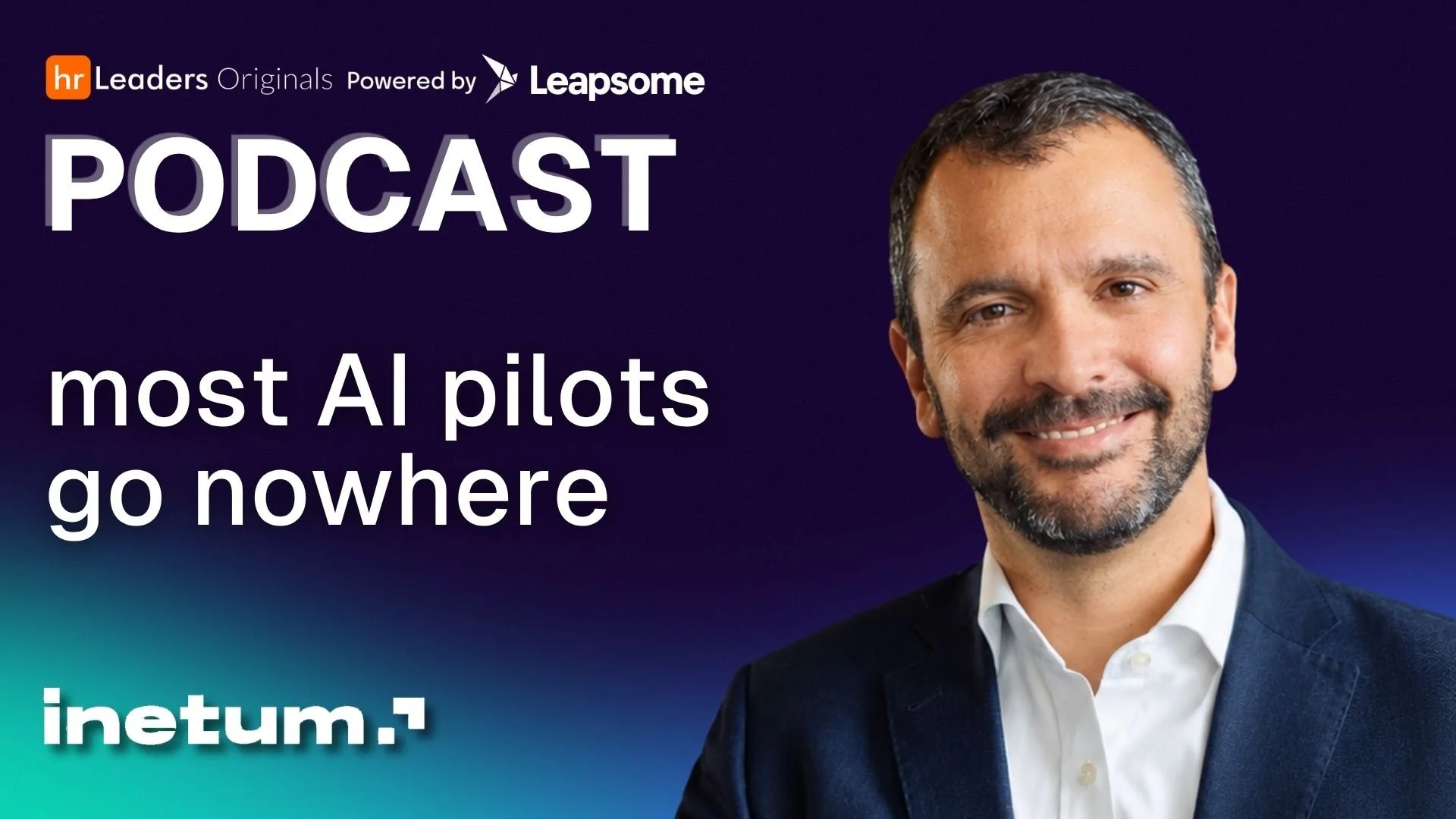


Andrea Petrone, The CEO Whisperer and author of Reinvention at the Top.