
The Burnout Problem Most Leaders Are Missing
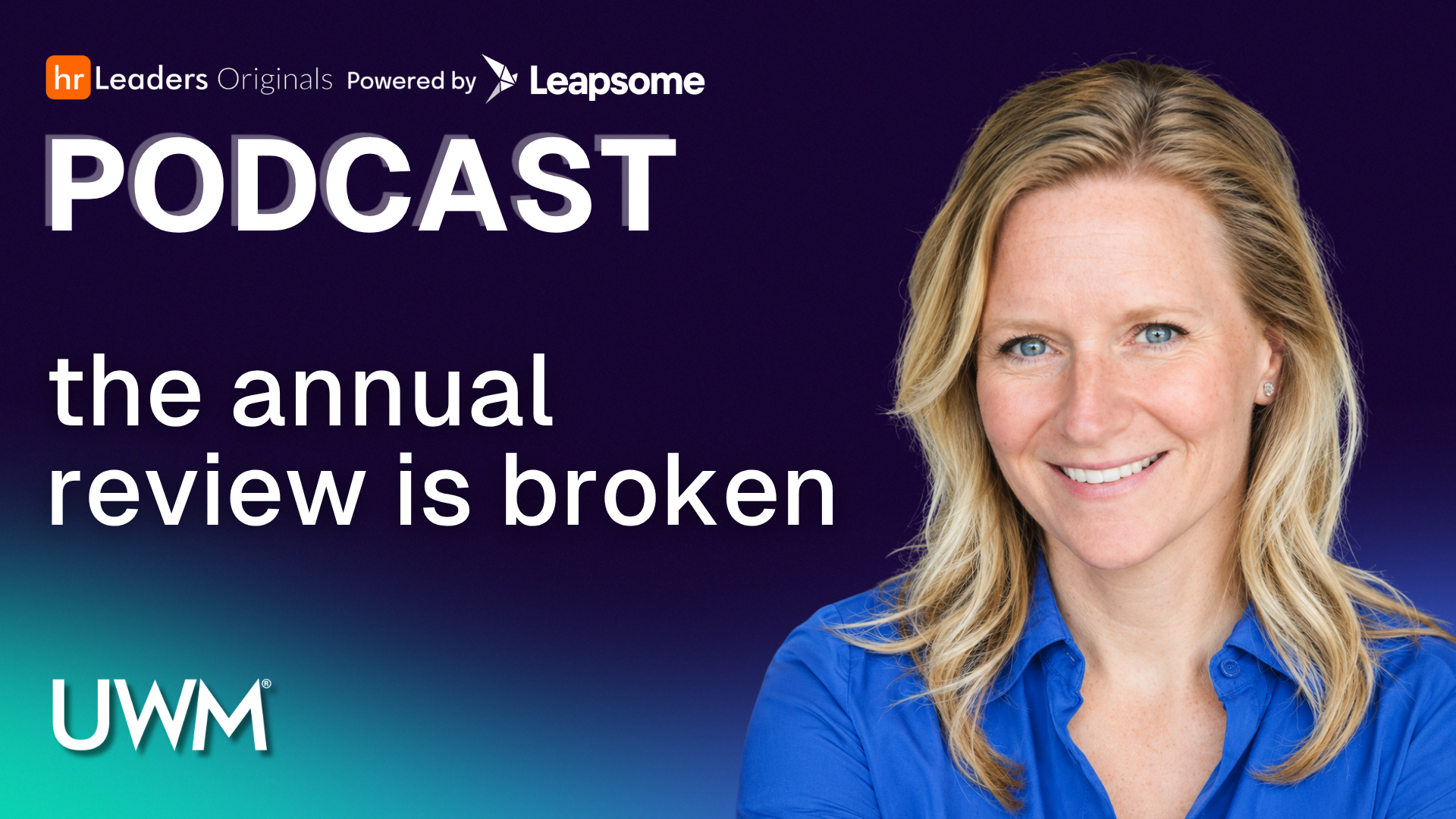
In this episode of the HR Leaders Podcast, we sit down with Anju Choudhary, Chief People Officer at Xoxoday, to unpack why burnout is not just a wellbeing problem, but a work design and change design problem.
Anju explains why organizations often treat burnout as an individual resilience issue, when the real problem is often the way teams are overloaded with unclear priorities, constant change, weak manager support, and poor recognition systems. She shares why leaders need to stop rewarding unsustainable hustle and start designing cultures where people can perform, grow, and recover without burning out.
Most importantly, Anju breaks down the practical ways HR leaders can reduce burnout, build trust, and create healthier performance cultures, from clearer feedback and better change management, to manager enablement, recognition, AI coaching, team playbooks, and reward strategies that actually connect to the lived employee experience.
🎓 In this episode, Anju discusses:
How unclear change creates cognitive overload for teams
Why burnout is a design issue, not just a resilience problem
Why leaders must stop rewarding unsustainable hustle behaviors
Why managers need better support for crucial conversations and change
How recognition and feedback shape the culture employees actually experience
What if AI agents were not just another way to create more learning content?
What if AI agents could help talent teams find real skills gaps, build the right intervention, and deliver it at the moment employees need it most?
That is what Arist is building with the first end-to-end AI agent for enablement.
Instead of relying on slow needs analysis, outdated content libraries, and one-size-fits-all training, Arist helps organisations move from guessing what people need to identifying real gaps in real time.
Its AI agents can interview employees, uncover talent gaps, create personalised learning, and deliver it directly through tools like SMS and MS Teams.
Because the future of enablement will not be built by more content or more manual workflows. It will be built by teams that can spot business needs faster, deliver learning that fits the moment, and prove impact.
With Arist, AI agents become a way to close skills gaps faster, improve performance, and help employees get the right learning before the business has already moved on.
[00:00]->[00:30]
Burnout just isn't a wellbeing issue.
It's a slowly 18 to 20% lower productivity, higher risk of sick days, ER visits, all of that happens.
And it's mostly a design issue.
The way we are thinking about burnout is it's probably somebody's overworked.
But we're forgetting the impact that change management have on this.
Sometime, one team is bombarded with four different change management things that they're dealing with, and then the burnout happens.
[00:30]->[00:41]
Despite the fact that your organization is going through a big change,
there is still strategies that HR and leaders can implement to ensure that people thrive during that time.
[00:58]->[00:59]
Andrew, welcome to the show.
How are you doing?
[01:00]->[01:02]
I'm doing well, Chris.
Thank you so much for having me.
[01:03]->[01:12]
It's crazy because I feel like we've been connected for a while.
You've got so many shared connections with me and only now we're finally chatting.
How has it taken so long?
[01:13]->[01:17]
I don't know.
Our paths crossed so many times, but I'm so glad finally we're here.
[01:18]->[01:26]
Before we jump in, Andrew, tell everyone a little bit more about your background personally and a little bit about the organization and then
we'll jump in to the episode.
[01:27]->[01:58]
Absolutely.
Yeah.
So, Chris, we know each other a little bit.
We've had some conversation for those of us
The people who are listening to us, I've spent about my career at the intersection of people, performance, and transformation.
And what's always fascinated me is this simple but complex question.
Why do some organizations expect
Extraordinary talented potential people.
They perform really, really well, while in other organizations, people burn out in that process.
[01:58]->[02:30]
So over the last two decades, I've been trying to figure out this thing and have been using my experience in learning and development,
performance management, coaching, et cetera,
First hand trying to explore this, that culture isn't just a slogan on the wall,
it's the lived experience of all employees at all times, every single day in moments that matter.
So intentionally what we're creating and where we're neglecting and where burnout happens and where it's inevitable.
So those are the areas that I love to explore and create better processes.
[02:30]->[02:49]
So my work is focused on helping organizations design these environments where people can thrive and do the best work and not just survive.
Currently, I'm the chief people officer for Zozo Day.
And for those of you who don't know us, we provide global solution to acquire, engage and retain your most valuable resources, your people.
[02:50]->[03:00]
Love that.
So it makes sense then based on what you said, why you're at this organization,
because it's very aligned with your values and your skills as well.
Was that intentional?
[03:01]->[03:31]
It was actually.
It's a great question because I feel like it's easier to be passionate about the work you do when you love the product so much,
when the values of the organization align really well with what you want to achieve.
And I was just talking to somebody this morning when I spoke to them.
I spent about eight years at IBM, and that's the first time as a new leader I learned about
Alignment of values and a deep role that it plays in the way you show up at work.
[03:32]->[04:01]
Trust and personal responsibility in all relationships.
I still remember that by heart because I still bleed blue like an IBMer forever.
And I remember that value so closely because I saw people showing up with that value.
I saw people really walking that talk in the ways they connected with their peers in the way they perform their job duties.
So values play a truly big part in the organizations where I work and where I find a true alignment.
[04:02]->[04:17]
Love that.
So you mentioned earlier burnout and we're seeing this as a record high right now.
Do you see this more as a work and change design issue or simply a resilience problem?
[04:18]->[04:54]
That's a great one I actually did get some stats around so around 48 to 50% of employees globally are reporting that they're feeling
burnout.
And this is a 2425 data and especially for women and younger people,
this can be even higher so burnout just isn't a well being issue it's a.
Slowly 18 to 20% lower productivity, higher risk of sick days, ER visits, all of that happens, and it's mostly a design issue.
Because the way we are thinking about burnout is it's probably somebody's overworked,
[04:54]->[05:29]
But we're forgetting the impact that change management have on this.
Sometime one team is bombarded with four different change management things that they're dealing with, and then the burnout happens.
So we'll talk about some of the strategies on how to discuss this further,
but I feel like this is more a design issue than just all that is happening around us.
We can still, despite the fact that your organization is going through a big change,
There is still strategies that HR and leaders can implement to ensure that people thrive during that time.
[05:29]->[05:42]
And I think that's also a really good time to pressure test the philosophy, the business values that we have,
and what we're expecting our people to do.
Are we aligned?
Are we really truly at the service of people?
[05:43]->[06:05]
Yeah, no, I agree with what you're saying.
I think many companies are talking about like the power skill of building resilience, etc.
But if you don't change the fundamental design frameworks and the way it works gets done,
you're kind of just like not putting a bandaid on the problem.
So walk us through some of the ways that you're thinking about this and some practical things perhaps people listening can do.
[06:05]->[06:37]
Yeah, so I love the analogy that you said.
Usually we just put a Band-Aid, especially because if you think about it, we're running from one thing to another, one meeting to another,
one project to another.
There's not necessarily a time to take
A breath and think about it.
So if on individual level, this is what is happening, then think on team level and on the organization level.
It just compounds further.
So then it becomes truly important that we're focused on being intentional about it.
[06:38]->[07:08]
I was actually listening to some of the previous podcasts, and one thing that resonated with most people is
This show up in the way you want people to do that.
For example, if as a leader, I am sending emails at 5 a.m.
And then again at 2 a.m., but I continue to tell people, oh, my God, please take a break when you need one.
I'm not actually modeling that right behavior.
I've seen that mostly leaders, they bring their A game, and they're really passionate.
[07:08]->[07:44]
And companies like ours, where the founders are C-suite executives, I understand there's an interesting motivation to make sure that company's successful.
But in that process, when you're rewarding,
Hustle behavior, you're probably also encouraging a burnout.
So think of what do you want to reward and recognize so that people repeat those behaviors.
So what's intrinsic in your organization, you need to make it extrinsic, especially right from onboarding.
So Chris, if I were to join your team, I want to know what good looks like at your organization.
[07:45]->[08:16]
How can I be successful there?
So when you recognize your team members and say, great job, person X, this is what you did.
This is how it aligned with our company's values.
And this is how it impacts business goals.
I say, okay, so this is what I need to do when I want to be successful in this organization.
So you want to continue to reward behaviors.
Number two, model what you want to see.
For example, when you take a break, really communicate that to your people.
When you're learning something,
[08:17]->[08:47]
Talk about that in your one-to-one conversations.
And especially when we fail, that's really important to recognize and acknowledge that I tried this and we failed at that.
So we're going to try something different.
And then the last piece of that is uncertainty has become such a big part of our life on an everyday basis,
and that causes burnout.
Because as humans, we hate to be in that space where we have this unknown around us.
Unfortunately, we can't solve for that now.
And we know that clearly.
[08:47]->[09:11]
So we acknowledge that and we co-create a future together.
Because when I walk into a meeting and somebody asks me, what does the new job architecture look like?
A number of times you have an answer.
But what does it look like five years later when we have humans and machines and AI together?
It's hard to predict that today.
But we can co-create that and acknowledging that we don't know all the answers right now.
But we're going to figure it out.
[09:12]->[09:22]
Yeah.
One of the things I love that you just said is that and you just can demonstrate is the importance of being very specific
about the feedback.
Why is that so important?
[09:22]->[09:55]
Clarity creates a culture of trust.
And that's what I believe.
Really early on in my career, I've had a chance to read some great books and be coached by some amazing people.
What got you here won't get you there.
As a first time manager, I was failing miserably.
I was...
Trying to I couldn't change the skill set in the mindset, my goals versus my team's goals, my success versus my team's success.
So one of my leader actually got me on the side and said, Andrew,
[09:56]->[10:30]
I'm so proud of the fact that in six months you've been able to achieve so much.
But I also acknowledge that you're running too fast, which means at the finish line,
you might be the only person and you don't want that.
So collaborate, communicate, create clarity, build trust, bring people together on that journey.
This is what something that I learned.
And as I'm progressing in my career, I realized that trust.
Goes hand in hand with clarity and providing clear direction, but also very clear feedback.
[10:30]->[11:03]
And that brings us to performance management, another topic that I'm super excited about and really motivated to create more clarity around.
Most of the time, it's an energy suck.
People come out of this feeling defeated, irrespective of the fact what rating you got.
Because you don't know, what did I do great?
Even if I got a five rating, I don't know what can I do differently to continue that.
Number two, if I didn't get such a great rating, one,
I lost the entire year and I have no way to fix it because we're just looking at matrices in the background.
[11:03]->[11:36]
This is what happened.
So providing a clear feedback, making every interaction a coaching interaction
Every time a leader's meeting, using all the data points to provide clarity on what can you do differently next, as early as possible,
as clearly as possible, provides people confidence and competence to be able to achieve that.
And then wherever the gaps align, provide that too.
So crucial conversation, really important.
Clarity, super important.
Creates better trust and people know where they're going, where they're headed to.
[11:37]->[11:44]
Do you think that our current managers and leaders have the adequate training and support to be able to do this effectively?
[11:45]->[12:19]
I think that's why we are failing because there's so much expected from the mid-rung, which is the leadership's got a clarity,
the employees are motivated to do that, but we've overburdened our people.
And the reason for that is we over index for business changes, but not for people changes.
And what I mean by that is imagine a big change that you're trying to implement.
We're always thinking about what impact it has on our tools, our processes, our revenue, all of that.
But what impact does it have on the people behind who are going to run that?
[12:20]->[12:51]
We're not really thinking about it as often.
So what's important is one of the quick operational tip that I want to give is whenever we are running a big change,
I try to sort of color code it.
Each team that has more than three number of changes happening, color code that red, that team needs additional attention.
And we are going to support that in the same way, for example, if I was sick and if I needed attention,
[12:51]->[12:59]
if I broke my bone, I need to go to ER.
It's almost like that, that sensitive care, while other teams, they might be more self-sufficient.
[12:59]->[13:10]
Are they aware of that?
Can they see that color coding and they're self-aware that we're currently in a sprint and we're in a moment right now of constant
change, which is always going to be happening, but there's different levels, obviously.
[13:11]->[13:43]
Right.
So sometime, no.
And that's why partners in that process become important.
HR business partners, people who are supporting that.
We work very closely with chief of staff leaders, ensuring that we, one, identifying where that change is happening,
where that change could overburden people, and then trying to utilize resources internally that we have.
So that we can continue to reward and recognize positive behaviors.
One quick example of that might be in our company with our tool Zozo Day, we allow people,
[13:43]->[14:18]
we actually add 100 points to each employee's account.
They can actually use those points to recognize each other and support each other.
And that shows up in the way that we're removing friction from recognition.
Because most companies don't have the tools and resources to be able to do that.
We also provide a framework for managers to, again, provide clear,
concise feedback and use data from various matrices that we pull together to ensure that their employees and their team, one is getting feedback,
[14:19]->[14:21]
but also the support as it's needed.
[14:21]->[14:48]
I mentioned like the lack of clarity where there's typically a lot of clarity at the top, a lot of clarity at the bottom,
but that middle ground.
Is that why you think that we often hear leaders say that culture is strong, but yet employees tell a different story?
So, you know, I speak with a lot of leaders and we're talking about that great culture and values.
And then the further you come down the organization, especially kind of in the middle, we lose that clarity further that we go down.
[14:50]->[15:21]
Yeah, you know, it's interesting what real culture is and how people define.
I've heard you speak about how free pizza wouldn't fix things.
And the real culture actually shows up in how we handle the workload, priorities, how leaders recognize efforts, efforts and impact,
and where boundaries and flexibility is respected.
And it's not just advertised.
We've seen There's a lot of optical and performative work that happens when we talk about culture,
[15:21]->[15:51]
but how it translates to everyday experiences is where it matters the most.
A constant change with unclear priority only creates a cognitive overload is how we've seen.
But when you provide clarity, especially to the managers and help them become the change agents, it's easier.
People aren't scared of change.
They're, again, scared of uncertainty.
If you were my manager and there's a big change that came from the leadership, when I come to ask you questions, Chris,
[15:52]->[16:22]
and one, you don't own it because it was just communicated to you, you didn't co-create it,
it's very hard for you to answer me.
So my advice would be to co-create change when possible.
And when managers aren't able to, you can't involve them,
at least provide them the support so they can handle the questions coming from the team.
Enable them to support that change.
So that part, I feel like we weaken at the manager rung.
It's very hard for them because they have a day job.
[16:22]->[16:29]
They have their own stuff going on, but they also have the emotional burden from their team that they manage.
[16:29]->[16:49]
Yeah.
And a lot of times we're very good at giving the positive feedback, but we shy away from sharing the bad news.
But in many ways, sharing what didn't go well and what we cannot do builds more trust because then it removes that lack of uncertainty
and anxiety.
[16:50]->[17:20]
I'd ask why.
And when I've asked that question, I feel like, one, of course,
I don't want to be the bad guy saying that stuff that I don't want to say.
Also, it's very hard as a conversation to do when you have bad news to share.
But also, it's a skill issue too a number of times.
Skill will both, actually, in a way.
I'm going to go back to an example.
My time at Skillsoft, we built
Something called SKC, which is a conversation AI simulator.
[17:21]->[17:57]
It's an AI coach.
The idea behind that, Chris, was most of the time crucial conversations fail because we know what we're going to say.
We just don't know how the other person is going to respond.
So if I'm here to provide you a crucial feedback,
I have my script ready, but I have no idea how you're going to respond.
You might be quiet, you might just get very agitated, you might just respond in so many ways that I'm not prepared for.
Now that there are so many AI coaches available, people can use that for their benefit and truly be able to practice that,
[17:57]->[18:28]
Until they get real-time feedback, be able to practice that again.
And hence, when they're thrown into real-life scenarios, they're well-prepared and they know how they're going to communicate.
I want to share a failure story that happened with me.
When I moved to US, I used to drive on my international license for about six months.
This was time when I had to go to DMV to get my license.
First of all, DMVs are very scary places.
For some reason, you don't feel so confident when you go there.
[18:28]->[19:00]
I drove for literally 30 seconds and I failed and I made a critical mistake.
And the mistake I made was as I left the parking lot, I drove on the left side.
And I'm in US for those of you who don't know.
And that's wrong.
That's wrong because I'm in the wrong side.
The reason I did that was this is a high tension environment.
And I went back to how I drove in the past in India, which was the right side according to my brain.
In a high tension scenario, we all tend to do that.
[19:00]->[19:34]
We fall back on a learned behavior.
And hence, no matter how many times you teach people on how to provide feedback, how to have crucial conversations,
There's a high likelihood they will make mistakes and fall back.
So the answer to that then is, how can we fix this?
Well, we continue to train them, let them practice that in a safe environment,
Get real-time feedback until they build competence and confidence both to have those conversations.
[19:34]->[19:54]
And the same scenario applies whether that's sales conversations, customer service, new manager, manager to employee, upwards, or to your manager even.
So I suggest people that use technology to your advantage, now everyone can have a coach,
but be aware of the pitfalls of technology and the bias that exists.
[19:55]->[20:02]
You literally kind of in many ways described our entire purpose behind building Atlas.
[20:02]->[20:34]
Which I love by the way.
I think it does a great job of identifying
Problem areas and really creating a personalized learning that caters to me.
It's not a spray and pray approach where everybody goes through the same training program and you just think there will be a behavior
change.
Because again, it's a cognitive overload.
We're just sharing a ton of information without a reliability of it is going to change any behavior at all.
[20:34]->[21:05]
And that's what I love about Atlas Copilot, not advertising people with information.
In advance but i'm just a fan and i think that approach is what is going to be the future of learning where we
are going to create opportunities for people to learn what matters to them the most so whatever time they're spending it's most effective and then
it's it's providing them coaching clarity knowledge and skills and competence in where they need so they can do their best work
[21:05]->[21:20]
Yeah.
We spoke a lot about the reward of recognition side.
In the past, this used to be seen as like a nice to have, that something was very soft and fluffy.
Why is it now becoming so essential in 2026?
[21:24]->[22:00]
I love that because people are paying attention and rethinking what reward and recognition in 2026 looks like.
So from a program, it has become a strategic lever in total rewards design.
And we're noticing that recognition is
It's constantly being discussed as an integrated part of the strategy, as a part of your pay, your benefits, your well-being,
and not as a separate work stream.
So the trends that I've been noticing is pay transparency and equity, hyper-personalized rewards and benefits, especially when you're a global company,
[22:00]->[22:36]
then you want to create global rewards, but locally organized.
Relevant and what i mean by that is for example in india diwali is when we do gift giving versus maybe in us it's
more around christmas time and that's where people care for it so if recognition isn't connected and how we pay promote or develop people
it becomes very performative so there are fundamentally few layers that i want to talk about one is fair pay and flexibility
So no matter how much free pizza we have or happy hours, that's not going to replace your fair pay.
[22:37]->[23:08]
It, in fact, feels a little bit disrespectful when we talk about when we thank people.
But then there is no respect at workplace when there is no flexibility.
If this is something that your people care about.
So operationally, what people can do is run a.
Pay equity and comparison program on at least on annual basis to find where those gaps exist and are there specific people and especially
people who are underrepresented.
That's where those gaps primarily exists and then a pragmatic approach,
[23:08]->[23:40]
so a formal reward and recognition program I can't reiterate enough that a program where you have.
A structured approach towards reward and recognition.
Whether that's spot bonuses on and off, but on a consistent basis,
what does attraction retention of a top talent at your organization look like?
What do you do for them so they can see a long-term career in the organization?
Is by providing those opportunities.
And these can show up in many ways.
[23:40]->[24:11]
It just doesn't, I think you had mentioned in one of the podcasts that non-monetary reward and recognition actually is weighed 40% higher than
monetary, which a number of salespeople would be like, is that true really?
But think about the time, what made you stay in any organization where you stayed or any team where you stayed.
It mostly then aligns to the people and how you felt.
So reward recognition strategy just doesn't stop at the bonuses and awards that we receive,
[24:11]->[24:15]
but also at the tools and processes and everyday experiences that people have.
[24:15]->[24:28]
Yeah.
How are you connecting this with business outcomes and what, for example, what are some of the key people metrics that you're measuring?
So you know that what success looks like and that you're just actually having impact.
[24:30]->[25:03]
That's a great question.
So we we're a data driven company.
We do pay attention to what voices we hear from people.
We do a number of surveys.
We try to connect the data that qualitative and quantitative feedback that we receive, connect that to internal levers in terms of training, learning,
identifying those gaps.
What are we building for tomorrow?
So for our organization what skills are relevant where those gaps exist and then be able to identify internally within those teams to fulfill
[25:03]->[25:37]
those gaps whether that's by talent attraction so hiring people from outside or internal mobility so we can actually help people upskill internally and then
rewarding those behaviors so that we can see that for future uh
Pay, rewards, equity, those things matter.
But also our employee resource groups internally play a big part in terms of creating a space for people where they feel valued, heard,
and respected.
First time when I walked into a company where I was new, I didn't know anybody,
[25:38]->[26:10]
and they were celebrating a festival that is celebrated in my country, I actually felt seen.
I stayed with that company for four years and I would love to go work for that company any day again.
Those experiences stem from how was I valued in this organization?
So 2026, human skills, connecting with empathy, being able to listen to your people and using data to be able to identify where those
gaps exist and creating an action plan and communicating back that to the people.
[26:11]->[26:44]
So we heard you, this is what we heard, and here's what we are doing in action on that, connecting that, taking
it back to people.
We're going through a major change with AI, and we all know that, where people are afraid of, what does my role look like?
Even for me, I have no idea how this role is going to evolve.
And I think that stands true for most people.
How are roles going to change?
What does workplace of tomorrow look like?
So we're going to build these programs today so that we can create more opportunities
[26:45]->[27:02]
Frictionless workplace where people can perform their best job so we have a big job to do and I know that these are some
of the ways we can fulfill and it is going to be an ever-evolving strategy yeah oh I love that last part that you
[27:02]->[27:40]
added obviously it's gonna be ever-evolving you know gone are the days of here's our three to five year plan
And I think that's one of the challenges is how do we redesign work and our systems and processes where it's agile, right?
Because we're going to have to adapt and evolve.
Things are changing so fast, but we also need to allow for...
A culture of curiosity where people can fail um experiment have that psychological safety right to to bring different ideas and understand that even
[27:40]->[27:49]
if i do fail that's kind of like part of the process obviously we have to learn from it um as well and that's
quite a big culture change and systemic change
[27:50]->[28:30]
I've heard about failing fast, failing often, trying different things from a lot of organizations.
It's something that, again, sometime could become, again, very optical.
And the reason for that is, and when I interview for a new organization, I ask them a question.
Tell me about the time when you've recently failed, when you tried something and then they failed.
And tell me what happened, what was going on.
That actually helps me understand the psychology behind how do people feel psychological safety while attempt trying to attempt new things?
[28:30]->[29:02]
And what does that teamwork look like?
How does the rest of the team view this?
Again, one Operational tip that I want to share here is when I join a new team, I love the readmes.
How do you work best with me?
Here's how I prefer to communicate.
If you have an urgency, here's how I like to get feedback.
So I think that decoding how to work with me is a fabulous way of creating, but also a team playbook,
[29:02]->[29:35]
which is a living, breathing document that you can use when somebody new comes in, you can continue to add on it.
But what we're doing is in this team, we like to innovate, we like to create.
And in that process, sometimes we are successful and sometimes we fail.
And if we fail, this is what we do.
And if you're successful, what we do.
So I think that kind of a playbook sort of become
A pathway for somebody to explore further, and then they will probably feel more confident to try new things and innovate.
[29:36]->[29:45]
Other than just saying, oh, fail, fail fast, and let's move along.
Because I've seen both sides of it.
And it doesn't just work by saying.
You have to show it.
[29:45]->[30:18]
Yeah, I love that.
It's so simple, but it just provides that clarity, right?
Because we all have our own backpack of beliefs and assumptions that we assume someone likes to be rewarded this way or recognize or how
someone likes to receive feedback.
But just having that, and then also I love the way you elevated it from the individual then to the team.
Dynamic and just documenting that.
And then when someone joins the organization or the team, they can see that and have that clarity, which is so refreshing.
[30:18]->[30:51]
It removes a lot of pressure from that and guessing.
Well, listen, I feel like we need a part two,
but I appreciate you taking the time to come on and I love the work you're doing and I really appreciate you showing so many
practical pieces of advice.
For everyone listening, there's a lot of takeaways for me even as a leader that I'm going to take away.
I love that sort of playbook that you just shared at the end and documenting that.
I think that's so important as well.
So I wish you all the best until we next speak and I'll see you again soon, okay?
[30:51]->[30:51]
Thanks so much.
[30:52]->[30:57]
Thank you so much for having me, Chris.
It was wonderful chatting with you.
Thank you.



Andrea Petrone, The CEO Whisperer and author of Reinvention at the Top.