
What Happens When Leaders Tolerate Poor Performance
AI is moving faster than most organisations can redesign themselves, so how do you stop transformation becoming a series of disconnected technology fixes?
Every leader says they want a high-performing team. But what happens when poor performance, missed standards and a lack of ownership are tolerated for too long?
In the most recent HR Leaders Podcast episode, I had a fascinating conversation with Paul D. Brubaker, Vice President Human Resources at KARL STORZ North America.
Paul shares what decades of leadership have taught him about building teams around trust, accountability and continuous improvement. From knowing when coaching is no longer enough to preparing HR teams for AI-driven change, he explains why great cultures are shaped by the behaviours leaders consistently reward, challenge and refuse to tolerate.
5 things you’ll learn from this episode:
The overlooked “trust dividend” that can remove unnecessary checking, duplication and friction from your team
The warning sign that tells leaders they may have held onto an underperformer for too long
Why the standards you quietly tolerate can become the culture your entire team starts to accept
The AI opportunity Paul believes could remove huge amounts of transactional HR work, and the barrier still slowing many organisations down
Why staying relevant in HR will increasingly depend on your ability to learn, adapt and build new capabilities faster than your role changes
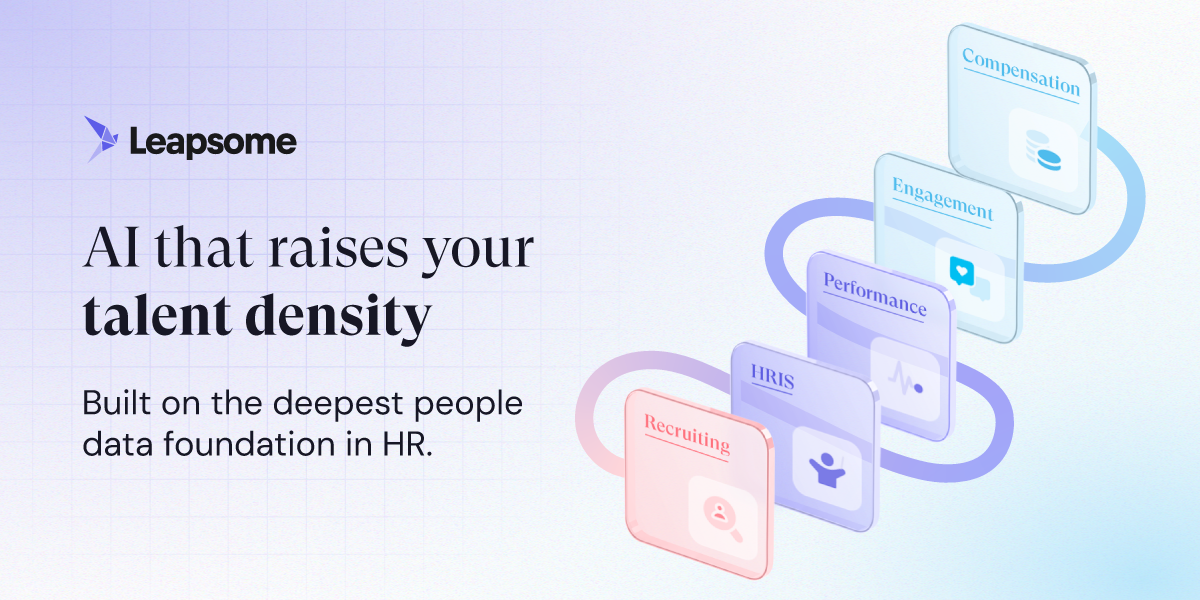
What if AI in HR wasn't just another feature for automating basic admin tasks?
What if an HR platform could connect hiring, performance, and growth on a single data foundation to systematically raise your company’s talent density?
That is what Leapsome is building on the deepest people data foundation in HR.
Instead of juggling disconnected systems where hiring lives in one tool, performance in another, and engagement in a third, Leapsome helps organisations move from fragmented software to a unified talent engine.
Its platform unifies ATS, core HRIS, and a full Talent Suite with cross-functional AI agents, bringing together everything from onboarding and performance reviews to goal tracking, learning, and compensation into one continuous workflow.
Because the future of people operations will not be built on siloed point solutions or manual administrative work. It will be built by HR teams that can connect the entire employee journey, turn deep people data into action, and scale high-performing cultures.
With Leapsome, AI becomes a way to develop more people like your top performers, streamline core operations, and run the HR function of a company twice your size.
[01:00:00:02 - 01:00:01:17]
Paul welcome to the show my friend. How you doing?
[01:00:03:06 - 01:00:25:00]
Doing well, thanks Chris. How are you? I'm good. I'm good. I'm jealous of your home office. That's what I'm thinking I'm thinking now when I get home, I've got all these ideas That my wife's gonna say no to Yeah, and I can see you've got some really cool photos there the family and stuff. I mean that's your sanctuary
[01:00:26:14 - 01:00:38:06]
Exactly. Yeah, spend a lot of time in this room. So no, I love it before we jump in Tell everyone a little bit more about you personally and your background and sort of journey to where we are now
[01:00:40:07 - 01:00:45:02]
Sure I'm the youngest of four boys and
[01:00:46:10 - 01:01:06:23]
My dad was a businessman and I followed him into business and really into finance Got my MBA at the University of Virginia the Garden School and Went to work in the oil and gas industry and did finance for quite a while and we got my company was spun off from
[01:01:08:02 - 01:01:33:05]
Union Pacific Railroad and In that spinoff they asked me to run benefits because they had a lot of money running through benefits They didn't have anybody in the subsidiary doing it and I said, well, I know it was to how to sign up for benefits So they said well you'll learn and I did and That was a blast quite a bit of fun
[01:01:34:08 - 01:01:50:07]
made a lot of changes and And so then our CEO left and I followed him to a high-tech company and and in that process then Things changed and I got more involved in HR. I did a culture integration
[01:01:51:08 - 01:01:56:12]
with a software firm novel and then
[01:01:57:20 - 01:02:12:15]
Move myself out to California back home to help with aging parents and in that transition then Did that job and was my first time be out of work in 20 years since my MBA and so started networking
[01:02:13:18 - 01:02:28:02]
Learned a lot about the value of a network huge and And then just reinventing myself. Who was I was I finance was I a jar was I a GM I had been a general manager of a power plant for a couple of years
[01:02:29:05 - 01:02:40:04]
Okay, and so, you know P&L responsibility. It was really fun But found my way into HR and so picked up, you know the couple of certifications
[01:02:41:05 - 01:02:57:14]
SPHR and global THR and And that and just to show that I was now really saying I am an HR guy and then So you're officially over on record on record. You're officially an HR guy and not a finance guy I
[01:02:59:09 - 01:03:00:07]
It's still there
[01:03:01:21 - 01:03:33:23]
You need you need that in HR more now more than ever so that's a good that's a good thing We like to we like to think of our leaders as enterprise thinkers, right? You gotta you gotta be thinking about every bit of it. So it helps of course and and The half-life of skills and how fast things are moving Constantly have to have a like any HR lead or any leader forget about HR Just that is is that I see the succeeding is they've constantly have a growth mindset and always always learning
[01:03:35:03 - 01:03:58:17]
You know and evolving and adapting and that's one of the key things 100% I keep talking about Maybe we'll spend some time talking about a best team What is a best team and you never get to be the best you never get to be your best person because we're always striving Those of us who are you know, it's it's about sports. I think you had talked with me a little bit about sports and
[01:04:00:01 - 01:06:05:17]
You're always trying to get better and be your best and and there's always something more to learn some way to grow some way To get better. So yeah Rest that's one thing that struck me when I first came into the corporate world is that obviously I'd been you know Played ice hockey growing up basketball tennis that you name it. We were kind of just in every sport you could think of so it was in my kind of DNA almost to want to be to want to be coached and to be coachable and To understand that I train free. I train Three days a week on ice to get better to prepare for those two games on the weekend But then I worked into the walked into the corporate world And we were just doing the work and not so much focus on Where where are we doing the three days a week of practice? And upskilling right right and it was really confusing to me because I had this like one day training Uh, like, you know as I came in and I was like Where's the rest? Like like and now i'm just supposed to just hopefully succeed Like uh, like where do I get the you know the reps in? Uh in where's the sandbox if the all the ice, you know, where's the where's this place that I can do that? And and it kind of took it took me a while to adjust um To the lack of training That's a really really great point about corporate america. I mean all we're doing is trying to get the work done. Yes We're thinly staffed it costs money to have people so you can't just have You know extra 20 extra people so you can train 20 of the time. No, it just doesn't happen Yeah, but you think about athletes right where it's tennis players, etc. They spend months prepare. Oh, let's think about olympics They spend years Preparing for the day that they that last 10 that the last 10 seconds for a hundred meter race So, you know, what what what are we what I mean, what what what what are we measuring? Are we measuring just? The time that people turn up or are we actually measuring the outcomes?
[01:06:06:22 - 01:06:29:00]
And the results uh As well and you need you can't have one without the other in terms of like Doing the training and preparation up front to set people up to be successful 100 percent. Yeah Well, let's let's kind of I know something you're really passionate about is and we're going to talk about it is You know, what does it really mean to build a team based on trust?
[01:06:30:01 - 01:06:33:19]
Um, uh firstly, why is that such a important topic to you?
[01:06:35:21 - 01:06:48:03]
You know, it's just foundational to everything we do. Um and and whether it's your peers team or uh, your
[01:07:09:09 - 01:07:37:13]
So a lot more fun if you can win And that trust maybe people have seen the book the speed of trust And you have a trust dividend meaning I don't have to have three people Do the same work and then check the three and see which you know I I just have one and then there's that mistrust tax where you do have the three people doing the same work to see You know, is this really where we should be going?
[01:07:39:14 - 01:07:55:00]
And I see you know That we undervalue that trust dividend And so as you build trust people come up with their ideas if they trust you
[01:07:56:02 - 01:09:42:01]
They know you'll hear them because you listen you care you build this relationship with your people and uh if you If you're consistent in how you handle people And if you're consistent in your manners every day Um, you don't come in one day and they go oh stay away from paul today. It's a bad day for paul. Oh Tomorrow yeah see him tomorrow because you know tomorrow he came in and he was smiling. So it's a better day So i'll see him tomorrow. No, it's all you know, it's behavior. How are you behaving today? You need to be consistent and reliable um Obviously you need to have the ability to and competency to do the job. So they have to believe in you um And and you have to believe in your people, right and then you have to coach and be the coach every day um You've got you've got to be concerned truly concerned you listen with concern and care and you ask and follow up Oh, how'd it go yesterday with your? Child who was having an operation, right? You need to check in and this builds trust And as the more trust you have the better your team's going to perform we talk about diversity, right? Diversity is only good if people can bring up their ideas In a safe environment and that safety comes partly through trust Yeah, or or or show up as their authentic selves, right? If you don't create the right environment to do that, then they're not going to be able to do that Exactly. And then you lose the value. Why why have the person even there? We've got to get their ideas If you believe you're the one with the ideas, they're really good then you've already lost. Yeah. Thanks If there's like one if you're going to choose one sort of practical way of building trust, what would that be?
[01:09:44:11 - 01:09:44:12]
Uh
[01:09:45:17 - 01:09:48:02]
Transparency honesty
[01:09:49:06 - 01:10:22:08]
Um show them that you trust them by sharing things that that are important that maybe they don't need to know but But you build that through being transparent you are I am just a person Right. I'm just another person. I have a different title or a different role to play But everybody on the team is important if you believe that Then you need to let them know that you are important in your role. You're doing something different than i'm doing I can probably do many of the roles that they are doing i've been in many of the roles, but
[01:10:23:12 - 01:11:24:08]
But you know, but i'm expected to deliver something different than they are but I expect them to deliver what they're supposed to And so I Trust that you know the whole remote work thing Uh brought this whole thing to the floor as well And and it divides people because I don't trust I want people in the office I do trust i'm fine with how we're working And you know, it's been proven now There's no study that proves that you're more productive in the office or that you have a better culture if you're in the office every day Um, we happen to be in the office twice a week If you're low Yeah, no, I love that example because It's such a contrast to what we're taught When we first become managers or leaders where you kind of feel like this pressure that you have to have all of the answers You know and and no and no, you know, no vulnerability You know and uh, one of the biggest kind of game changes for me was in terms of building trust is just asking for help
[01:11:26:09 - 01:11:38:07]
Right, like uh, it seems so simple but like the vulnerability In saying I don't know And I need help Just opens up that connection and builds trust straight away
[01:11:39:08 - 01:12:01:15]
As well and more importantly If you do it and then let that person actually follow through And and and deliver on that they'll you'll never find someone more motivated and engaged That my leaders asked me for help and I was there to help them All right, and it's genuine, you know, just make stuff up obviously Um as well, but it just shows that oh, wow. Okay
[01:12:02:18 - 01:12:33:17]
That's brilliant. Yeah Love that. Yeah, great example. Yeah. Thank you. What would you say is um Like there's there's building trust but I want to switch a little bit over to sort of capability because What i've seen is I i've been in some organizations where even though The individual employees can are very competent in in in their work They at the final hurdle, they're still always going to their manager For the final like hey, can you review the work?
[01:12:34:22 - 01:13:03:02]
And then what ends up what ends up happening is you've got a leader who's now just checking homework As opposed to a team that's autonomous That really can make real progress Um like and I see this a lot in companies And I wonder like what's driving that I don't know if that even makes sense what I just said Um as well in terms of like, you know They don't want to make the final decision. Maybe it's a risk of if I if I if I if I lead the way and take
[01:13:04:03 - 01:13:08:14]
Take charge and i'm the one to blame and then I you know, I wonder what's driving that behavior
[01:13:09:23 - 01:13:57:20]
It's a great question. I think a bit of fear and maybe that's culturally induced Or maybe it's just something they bring to the table. Gee, I never was making these decisions. I don't want to be on that line or You know, i'm not paid enough to make this decision You know, that's fair that's a fair one You know, but but I I think this is another thing about building capability in people I want my people to be in front of the leadership team that i'm peers with right and So they need to build that relationship so that My peers know that i've got a great team They know that i've got a capable team that
[01:13:58:23 - 01:13:59:17]
you know and
[01:14:00:22 - 01:15:08:13]
Back to to trust as well You never steal an idea Right, you always give credit always give credit um So but if the person's coming and asking for your help You know to review I do review and I ask questions and and make suggestions, you know We might want to fill out this area of the report a little more. Did you think about this? And uh and try to make sure that we have the best product together as a team, but it's still their product Hopefully they're going to present Um, but they feel better that they've gotten another viewpoint whether it's mine or another peer of theirs in our team Uh to to make sure that we've really brought forth All the different viewpoints. Yeah that we need to think through before presenting. Yeah On the flip side of this of of that In terms of performance. How do you think about and decide when someone? Is uncouchable? Or perhaps they don't have the capability to learn and it's time to let them go because that's a tough conversation a tough balancing act
[01:15:10:02 - 01:15:38:09]
You know, you know you always say Don't make the same mistake twice, but I did At least twice, you know where you you believe in the person you believe you can bring them along you think you can coach them And you really can't and uh, that was one of the big learnings As a leader your team knows if somebody's not performing. Yeah, that's so true They all know it's not a secret, but you think it's a secret
[01:15:39:10 - 01:15:49:23]
You think oh, I'm the one that sees this person struggling And the truth is that when you finally exit a person your team is like
[01:15:50:23 - 01:16:45:12]
Thank you Like why didn't you do that six months ago or two months ago or whatever? and And I realized in that Error of keeping the person too long that everyone does know It is your job to make the hard calls. That's why you're the manager or the leader and uh, and so I have learned to step up into that More quickly. That doesn't mean I throw people out You know rapidly But it does mean that when we're having trouble We confront it and we figure it out and give them the chance they need and if they can't Yeah remove Yeah, I think I I made that same Mistake really early on when we started hr leaders because there was a lot of um, when is your own business as well So I think that there's also this sort of like if I feel like someone's failing I feel like I've failed them
[01:16:46:14 - 01:16:56:14]
So I don't know if that makes sense. Um, yeah, I was I was Hiring too fast and letting people go too slow
[01:16:57:16 - 01:17:50:24]
So I wasn't spending enough time on the front end Which was causing more issues Right because I wasn't getting the right culture fit or even let alone in terms of capabilities Um and skills and then I was holding on to people for way too long um One because I was like I felt like I failed them too. You kind of just don't want to admit to yourself Like you said like the team knows you know and you just sort of just delaying the hard conversation with all being there before but what I didn't understand until maybe years later to your point is the consequence that that has on the team And the impact because what signal is that sending is sending the signal that this is okay. This is our standard Right, whereas I want everyone in our team to be at the top of their game And then it kind of like just sends a signal that okay at hr leaders. This is what our standards are
[01:17:52:07 - 01:18:06:17]
And the moment I hired in some new people into certain functions even more recently We the business just it was almost like a breath of fresh air and energy injected into the business both financially culturally, you know
[01:18:08:03 - 01:18:10:12]
Yeah, it was just like a drain
[01:18:11:14 - 01:18:42:01]
On the team Oh, yeah, absolutely It it can be a drain. There can be political implications. I keep walking on eggshells around a person. Yeah uh, just just terrible things and you brought up in my mind a good quote that I remember about uh, your culture is What you will tolerate So if people are late to meetings and they're five minutes late, you just go on and that's just the way it is It's okay to be late to meetings. That's your culture
[01:18:43:02 - 01:19:03:00]
right, so It's and if you tolerate poor performance, then yeah, that's what you're gonna get. Yeah I mean, that's definitely something I realized like again back to the sports An analogy if you were late you were doing a couple more laps Like did everyone else and uh, you you can't
[01:19:04:19 - 01:19:08:20]
I suppose you can't have a high performance culture without high performance habits
[01:19:11:20 - 01:19:48:07]
Great word again habits. It is a habit. What is your habit? You know, are you on time to meetings? Is it a habit to grow and learn all you reading the book? What you know, what's going on? What are you learning today? uh, yeah, your habits are Key to your success. Yeah, and that's true in sport too, right? All those habits add up to your performance a hundred percent um How do you personally stay? Nimble up to date, especially in hr, you know, it's almost Unrecognizable from when I started 20 years ago
[01:19:49:19 - 01:20:04:12]
To where we are now As if you wouldn't have made it this far if you hadn't Constantly so what like practice you just break down like what some of the practical things that you do What do you read? What do you listen to? Like what are some of the things that really help you?
[01:20:06:05 - 01:20:16:16]
Yeah, I Tend to stay on top of the technology. That's what I think is uh, is key this the whole ai deal
[01:20:18:07 - 01:20:20:24]
If you're postponed six months you're losing
[01:20:22:11 - 01:20:34:15]
You're losing so much. Is it worth a year? Is it worth two years? I don't know because ai is moving so quickly and um What one of the things I was thinking about? Uh
[01:20:35:23 - 01:20:37:13]
Is is that the
[01:20:38:23 - 01:21:00:07]
We're confined with our caution around personal information And so in my company, we created a chat bot. Let's call it that And you've got the handbook and policies and things are all read into the chat bot and now instead of calling Somebody on my team. They can just say, you know
[01:21:01:10 - 01:21:40:01]
I've been here this many years. How much vacation do I get? It'll look it up But instead it should be a single sign on it should know on me It should know what my role is how long i've been there when I was hired how much vacation i've got how much i've taken How much food and ready? I I should just Be able to say, you know, hey how much vacation do I have available? I want to take a week starting on this date and it would Should send the thing to my boss for an approval and they approve and away we go And that saves me from having to learn a timekeeping system and they go in and put put in the dates and your own stuff
[01:21:41:06 - 01:22:20:01]
But we we handicap ourselves because in my company we can't yet Go in and it can't look at my record because they're not sure that this chat bot is going to be secure enough with my data and so You know, we're working through all of that, but it just takes time and it frustrates me Because we can be so much better so much quicker and actually my company is in minimally invasive surgery we do endoscopes and camera heads and we bring a signal we put On the screen and there are robots now, right? And so these robots are putting all this Surgical data into the cloud
[01:22:21:02 - 01:22:23:05]
And so you've done, you know
[01:22:24:12 - 01:23:37:12]
100,000 hernia repairs or you've removed this type of tumor 10,000 times and they have 10,000 surgeries in a cloud and it shows You know the different things that have happened and the outcomes and then all of a sudden you've got A better robot because it knows it's guided by all of this data Um, we're working on our own robot. We're not quite there yet. I'm afraid of how far ahead others are getting by Either a gathering of data Yeah, I mean the best the best time to start is now right like I mean you can just Yeah, you got you got to get into it as soon as possible. I started our ai journey about Four and a half years ago before we even opened the ai Because I was kind of leveraging that on how do I put you know, the 50,000 hours of content we have into everyone's hands democratize access to content and Translate everything into any language instantly And to your point the most biggest breakthrough when we first launched it was it understanding the context of the user So if you log into atlas, it knows your job title your role responsibilities your industry All of that context so that when you ask a question
[01:23:38:12 - 01:24:13:02]
It will respond within the context of the individual and the organizational priorities and goals And I think that was because everyone there was like many chat bots that you can ask questions and get generic Responses right or like a link to a document, but the problem was it wasn't personalized So exactly and that's the issue It's like and now i'm getting answers that don't even mean anything to me And i'm not even going to use it anymore because it's like A generic response that doesn't understand where i'm at and then I think the second one which to your Do you you mentioned about your own internal one is it didn't show up in the flow of work?
[01:24:14:04 - 01:25:10:00]
So it was another app I had to go to right whereas now we're integrating into slack and into teams and Into you know co-pilot and other things so that there's one source one place that you go to And you know learning shouldn't be something you have to go to It should come to you. It should exist Um not even in the flow of work. It should it should it should show up in the work itself Because we talk about the flow of work, but learning should show up in work the way in which we design it As well back to the analogy earlier of like how do we make sure that we can build capability? um At the speed of business and in in the terms of like ice hockey i'm i'm i'm putting the reps in i'm training every day So that during the game i'm ready We need to bring those two things together Um, like a training module every three months is not going to cut it
[01:25:11:08 - 01:25:21:02]
right right Yeah A linkedin learning course is not going to prepare me For the meeting I have tomorrow to have a hard conversation with a member of my team
[01:25:22:17 - 01:29:24:23]
Oh, let me just go on linkedin quickly before it's cool and watch it and generic and there's a note like you know I don't want to dig at linkedin, but this is how it currently exists in most organizations Yeah, we we actually did just roll out a tool Not an advertisement. We're just piloting but there's a company called balance And their tool that we got is called nadia. It's an AI coach And uh, so you can literally say, you know, i've got a team member I'm struggling with Uh, here's the situation and it would give you some ideas and then it'll say like well, would you like to roll? And and you can talk to it and and it'll do it in any language quickly translate and uh And so you can kind of do a role play before you ever go into the meeting and see how it's how it's gonna go And you can come back and tell it what you did and then it'll log it and it'll say well, I think you could work more on Yeah, sort of that right your approach. Yeah, we know the team at valence. I um, I just finished a 10 part uh video series where I was interviewing different chief HR officers of how they're leveraging AI and I was a Partnership with valence many of them using it. I seen it's a great tool, right? You know the ability that every employee in the business has their own coach We could never do this before a scale um And in many ways it understands more about you than you do because it has access to your emails your the um To your calendar so it can can hey chris you've got a meeting next week. Do you want to practice? Having you know doing a role play, uh has all of the transcripts Right as well You can connect that to your team So it learns about different members of your team and how you should interact and it can give you feedback on that as well right, I think the connection that we still need to build Is Vascularate, but then how do we then from there create learning pathways off the back of that? If you're having a challenge Around a specific area and it's identifying that what are some learning pathways that we can create to help fill those gaps? Um as well, and I think that's the connection that there's going to be really interesting Like how do we because at the moment coaching ai coaching sits separately from our lms? Oh, yes, right. So how do we make sure we connect that so we have the data? That feeds in so that we can start to build um a connection Between between that because it at the moment they sit separately if that makes sense in organizations they they do um and I thought that's crossed my mind a couple of times in our discussion is this uh the whole legal balance and um, I think about recruiting And oh, well, there's built-in bias maybe into the algorithm. Yeah, but by the way Human bias unconscious bias you just look at a name and you throw the resume out Get the same resume with a different name and you take it right, it's been proven that just the name can be enough to Change people's perception. And so you work on these unconscious biases, but basically that's a built-in algorithm in my mind and you don't even We don't even aren't even aware sometimes. So I I tend to think that the automated piece Even though there's a potential bias. I think there's probably less bias built-in than in the human mind And then as I go into nadia or coaching And i've asked the question we're studying right now, you know, they say well all of your conversations with the coaches are Private and nobody's going to see those conversations, which I believe that's true within my organization But when we terminate an employee and they hire a lawyer And they bring the lawyer and the lawyer says I want to see everything you've got related to Mary smith who you terminated
[01:29:26:02 - 01:29:37:10]
They're going to be able to get A printout of everything we've got and if and it's in the cloud And I think they're probably going to be able to get what we put into uh, nadia
[01:29:38:19 - 01:30:02:12]
That's one of the questions that you anyone who's listening right now if you're if you're thinking about a solution And a lot of companies have sort of a black box They don't want to tell you What's in it? And if you ask them like how is it making that decision? like tell me specifically why And uh, if they're not transparent with that you should be very careful
[01:30:03:13 - 01:30:51:14]
And do your due diligence up front to make sure you don't we've already seen Not going to mention names many of you know some of the very large hcm's and companies that have been in the news for getting into trouble um with that with with especially on the recruiting side uh of some of the decision making and that's a perfect example because One thing ai will do is if there's an it will amplify everything So so if it will be if there's a mistake or something's not working right it will do so at scale Um, so you got to be very careful about that. So there's definitely an error of caution uh for us like Most of the time when we're working with companies for atl to roll our atlas to upskill their hr teams and their leadership teams Most of our conversations are spent around that what you just described
[01:30:52:17 - 01:31:23:20]
You know, it's not so much. Okay, we see the use case We see the impact but hey like how does it actually work like like and having teams of their It and security team and really nailed nailing down on that stuff is super important. You cannot skip that step along the process outside of sort of um Automation in the hr and kind of you know Creating more of a self-serve approach which is great for the employees great for the h4u in the team frees you up Where do you see other areas in the hr where ai could really have a lot of impact?
[01:31:27:07 - 01:31:43:18]
Uh Uh Well, yeah, we've talked about recruiting it's huge there. I think that's the first use case the second use case it's internally Um, you know the coaching I think is going to be huge as we go forward. That's that's learning right now It's learning on its own
[01:31:44:19 - 01:32:52:17]
It's getting better. I'm sure and uh, so I think that's going to be huge if people use it and actually Learn from it change their behavior, right? um I think the transactional work is is where we should see the most impact quickest. Yeah, it's like Adding a baby to your benefits or getting married or divorced or um You know changing an address or whatever this stuff ought to be So simple and and people don't really need to know a system. They just Basically tell it hey i've changed my address and it deals with it It feels it gets it over to your payroll if you change your bank that gets taken care of um If you're in a different country or a different in the us a different state You may be in a different health plan And it will know that and it'll ask you do you want to do this or this here's your two choices You can't have what you're used to. Okay, you know, right so all of those things that used to take so much time
[01:32:53:23 - 01:32:54:15]
I think in
[01:32:55:23 - 01:33:55:03]
hopefully I don't know two to three years. I guess to me that sounds like a long time. I think we're already there to be honest Yeah It's not an issue of the technology is not there in most companies it's the quality of their data Yeah, so it's like if you started from if I started the company tomorrow I could have everything working perfectly, right? But that's not how the world works. You're coming into a large organization with many systems Many that are fragmented that don't talk to each other The quality of data is not always great. That's the challenge. It's not so much like the technology. It's like Garbage in garbage out like we're gonna throw throw that in. So that's that's the real work that needs to take So true very true. Yeah, you're right. The technology is there It's just a matter of paying a price to implement it and getting somebody to do it and then Cleaning up your data so that you're yeah, it's useful. That's the time. It's interesting We did our people analytics summit last week and I had um,
[01:33:56:08 - 01:34:39:05]
uh, probably eight years ago I interviewed the vice president of people analytics for for what at the time was facebook now now meta And we eight years later we do the last week we did the people analytics summit It was the same key takeaway from the summit. It was like All of this even with ai The quality of the data All of the like we had 60 vps of people analytics You'd think there'd be some massive breakthrough and everyone's gonna talk about it No, the big thing take away from this whole summit is make sure that you Focus on the quality of your data. That's your that's your issue The technology is there and it will get better and it will advance but you know You have to make sure that you start with the data. It's like I was like eight years and we're doing the same message
[01:34:40:13 - 01:35:02:00]
Uh takeaway, uh from it 100 What do you think this is going to mean for those unlocked hours for you and the team? How are you thinking about when we get there and you're already getting there a little bit with some of the things you're talking about How are you now? May maybe upskilling and resealing or repositioning your the resource of being a team Um, what what what what what comes to mind?
[01:35:03:11 - 01:35:12:20]
Yeah, I think it it does change the skill sets needed um and There will be I would say
[01:35:14:09 - 01:36:28:18]
Winners and losers, you know, and and this gets back to the whole growth theme Uh, we all need to grow and and if we don't we're done just just hang it up Um, you know, some people might look at me and say i'm older and so what you know If i'm on top of the technology and learning and the latest then then i'm relevant, right? and As long as we're excited about that there's space for people so You know, the question is at the lower levels of my team People that are doing some of the transactional work, for example, are they able? To upskill Yeah, and gain skills and and learn things that are Newly applicable. So what what are the new roles? I I don't know exactly um But I think you know, it's it's going to impact even HR business partners, it will impact HR coordinators You know these jobs that used to just coordinate winner interviews, you know, we've got Five candidates they got to meet with You know six people each. I got 30 interviews to yeah, but that's
[01:36:29:24 - 01:36:34:08]
It's all automated already calendly. I don't know pick anything. Yeah, I use I use chandelier
[01:36:35:15 - 01:37:05:18]
Yeah So, you know what? What what is the value add from that person going to be tomorrow in the next day? And those those folks we're working with them to figure that out. Yeah, no, I agree What would you say is like Like as a as a as a father as a husband like Many h colleagues I spoke to struggled To find balance because it's quite you know, it's a tough job, right?
[01:37:06:19 - 01:37:09:16]
How how how over the years have you
[01:37:10:19 - 01:37:12:22]
I won't even use the word balance. Let's say blend
[01:37:14:08 - 01:38:55:00]
Because there's no such thing as because valet's says I have to do one or the other and that's just not the reality um Have you found the right blend? Yeah you know So one of my strengths finder top strength is competition. I compete with myself even best right so that gets back to sports as well and I learned early on when I went from high school went to college and I was you know doing super well in high school and I was doing fine in college and and I realized that to get to move from the The b plus to the a minus or to from a b to an a was A lot of extra investment And did I want to make that investment or not? And then I got married and then I had children and I realized You can't get an a plus at work In your marriage and as a father or a parent Uh, I I don't think you can get an a plus all the time in all three all at once So you've got to figure out You know, where am I suffering at the moment? Will my spouse understand if I spend more time at work because it's critical to this month or this three months? And then will my children? Understand and then now it's sports time. So it's time to rev up and I want to go be their coach So can I do that? How am I going to prioritize them and get the a plus as the parent for the next three months? Can I get a b at work and is that going to be okay with me and with my boss? And how is that going to be seen? But I think we have to recognize that you can't
[01:38:56:02 - 01:39:11:21]
Get that top ring and everything all the time things have to give and so you you've got to be aware of that And the more aware of it you are More you can make a conscious choice. Yeah No, I I I think we're both the same on that one
[01:39:12:23 - 01:39:30:11]
Uh, and I used to kind of um, well one Not I used to do a terrible job at communicating that with my wife first and foremost And my team actually in every with everyone in general, so i'm not managing expectations or communicating clearly um
[01:39:31:13 - 01:39:33:02]
Used to beat myself up a lot about it
[01:39:34:03 - 01:39:46:09]
You know need to sort of give myself grace and not always like, you know Push yourself too far And I think if you have that kind of affix mindset you kind of tend to do that anyway because you want to be better You want to be the best you want to you know win?
[01:39:47:17 - 01:41:03:19]
When I was when I was a salesperson I have to be the best salesperson when I was a manager I had to be the best manager and I was like I and then and then All of a sudden I have a wife and a child and i'm trying to balance all three to your point It's not real like what I do now is um And so some of my coach chesta elton has helped me with is like Just communicate with my wife and say like hey i'm gonna be like in a in a in a sprint Let's say for the next three months. I got this project. So I may miss a few bedtimes I may be home late and just like be super clear About that upfront and when I can and cannot be there whereas before I wouldn't and obviously It didn't go down. You can imagine didn't go well Yeah in terms of cause of arguments and tension um as well and then It's just kind of vicious So and the same but works and setting clear boundaries with my team and lisa my ea saying I need this time blocked out. This is a non-negotiable Like you know and then communicating that as opposed to saying why have I got a meeting here when robin's got a sports day next week Well, that's my fault. I didn't communicate that clearly um, so when you mentioned this before we did the show I was like It's important to talk about this topic Because we haven't really spoken about it before and I think many people there's no playbook. No one teaches you this stuff
[01:41:04:21 - 01:41:32:11]
Right it like went at what point does someone say how do you balance these? These things no one does I learned the hard way by failing and you know And it impacted my physical mental health my relationship, right you you And the other small thing I do which I actually haven't done in a few weeks I need to get better at just kind of Just check to myself there in real time is when I walk in the house I'll just say to to my wife like where I'm at between like a scale of one to ten
[01:41:33:15 - 01:42:12:18]
And she'll do the same thing. So if I come home and she's like, hey, babe, i'm a free i'm like, no worries I've got bedtime. I've got bath time Go chill So it's like a very quick instant check-in Because if someone's a bit grumpy or a bit moody you can you can take it the wrong way, right? Whereas so whereas if you just do that quick check-in And then okay, no worries You're there and I don't you don't have to ask why they feel like that or like, you know Justify why you're feeling that way is built on trust to your point You I got you So that's awesome simple Thing i'm a free like you know or come in here. Hey, i'm a tensor just go relax. I've got bedtime It's also a positive thing
[01:42:14:00 - 01:42:21:16]
As well. So yeah, sorry. I went on a bit of a tangent there, but I know that that's a great simple, you know simple is good
[01:42:22:19 - 01:42:47:15]
It's not complex. Just walk in yeah, i'm feeling this way even my daughter who seven has heard me say it before And she asked me what it was and she was like, okay And like even with her like i've i haven't done a lot but a few times i've said where where are you? She's like, uh, i'm like a four today. Daddy. I feel like really tired She said to me the other day i'm too tired. I'm like and i've never heard a child say this She said i'm doing too many things
[01:42:48:16 - 01:43:19:19]
Wow, and i was like, what do you mean? She's like well i've got gymnastics on this day I've got juditsu on that day I've got tennis on this day is too much and i was like, oh, it's great that you communicated that robin like We'll cut back on a few things, right? Oh my god, like it actually communicated it's just like I thought that putting her in all those things is really exciting. She's like i'm so tired Yeah That's great. Yeah, that's great that yeah, she can put her finger on that and communicate that's fantastic I know I was like, okay
[01:43:20:23 - 01:43:22:17]
Um, what's your happy place?
[01:43:24:11 - 01:43:34:11]
Uh You know, uh three kids and uh, three spouses of those kids and a few grandkids as well
[01:43:36:03 - 01:43:37:19]
My bicycle uh
[01:43:39:15 - 01:44:28:08]
My my wife and I going out we used to ride tandem together, uh We we followed the tour front tour to france around one time. Uh, and uh I love to ride. I love to ride i've ridden since I was a kid and rode across the country u.s Santa Monica, it's really it's georgia. Wow one summer and uh Yeah, so it's just fun. It's it's just my fun place I can go out and and i'm not worried I got to worry about the road ahead Where i'm going and and I forget everything else Yeah, and that's that's a really good thing, right? That's like it's so important like that mindfulness of being just in the moment Yeah like for me I um
[01:44:29:12 - 01:44:33:12]
There's a few things but one growing up and not so much more it was dancing
[01:44:35:00 - 01:44:39:03]
You know, so like it's impossible to be stressed and dance at the same time
[01:44:40:14 - 01:45:15:04]
I say like like and and being lost in the moment. I grew up breakdancing and uh, and doing like hip-hop dancing so like you can't Be thinking about all of the stress and challenges when you're upside down Doing a handstand like you're you're fully you're fully in the moment, right? uh to be able to do that also rollerblading just saying kind of to your biking just Yeah, just hitting the road and just Just forgetting about outside getting exercise. It's a good thing Yeah, and the amount of times I know about you like do you ever like I feel like I come up with my biggest aha moments
[01:45:17:10 - 01:46:13:22]
During those times. Oh, yeah, I I think that subconscious mind of ours works So interestingly, right? Um, but by doing that clearing of the mind it helps you Deal with things that you're not Uh that you weren't winning with just sitting at your desk. Yeah I think so. I think I think it's also the same reason why sometimes we wake up in the morning with ideas Because your mind's had time to like process it um, I used to do a lot of um This is really random, but i'm gonna say I used to do a lot of uh, I can't remember the name of it Now I just have a lot of playlists that I would play whilst i'm sleeping to Program my subconscious mind So stuff around like positive affirmations So I was really at one point focused on a lot on my negative self-talk Because and I was I started to recognize when I was talking negatively and catch myself
[01:46:15:00 - 01:46:42:18]
Doing it and saying no like is this helping you get to where you want to go and the answer is no Am I giving myself so I used to have a playlist and the playlist was designed To reverse everything that I was saying negatively and i'll just leave it i'll go to sleep with it on And so my subconscious mind whilst i'm sleeping is just absorbing all of these positive affirmations around Around what I want to achieve and I would wake up feeling crazy motivated And so excited
[01:46:43:22 - 01:47:08:19]
About doing it. I did this for years. I haven't asked. I don't know why I stopped doing it, but I did it for years Like like yeah, I even did it. Um, i've never said this much May sound quite sad I even when I was in sales, I was so obsessed with being the best that I recorded my sales pitch And all of the objections and all of the benefits and I and I played it and just fell asleep and it was on repeat
[01:47:10:22 - 01:47:30:22]
So literally I I never needed a sales pitch it was just burned into my brain Sure, sure. Does that make sense? That sounds crazy. Like everyone has a sales folder. I didn't need a sales folder It was just like everything was in there and I could just reel everything Off that's amazing. Yeah. Yeah, it was that was how much I wanted to win
[01:47:32:12 - 01:47:33:01]
Totally
[01:47:34:22 - 01:47:52:07]
Most leaders are driven right we're all driven to win at everything that we try and And it comes out Yeah, and so uh, yeah, well listen man before I let you go, um What would be your pining advice for those hr leaders of tomorrow?
[01:47:53:10 - 01:48:14:05]
They're going to be sitting in your seat one day Yeah, I I think it's it's the whole uh learning thing I it's uh Learn daily grow Uh never uh, just say good enough. I know I know enough you don't know enough Uh, you've got to stay abreast of change
[01:48:16:04 - 01:49:27:20]
Are you change is incredible these days you I love to be a driver of change Like hey, let's here's this new concept. Let's bring it in. Let's do this. Don't be satisfied with where you are You're never the best keep striving That's really the the advice, you know, it's it's a good habit You know try to get better Um, sometimes you feel like you really get a pinnacle. That's great. You should acknowledge that stop for a second But then say, you know, but there's still more yeah, because there is And so that's that's always for me Uh, where do I go? He's trying to figure out what's next? How do we get better? How can how can I be better? Yeah, that's what keeps it exciting All right And if you're going to be in this profession one thing you could be for sure like know for sure is it's going to keep changing and Evolving so you kind of have to Have that growth mindset succeed as well. But listen, I appreciate you coming on uh the show and um, uh and and There is no show about people like you giving back to the community. So that means a lot and uh, I wish you all the best until we next speak
[01:49:29:02 - 01:49:42:14]
Thanks for the opportunity chris. It's really been fun and Look at all the work that you've done and all those podcasts. So it's it's helping a lot of people if this reaches so many great Amazing appreciate you All right. Same here.



Andrea Petrone, The CEO Whisperer and author of Reinvention at the Top.